

You face tough choices when designing electronics for reliability and performance. Ffc durability matters because every bend or twist can affect how long your system works. The bend radius and flex life are the two main reasons flexible flat cables either last or fail. A smaller bend radius increases stress, while a higher flex life means your cable survives more cycles before breaking. Flex testing often measures durability in thousands of cycles, especially with demanding applications. Material selection and construction methods help maximize flex performance. YLS Flexible flat cable gives you confidence in harsh environments, where flex and durability are non-negotiable.
Key Takeaways
FFC durability is crucial for reliable electronic designs. Choose cables that can withstand repeated flexing and environmental stress.
Understanding bend radius helps prevent damage. Always follow recommended bend radius values to avoid cracks and ensure cable longevity.
Flex life indicates how many times a cable can bend before failing. Opt for cables with high flex life for devices that experience frequent movement.
Select materials wisely. Quality materials enhance durability and performance, especially in harsh environments like automotive and medical applications.
Implement best design practices. Consider operating conditions, cable management, and regular inspections to maximize the lifespan of your flexible flat cables.
FFC Durability in Modern Applications
What Is FFC Durability
You need to understand ffc durability if you want your electronic designs to last. FFC durability means how well a flexible flat cable can handle repeated flex, movement, and environmental stress without failing. In modern devices, you see flexible printed circuits everywhere. These circuits connect displays, sensors, and controls. You rely on them in your phone, your car, and even medical equipment. Each circuit must flex many times during use. The cable must survive these cycles without breaking or losing signal quality.
You find flexible printed circuits in many industries:
Consumer electronics: cell phones, laptops, cameras, flat screen TVs
Automotive: ABS, steering, transmission sensors, engine wiring harnesses
Medical equipment: advanced devices that need mobility and precision
You need cables that flex easily, resist wear from repeated motion, and withstand environmental stress. The right material properties make a difference. Chemical resistance keeps the circuit safe from spills or cleaning agents. UV stability prevents the circuit from getting brittle in sunlight. Abrasion resistance protects the circuit from rough surfaces. Reinforcement materials help the circuit handle pressure and reduce stretching.
Why Durability Matters for YLS Flexible Flat Cable
You want your circuit to work every time you use your device. Durability under stress is critical. If a circuit fails, your device stops working. In the automotive industry, circuits must handle temperature swings from -40°C to +125°C and constant vibration. In medical devices, circuits must meet strict standards for reliability and safety. In consumer electronics, you need circuits that fit tight spaces and flex without damage.
Here is how durability compares across industries:
Industry | Durability Characteristics |
|---|---|
Automotive | FPCs withstand temperature extremes from -40°C to +125°C and vibration conditions, essential for reliability. |
Medical Devices | FPCs meet stringent reliability standards and regulatory requirements, crucial for advanced medical technology. |
Consumer Electronics | FFCs are used in cost-sensitive applications, while FPCs enable advanced functionalities in devices like smartphones. |
YLS Flexible Flat Cable gives you the reliability you need. The design resists abrasion, cold, and crushing. You can trust your circuit to flex and perform, even in tough environments. When you choose the right cable, you protect your circuit and extend the life of your product.
Bend Radius and Flex PCB Design
Bend Radius Basics
You need to understand bend radius when working with flex pcb design. The bend radius is the smallest curve you can make with a flex cable without causing damage. This value tells you how tightly you can bend the cable before risking cracks or breaks. You calculate the bending radius by multiplying the cable’s thickness or diameter by a recommended ratio. For example, if your cable is 2 mm thick and the ratio is 10:1, the minimum bending radius is 20 mm. Knowing this helps you avoid stretching or compressing the copper inside the flex pcb. A balanced construction centers the neutral axis, which means less stress during flexing.
The bend radius is the minimum degree the flex area can bend.
You must know the expected number of flex cycles to prevent copper stretching and cracking.
The neutral bend radius is where there is no tension or compression during flexing.
Impact on Flex PCB and Cable Reliability
You want your flex pcb to last as long as possible. If you bend the cable too tightly, you increase the risk of failure. Material fatigue, copper cracking, and insulation damage can all happen if you ignore the recommended bending radius. The table below shows how different types of circuits require different bend radii:
Circuit Type | Recommended Bend Radius |
|---|---|
Single-sided circuits | 3 to 6 times the circuit thickness |
Double-sided circuits | 6 to 10 times the circuit thickness |
Multilayer circuits | 10 to 15 times the circuit thickness |
Dynamic applications | 20 to 40 times the circuit thickness |
You can see that dynamic applications need a much larger bend radius. This reduces stress and helps your flex pcb survive millions of cycles. If you do not follow these guidelines, you may see failures like loss of continuity, insulation damage, corkscrew deformation, or even increased electromagnetic interference.

Choosing the Right Bend Radius
You must choose the right bend radius based on your application. For static installations, where the flex pcb stays in one position, you can use a tighter bend. For dynamic applications, like robotics or moving parts, you need a larger bend radius to handle repeated movement. YLS Flexible flat cable specifications, such as pitch, thickness, and materials, influence the ideal bend radius. Thicker cables or those with more conductors need a larger bending radius. Shielded or high-speed designs may also require more space to avoid damage.
Tip: Always check the cable’s datasheet for recommended bend radius values. Following these guidelines helps you prevent early failures and keeps your flex pcb reliable.
If you select the correct bend radius, you protect your investment and ensure your flexible pcb performs well in any environment.
Flex Life and Performance
Defining Flex Life
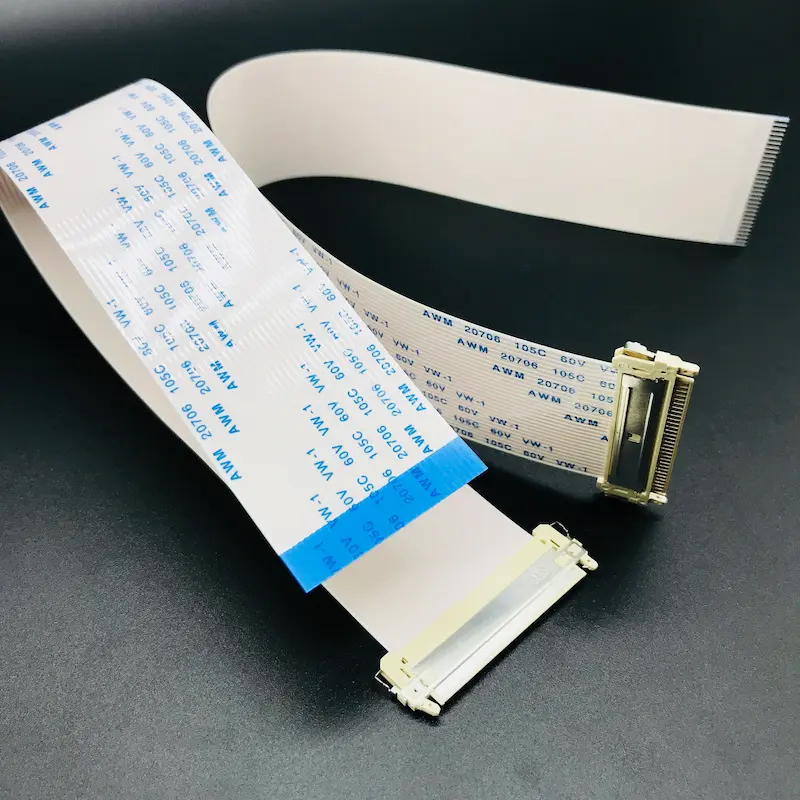
You need to know why flex life matters when you choose cables for your project. Flex life tells you how many times a flexible flat cable can bend before it fails. This number is important because many devices move or open and close thousands of times. If you use a cable with low flex life, you risk early failure. High flex life means your cable can handle many cycles of bending without breaking. This is critical for devices like robotic arms, printers, or smartphones, where constant movement happens every day.
Note: Flex life is a key factor in ffc durability, especially in environments with repetitive motion.
Measuring Flex Life in Flexible Flat Cable
You want to measure flex life to predict how long your cable will last. Manufacturers use several test methods to check flex performance. The most common tests include bending the cable back and forth to a set angle, often ±90°, and counting the cycles until the cable fails. Some tests use weights or specific speeds to simulate real-world use. Dynamic flex testing is essential because it mimics the actual movement your cable will face.
Test Method | Description |
|---|---|
Flex Endurance Test | Sample is flexed to ±90° to accelerate deterioration. |
Rapid Comparative Testing | Compares multiple samples under the same conditions for quick results. |
Long-term Life Prediction | Simulates actual routing conditions for more accurate damage representation. |
Progressive Conductor Health Checks | Custom checks for changes in resistance and signal integrity during flex testing. |
You can see that these tests help you compare different cables and choose the one with the best flex life for your needs.
Flex Life’s Role in FFC Durability
You need to understand why flex life is so important for durability. Flex life shows how well a cable can survive repeated bending. If you pick a cable with high flex life, you get better durability and longer service life. This is especially true in high-cycle applications, such as industrial robots or medical devices. High-performance materials and smart design choices, like gradual bends and reinforced areas, help improve flex life and overall durability.
A high flex life means your cable can endure many bends without failing.
This is vital for devices that move often, like charging cables or folding screens.
Cables with low flex life may break at points of frequent bending, causing device failure.
You want your devices to last. By focusing on flex life, you ensure your cables deliver reliable performance and strong durability in any application.
Maximizing FFC Durability with YLS Solutions
Design Best Practices
You want your flexible flat cables to last as long as possible. Following smart design practices helps you achieve this goal. When you design with YLS Flexible Flat Cable, you can maximize both flex life and durability by considering these steps:
Check the Operating Environment
You should know if your cable will face temperature extremes or high humidity. This helps you pick materials that resist these conditions.Choose for Durability
Select cables that can handle wear and tear. YLS cables use quality copper and strong insulation to boost durability.Plan for Space Constraints
Make sure your cable fits tight spaces without sharp bends. This protects the cable from stress and extends flex life.Add Shielding When Needed
Shielding prevents electromagnetic interference. You get clear signals and better performance.Design for Easy Maintenance and Replacement
If you make cables easy to swap, you reduce downtime and keep your system running.Future-Proof Your Design
Pick cables that allow for upgrades. This saves you time and money later.Test in Real-World Conditions
Always test your cables in the actual environment. This shows how they will perform under real stress.Work with Trusted Suppliers
YLS offers custom options to match your needs. You get expert advice and reliable products.Respect the Bending Radius
Never bend cables tighter than the recommended radius. This prevents cracks and keeps flex performance high.Use Quality Materials and Construction
YLS uses polyimide and copper for strength and flexibility. These materials help your cable last longer.
Tip: When you follow these best practices, you increase cable lifespan and reduce the risk of failure. In many industries, companies have seen fewer repairs and lower costs by choosing high-quality cables and storing them properly.
Installation and Maintenance Tips
You can extend the life of your YLS Flexible Flat Cable with careful installation and regular maintenance. Here are some tips to help you:
Inspect your cables often. Look for signs of wear, fatigue, or damage.
Use cable management systems. These support and protect your cables from sharp edges and movement.
Test cables periodically. Early testing finds problems before they cause failures.
Avoid twisting or pulling cables during installation. Gentle handling keeps the flex area strong.
Replace cables that show any damage. Quick action prevents bigger problems.
Keep cables clean and dry. Moisture and dust can shorten cable life.
Note: Regular inspections and good cable management reduce downtime and keep your automation systems running smoothly. In factories, companies have cut repair costs by checking cables and fixing issues early.
Customization for Application Needs
You may need special features for your project. YLS offers many customization options to help you meet industry challenges. You can see how these options solve real problems in the table below:
Customization Option | Industry Application | Addressed Challenge |
|---|---|---|
Ultra-Fine Pitch, High Pin Count | Energy Storage, Robotics, Electronics | High-density connections |
Foldable & Shielded Cable Options | Communication Antennas, Robotics | EMI shielding, space constraints |
Flame-retardant Insulation | Energy Storage | Temperature resistance |
High-temperature FFC (up to 130°C) | Robotics & Automation | High-temperature environments |
Precision Punching & Custom Labels | Consumer Electronics | Rapid assembly, high-volume needs |
100% Electrical QC Before Shipment | All Applications | Reliability and performance |
Low MOQ, Fast Turnaround | All Applications | Quick response to market demands |
You can request ultra-thin profiles for small devices or shielded cables for high-frequency signals. If you work in robotics, you can choose high-flex designs that survive millions of cycles. For energy storage, you can select flame-retardant and high-temperature options. YLS tests every cable before shipping, so you know you get reliable performance.
When you customize your cable, you solve unique challenges and boost both flex life and durability. YLS works with you to create the right solution for your application.
You see why bend radius and flex life matter for ffc durability. When you choose YLS Flexible Flat Cable, you get solutions that meet or exceed industry standards for performance and longevity. The table below shows how YLS features support your needs:
Specification | Importance |
|---|---|
Impedance Control | Stable data for LVDS and eDP signals |
Conductor Pitch/Spacing | Better signal integrity, less crosstalk |
Robust Shielding | Protection from electromagnetic interference |
Quality Dielectric | Reliability in harsh environments |
Durability | Multiple insertion cycles, long-lasting flex life |
You can avoid common design pitfalls by following expert recommendations:
Allow slack near terminations to reduce pull forces.
Use anchored pads for better mechanical support.
Apply adhesives and shielding to protect flex regions.
Check connector ratings for frequent flex cycles.
You improve ffc durability when you apply these insights early in your design and procurement process. YLS helps you avoid ambiguity and delays with clear specifications and reliable supply. You ensure your cables flex, perform, and last.
FAQ
Why does bend radius affect FFC durability?
You increase cable life when you follow the correct bend radius. Tight bends put stress on the conductors. This stress can cause cracks or breaks. You protect your device by using the right bend radius.
Why should you care about flex life in your design?
You want your device to last. High flex life means your cable survives many bends. This reduces the risk of failure. You save time and money by choosing cables with better flex life.
Why do YLS Flexible Flat Cables work well in harsh environments?
You get reliable performance because YLS uses strong materials and advanced construction. These cables resist heat, vibration, and chemicals. You can trust them in automotive, medical, and industrial systems.
Why is customization important for FFC applications?
You face unique challenges in each project. Custom cables let you match pitch, length, and shielding to your needs. You improve performance and durability by choosing the right features for your application.
