
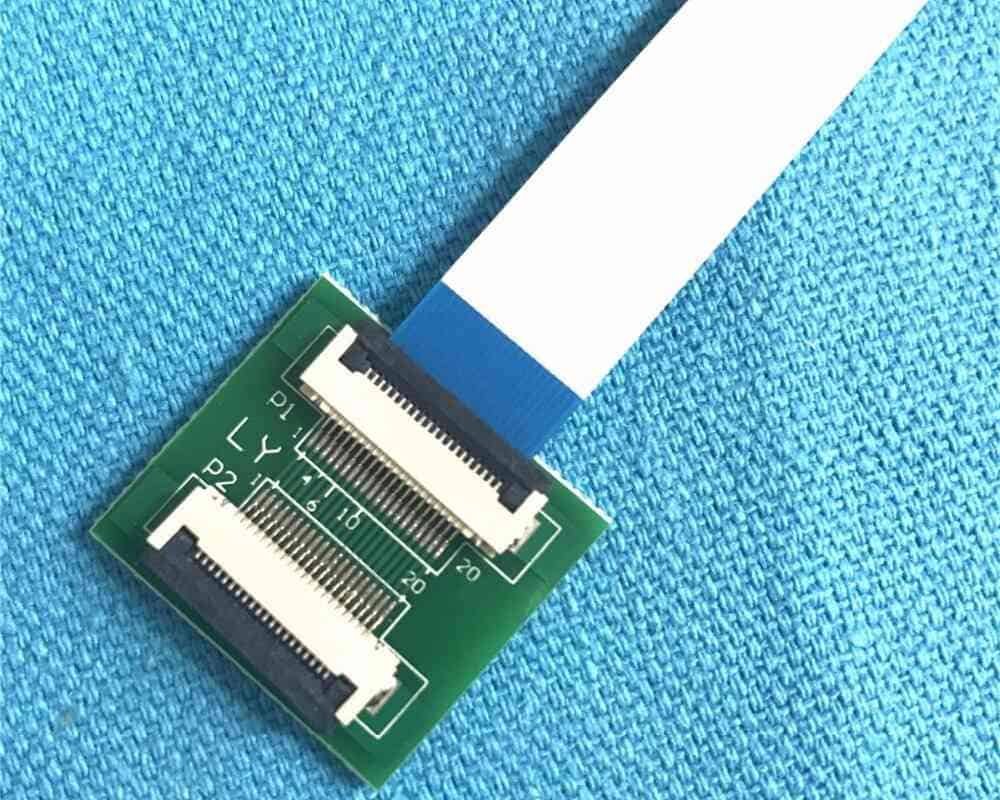
You depend on flexible flat cables for reliable connections in your projects. Recording every detail matters because missing information can affect quality and compliance. YLS, a trusted flexible flat cable manufacturer, sees buyers often overlook critical ffc parameters like pitch, conductor count, cable length, width, conductor material, insulation, plating, bending radius, current and voltage ratings, temperature range, connector type, stiffener, marking, and certification. Overlooking these can lead to costly errors. You can avoid mistakes by following a clear step-by-step process for accurate documentation.
Key Takeaways
Accurate recording of flexible flat cable parameters is crucial for ensuring quality and compliance in your projects.
Use a checklist to capture all critical parameters like pitch, conductor count, and insulation material to avoid costly mistakes.
Collaborate with your supplier for expert guidance on specifications and compliance to enhance your understanding and reduce errors.
Invest in ongoing training for your team to stay updated on industry standards and best practices, ensuring high-quality documentation.
Utilize YLS templates and digital tools to streamline your documentation process, making it easier to share and update records.
Critical FFC Parameters List
Pitch
Pitch describes the distance between the centers of adjacent conductors in a flexible flat cable. You must record pitch accurately because it determines device compatibility, signal integrity, and data transfer performance. If you select the wrong pitch, the cable may not fit the connector or could cause electrical issues.
Tip: Always match the pitch to your device’s connector specification.
Step-by-step guide to recording pitch:
Check the connector datasheet for required pitch.
Measure the distance between conductor centers using calipers.
Note the pitch in millimeters (e.g., 0.5 mm, 1.0 mm).
Include pitch in your part description and drawing.
YLS offers pitch options from 0.4 mm to 1.25 mm, supporting high-density and robust applications.
Pitch Size | Implications on Performance |
|---|---|
0.25 mm | Higher density connections, suitable for compact devices |
0.3 mm | Ideal for high-pin-count applications, requires careful handling |
0.5 mm | Balances density and robustness, used in various applications |
1.0 mm | Greater mechanical robustness, easier termination, better for industrial use |
Number of Conductors
The number of conductors, or pin count, refers to how many parallel wires run through the cable. This parameter affects signal integrity and application suitability. If you overlook the pin count, you risk missing signals or creating unnecessary complexity.
Step-by-step guide to recording number of conductors:
Identify all signals and power lines needed for your application.
Count the required conductors.
Specify the exact pin count in your documentation.
Include pin count in your drawing and part description.
YLS supports up to 96 conductors, making it easy to customize for complex or simple circuits.
Pin Count | Implications on Signal Integrity and Application Suitability |
|---|---|
High pin count | Supports complex circuits and multiple parallel signals, but increases cable width. |
Low pin count | Ideal for simpler connections or low-power signals, allowing more compact routing. |
Signal crosstalk | Closely spaced pins in high-density cables can cause interference if not designed properly. |
Current capacity | High pin count with thin traces may restrict power delivery. |
Design choice | Selecting the right pin count ensures all necessary signals are transmitted without unnecessary complexity. |
Cable Length
Cable length is the total distance from one end of the cable to the other. You must record cable length precisely to ensure proper fit and function. Incorrect length can cause installation issues or signal loss.
Step-by-step guide to recording cable length:
Measure the required distance between connection points.
Use machine vision or calibrated tools for accuracy.
Record the length in millimeters or centimeters.
Add length to your part description and drawing.
YLS uses advanced measurement technology for precise cable length markings.
Feature | Description |
|---|---|
Technology | Utilizes machine vision technology for accurate length markings. |
Calibration | Communicates with the printer to adjust print intervals automatically. |
Speed | Captures images at speeds up to 1500 feet (450 meters) per minute. |
Measurement | Analyzes images to measure distances from a calibrated reference point. |
Cable Width
Cable width is the measurement across the cable, perpendicular to the conductors. This parameter affects current capacity and mechanical strength. If you select the wrong width, the cable may not handle the required current or fit the device.
Step-by-step guide to recording cable width:
Determine the number of conductors and pitch.
Calculate width: (Number of conductors × pitch) + margin for insulation.
Measure with a ruler or caliper.
Record width in your documentation.
Cable gauge impacts current capacity.
Lower gauge (thicker traces) handles higher currents.
Higher gauge (thinner traces) suits low-power, compact designs.
Conductor Material
Conductor material determines electrical performance and durability. Copper is the most common choice because it offers excellent conductivity. The thickness of the conductor, measured by American Wire Gauge (AWG), affects current capacity.
Step-by-step guide to recording conductor material:
Identify the material (e.g., copper, copper-tin, copper-nickel).
Specify AWG size for current requirements.
Record material and thickness in your part description.
YLS uses hot-pressed copper wire, copper-tin wire, or copper-nickel wire for optimal performance.
Insulation Material
Insulation material protects conductors and ensures safety. The right insulation improves durability and prevents electrical faults. If you choose poor insulation, the cable may fail in harsh environments.
Step-by-step guide to recording insulation material:
Select insulation based on application (e.g., PET, polyimide).
Check resistance to temperature, chemicals, and mechanical stress.
Record insulation type in your documentation.
Insulation affects electrical isolation, environmental protection, flexibility, and mechanical strength.
Proper insulation prevents corrosion and mechanical damage.
YLS offers PET and polyimide insulation for reliable performance.
Plating Type
Plating type refers to the coating applied to conductors. Plating improves corrosion resistance and conductivity. If you miss this parameter, the cable may degrade or lose performance.
Step-by-step guide to recording plating type:
Identify plating (e.g., tin, gold, TiN, CrN, NbN, TaN).
Specify plating thickness if required.
Record plating in your part description.
Coating Type | Corrosion Resistance | Electrical Conductivity |
|---|---|---|
TiN | Excellent | High |
CrN | Excellent | High |
NbN | Excellent | High |
TaN | Excellent | High |
YLS offers tin-plated copper for enhanced durability.
Bending Radius
Bending radius is the minimum curve the cable can safely bend without damage. If you exceed this radius, you risk cable failure and reduced lifespan.
Step-by-step guide to recording bending radius:
Check circuit type (single-sided, double-sided, multilayer, dynamic).
Calculate recommended bend radius based on thickness.
Record bend radius in your documentation.
Circuit Type | Recommended Bend Radius |
|---|---|
Single-sided circuits | 3 to 6 times the circuit thickness |
Double-sided circuits | 6 to 10 times the circuit thickness |
Multilayer circuits | 10 to 15 times the circuit thickness |
Dynamic applications | 20 to 40 times the circuit thickness |
Exceeding the recommended bending radius can cause material fatigue, copper cracking, and insulation damage.
Current Rating
Current rating defines how much electrical current the cable can safely carry. If you overlook this parameter, the cable may overheat or fail.
Step-by-step guide to recording current rating:
Calculate total current required for your application.
Check conductor size and material.
Record current rating in your documentation.
YLS cables support various current ratings based on conductor size and application.
Voltage Rating
Voltage rating specifies the maximum voltage the cable can handle. If you miss this parameter, you risk electrical breakdown or safety hazards.
Step-by-step guide to recording voltage rating:
Identify maximum voltage in your application.
Check insulation material and thickness.
Record voltage rating in your documentation.
YLS cables meet industry voltage standards for safe operation.
Temperature Range
Temperature range shows the minimum and maximum temperatures the cable can withstand. If you ignore this parameter, the cable may fail in high-heat or cold environments.
Step-by-step guide to recording temperature range:
Identify operating environment.
Select cable with suitable insulation and conductor material.
Record temperature range in your documentation.
Polyimide-based FFCs with tin-plated copper conductors perform well in high-heat environments.
Verify temperature rating and current capacity for reliability.
YLS cables are temperature-rated up to 105°C for demanding applications.
Connector Type
Connector type determines how the cable attaches to devices. If you select the wrong connector, you risk compatibility issues.
Step-by-step guide to recording connector type:
Identify connector required (e.g., ZIF, LIF, BIF).
Check device compatibility and orientation.
Record connector type in your documentation.
Connector Type | Description | Compatibility Influence |
|---|---|---|
ZIF (Zero Insertion Force) | Uses a locking lever to minimize insertion force and reduce wear on conductors. | Ensures secure connections with minimal risk of damage during insertion. |
LIF (Low Insertion Force) | Requires slight pressure to insert, suitable for semi-permanent installations. | Provides ease of connection but may not be as secure as ZIF. |
BIF (Bottom Inserted Force) | Cable is inserted from the bottom, ideal for slim-profile devices. | Important for devices with limited access; orientation must match for proper function. |
YLS supports soldering, ZIF/LIF connectors, and custom ends.
Stiffener
Stiffener is a reinforcement added to the cable to improve mechanical strength and support insertion into connectors. If you miss this parameter, the cable may bend or fail during installation.
Step-by-step guide to recording stiffener:
Identify if your application requires extra support.
Specify stiffener material and placement.
Record stiffener details in your documentation.
YLS offers customizable stiffeners for reliable connector engagement.
Marking/Labeling
Marking and labeling ensure traceability and compliance. If you skip this parameter, you may face assembly errors or regulatory issues.
Step-by-step guide to recording marking/labeling:
Specify required markings (part number, date code, polarity indicators).
Record marking requirements in your documentation.
Verify markings during inspection.
Description | |
|---|---|
Part Number | Clearly marked to identify the specific FFC. |
Date Code | Indicates the manufacturing date for traceability. |
Polarity Indicators | Essential for correct assembly to prevent errors. |
YLS provides clear markings for easy identification and compliance.
Certification Compliance
Certification compliance confirms the cable meets industry standards for safety and performance. If you overlook this parameter, you risk failing audits or legal requirements.
Step-by-step guide to recording certification compliance:
Identify required certifications (e.g., ISO/IATF16949).
Record certification in your documentation.
Request certificates from your supplier.
YLS cables comply with global standards, including ISO/IATF16949.
Note: Recording all critical ffc parameters ensures quality and compliance. YLS supports customization and documentation for every parameter, helping you avoid costly mistakes.
Recording Critical FFC Parameters
Tools and Formats
You need the right tools to record flexible flat cable parameters accurately. Digital calipers measure pitch and width. Machine vision systems help with cable length. Use spreadsheet software or digital templates to organize your data. Drawing software, such as CAD, creates clear part diagrams. You can use PDF forms for standardized documentation. These tools help you avoid errors and improve quality.
Tip: Always save your documentation in a shared folder so your team can access the latest version.
Checklists for YLS Flexible Flat Cable
A checklist keeps your process consistent. You can use a simple table to track each parameter. Here is an example checklist for YLS flexible flat cable:
Parameter | Recorded Value | Verified | Notes |
|---|---|---|---|
Pitch | |||
Number of Conductors | |||
Cable Length | |||
Cable Width | |||
Conductor Material | |||
Insulation Material | |||
Plating Type | |||
Bending Radius | |||
Current Rating | |||
Voltage Rating | |||
Temperature Range | |||
Connector Type | |||
Stiffener | |||
Marking/Labeling | |||
Certification |
You can print this checklist or use it in digital form. YLS recommends reviewing each item before sending your order.
Step-by-Step Recording Process
You can follow these steps to document FFC parameters:
Gather all technical requirements, including temperature and voltage.
Use measurement tools to record pitch, width, and length.
Fill out your checklist with each parameter.
Draw the cable layout using CAD or drawing software.
Add part numbers, date codes, and temperature ratings to your drawing.
Review your documentation with your team.
Send your completed documents to YLS for quoting.
Note: Clear documentation helps you get accurate quotes and ensures quality. YLS supports digital templates and checklists to make your process easier.
Buyer Mistakes with FFC Parameters
You can make mistakes when documenting flexible flat cable parameters. These errors can affect quality, safety, and compliance. You need to understand the most common pitfalls and learn how to avoid them.
Incomplete Data
You may forget to record all necessary details. Missing information about pitch, conductor count, or insulation material can lead to cables that do not fit your devices. If you skip temperature range or voltage rating, you risk safety issues. You should use a checklist to ensure you capture every parameter. YLS provides digital templates and guides to help you record complete data. You can rely on their support to avoid gaps in your documentation.
Tip: Always double-check your checklist before submitting your order.
Misunderstood Specs
You might misunderstand specifications for flexible flat cables. If you misinterpret pitch or connector type, your cable may not match your device. Misunderstanding specs can cause non-compliance with energy efficiency regulations. This can increase energy consumption and reduce performance in consumer products. You need to review datasheets and consult with experts. YLS offers technical support and clear documentation to help you understand specs. You can ask questions and get guidance to ensure your cables meet standards and safety requirements.
Overlooked Compliance
You may overlook compliance requirements, such as mandatory certifications or industry standards. If you ignore these, you risk legal and quality problems. Missing compliance can lead to undisclosed defects and even criminal prosecution. You need to check for certifications like ISO/IATF16949 and request documentation from your supplier. YLS ensures all cables meet global standards and provides certificates for your records.
Risk Type | Description |
|---|---|
Legal Risks | Presumption of undisclosed defects, potential liability for practitioners, and criminal prosecution. |
Quality Risks | Integrity of the transaction and potential undisclosed defects affecting buyer’s decision. |
Compliance Failure | If no mandatory disclosure form is provided, it is assumed that no defects were disclosed. |
Note: You can avoid these mistakes by using YLS checklists, templates, and expert support. You protect safety and ensure your cables meet all standards.
FFC Parameter Best Practices
Using YLS Templates
You can simplify your documentation process by using YLS templates. These templates help you record every critical parameter for flexible flat cables. You save time and reduce errors when you follow a structured format. YLS templates include fields for pitch, conductor count, cable length, and other important details. You can access digital forms that make your records easy to share and update. Templates support your growth by making your workflow more efficient. You improve safety by ensuring all specifications are clear and accurate.
Tip: Use YLS checklists and templates to verify each parameter before placing your order.
Supplier Collaboration
You achieve better results when you work closely with your supplier. YLS offers expert support to help you understand technical requirements and industry standards. You can ask questions and get guidance on connector types, insulation materials, and compliance certifications. Collaboration leads to growth because you learn from experienced professionals. You protect safety by confirming that your cables meet all regulations. You can request sample cables to test fit and function before finalizing your order. Open communication with YLS ensures you avoid mistakes and receive cables that match your needs.
You should maintain accurate and accessible records of your supplier interactions.
You can implement call monitoring and auditing to assess compliance and improve quality.
Ongoing Training
You build long-term growth by investing in ongoing training. You need to stay updated on flexible flat cable standards and best practices. YLS provides resources and guides to help you understand new regulations and technologies. You can prioritize employee training to improve your team’s knowledge and skills. Training supports safety by reducing the risk of errors and non-compliance. You can automate compliance processes with robust technology and track activities for regulatory readiness. Continuous learning helps you adapt to changes and maintain high-quality documentation.
Note: You grow your expertise and protect safety when you use YLS templates, collaborate with suppliers, and invest in training.
You improve quality and compliance when you record every critical FFC parameter. YLS gives you templates, checklists, and expert support to simplify your documentation. You protect your projects by following best practices and verifying each detail.
Review your FFC documentation process today. Use YLS resources to ensure your cables meet all requirements.
Record each parameter accurately.
Consult YLS for guidance and customization.
Update your checklist before placing your order.
FAQ
What should a buyer check before ordering flexible flat cables?
You should review every parameter, including pitch, conductor count, and certification. The market offers many options, so you must match your needs. Always confirm cable length, insulation, and heat resistance. This helps you avoid costly mistakes and ensures your cables fit your application.
How does heat affect flexible flat cable performance in the market?
Heat can change cable flexibility and durability. You must select cables that withstand the heat levels in your application. The market has cables with different temperature ratings. Always check the heat tolerance to prevent failures and ensure long-term reliability.
Why is certification important for buyers in the global heat gun market?
Certification proves that cables meet safety and quality standards. As a buyer in the global heat gun market, you need certified products to comply with regulations. Certification also helps you build trust with your customers and ensures your cables perform well under heat.
How can a buyer ensure cables meet market requirements for heat and certification?
You should request documentation from your supplier. Check for certification labels and test reports. The market demands cables that handle heat and pass strict tests. Always verify that your cables meet both heat and certification standards before purchase.
What trends should buyers watch in the global heat gun market?
Buyers should track new heat-resistant materials and evolving certification rules. The market changes quickly, so you must stay informed. Look for suppliers who offer cables designed for high heat and who keep up with market certification updates.
