
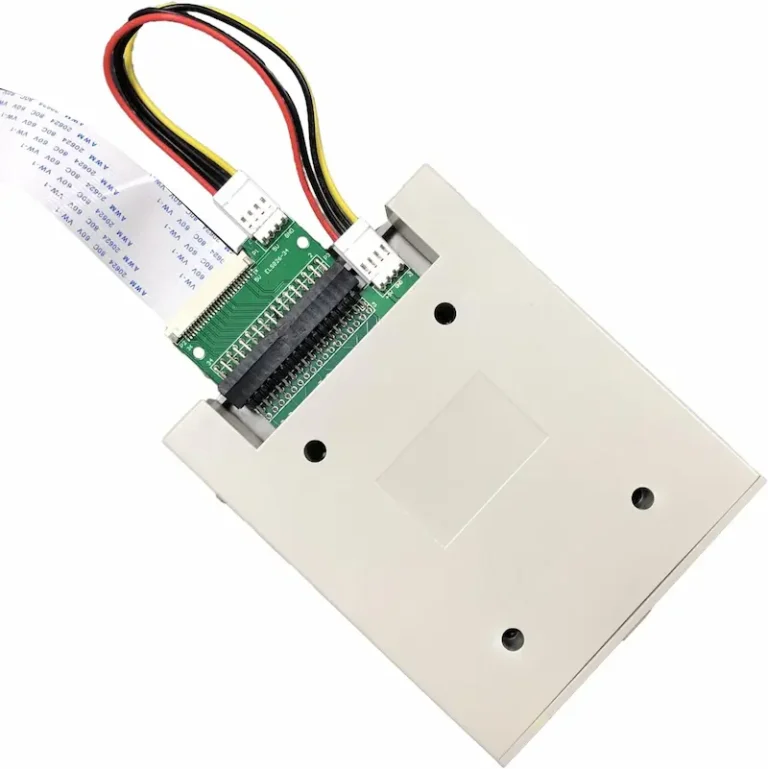
FPC/FFC connectors are small electronic parts that let you join flexible circuits and cables. You find these connectors in many devices that need space-saving and reliable wiring. FPC Connectors help you link flat cables to circuit boards in a simple way. Over the past decade, you see more demand for these connectors because of new technology in AI, smart cars, and industrial machines. YLS Flexible Flat Cables work well with these connectors, giving you strong and flexible wiring for many uses.
Key Takeaways
FPC and FFC connectors are essential for connecting flexible circuits in compact electronic devices.
Choose FPC connectors for complex circuits and FFC connectors for simpler, repeat-use connections.
ZIF connectors allow easy insertion with minimal force, while Non-ZIF connectors require more pressure for secure connections.
YLS Flexible Flat Cables enhance the performance of FPC/FFC connectors, ensuring reliability in various applications.
These connectors are crucial in consumer electronics, automotive, and medical devices, supporting smaller and lighter designs.
FPC Connectors Overview
What Are FPC Connectors
You use FPC Connectors to join flexible printed circuits to other electronic parts. These connectors help you make reliable electrical connections in devices where space is tight. FPC Connectors have a special design that supports flexible and thin circuit boards. You often see them in smartphones, cameras, and medical equipment.
Here is a table showing the main parts of FPC Connectors:
Component | Description |
|---|---|
Contacts | Metal terminals that create an electrical connection. |
Housing | Plastic structure for insulation and support. |
Locking Mechanism | Flip or slide lock that secures the FPC cable in place. |
You can find FPC Connectors in many modern devices because they fit well in small spaces. Their flexible design lets you connect circuits even when the device shape is unusual. You also get strong electrical performance, which is important for high-speed signals.
What Are FFC Connectors
FFC connectors, or Flexible Flat Cable connectors, are special interfaces that hold the ends of flat ribbon cables. You use these connectors to link flexible flat cables to circuit boards or other components. FFC connectors give you a stable way to send data, power, or control signals. They work best in places where you need to save space and connect many wires in a small area.
You see FFC connectors in laptops, printers, and display screens. Their simple structure makes them easy to use and install. You can rely on them for basic signal transmission in many electronic devices.
FPC vs FFC: Key Differences
You may wonder how FPC Connectors differ from FFC connectors. The main differences come from their structure, materials, and uses. The table below helps you compare them:
Feature | FFC (Flat Flexible Cable) | FPC (Flexible Printed Circuit) |
|---|---|---|
Structure & Function | Flat cable with simple 1:1 linear wiring | Flexible mini circuit board with complex routing |
Customization | Standardized, reusable | Custom-designed for specific tasks |
Design Complexity | Linear routing only | Supports multi-layer, angled, impedance-controlled paths |
Cost & Reusability | Lower cost, reusable | Higher cost, limited reusability |
Flexibility & Durability | Good for repeat-use connections | Better in tight spaces, harsh environments |
FPC Connectors use copper foil on a flexible base like polyimide or polyester. This gives you better electrical performance and more design options. FFC connectors use parallel wires with plastic insulation, which makes them simpler and less costly.
You choose FPC Connectors when you need complex circuits in small spaces. You pick FFC connectors for basic, repeat-use connections. Both types help you build smaller and lighter devices, which is important as electronics keep getting smaller.
Note: The market for FPC and FFC connectors is growing fast. You see more demand because people want smaller, lighter devices in electronics, cars, and healthcare. These connectors help you meet those needs by saving space and supporting flexible designs.
Features and Mechanisms
Compact Design and Flexibility
You will notice that FPC/FFC connectors stand out for their compact size and lightweight build. These connectors fit into devices where space is limited and flexibility is required. Their design allows you to transmit signals and power efficiently, even in assemblies that move or have tight spaces.
FPC connectors are flexible and suitable for tight spaces. FFC connectors are designed for easy and cost-effective connections in large projects.
Here is a table that compares the dimensions and weight advantages of different connector types:
Connector Type | Dimensions | Weight Advantages |
|---|---|---|
FPC | Ultra-thin | Lightweight |
FFC | Space-saving | Reduced weight |
Traditional | Bulkier | Heavier |
You can use FPC connectors in wearable electronics, automotive systems, medical devices, and flexible displays. These connectors help you create smaller, lighter, and more advanced products.
Connection Mechanisms (ZIF, Non-ZIF)
You will find two main connection mechanisms in FPC/FFC connectors: ZIF (Zero Insertion Force) and Non-ZIF. ZIF connectors let you insert cables with minimal force. They use a sliding or flipping mechanism to lock the cable in place. Non-ZIF connectors require a bit more pressure to insert the cable, and they do not have a locking lever.
Connector Type | Insertion Force Requirement | Locking Mechanism |
|---|---|---|
ZIF | Minimal force required | Sliding/flipping mechanism |
Non-ZIF/LIF | Pressure-based connection | No locking lever |
You can choose the mechanism that fits your project’s needs. ZIF connectors work well when you need to avoid damaging delicate cables. Non-ZIF connectors are good for simple, cost-effective designs.
YLS Flexible Flat Cable Compatibility
You can pair YLS Flexible Flat Cables with standard FPC/FFC connectors. These cables meet important compatibility requirements, such as matching the connector’s pitch, thickness, and alignment. The connector’s latch or friction fit secures the cable during use.
Compatibility Requirement | Description |
|---|---|
Pitch Compatibility | The connector’s contact spacing matches the cable’s conductor pitch. |
Thickness Compatibility | The connector’s clamp fits the cable’s total thickness. |
Circuit Alignment | The connector’s contacts align with the cable’s conductors. |
Actuation Mechanism | The cable is secured using the connector’s latch or friction fit. |
YLS Flexible Flat Cables also meet industry standards for flex cycle testing and material certification. This ensures you get reliable performance and safety in your electronic designs.
Types of FPC Connectors
ZIF and Non-ZIF Types
You will find two main types of FPC Connectors: ZIF (Zero Insertion Force) and Non-ZIF. ZIF connectors let you insert flexible circuits with almost no force. You lock the cable in place with a lever or slider. Non-ZIF connectors need more pressure to insert the cable, and they do not have a locking lever. You often use ZIF connectors when you want to avoid damaging delicate circuits. Non-ZIF connectors work well for permanent or semi-permanent connections.
Here is a table that compares ZIF and Non-ZIF connectors:
Feature | ZIF Connectors | Non-ZIF Connectors |
|---|---|---|
Insertion Force | Requires pressure for insertion | |
Risk of Damage | Low risk of damaging circuits | Higher risk during insertion |
Reliability | Good for repeated assembly/disassembly | Better for permanent connections |
Pitch Sizes and Configurations
You need to know about pitch size when you choose FPC Connectors. Pitch size is the distance between the centers of two contacts. Fine-pitch connectors (0.3mm to 1.27mm) are common in smartphones and laptops. These connectors help you fit many connections in a small space. Tighter pitch sizes can cause crosstalk or signal problems, so designers use shielding or special routing to keep signals clear. Wider pitch connectors, such as 2.54mm, give you better signal isolation and are best for low-speed uses.
Fine-pitch connectors (0.3mm–1.27mm): Used in high-density devices.
Tighter pitch: May need shielding for high-speed signals.
Wider pitch (2.54mm): Used for low-speed, simple connections.
Locking and Mounting Styles
You can choose from several locking and mounting styles for FPC Connectors. Flip-lock and slide-lock are two popular options. Flip-lock connectors use a lever that you flip to secure the cable. Slide-lock connectors use a sliding part to hold the cable in place. Both styles give you a reliable connection and are easy to use.
Here is a table showing common mounting styles:
Mounting Style | Orientation | Pin Pitch | Features | Applications |
|---|---|---|---|---|
Flip-Lock | Horizontal/Vertical | 0.3mm–0.8mm | High retention, reliable lock | Consumer electronics |
Slide-Lock | Horizontal | 0.3mm–0.8mm | Space-saving, secure connection | Automotive systems |
You will see these mounting styles in many devices, from phones to cars. Each style helps you match the connector to your project’s needs.
Applications

Consumer Electronics
You see FPC/FFC connectors in many consumer electronics. These connectors help you build compact devices like smartphones, tablets, and laptops.
Smartphones use these connectors to link the touchscreen display to the main logic board. This ensures fast touch response and clear video output.
Cameras rely on FFC cables for signal transmission. This allows slim designs and smooth movement of parts.
Laptops use FPC connectors to connect keyboards, trackpads, and displays to the motherboard. These connectors work well at hinge points.
Their flexibility reduces mechanical stress and improves reliability.
Tip: Flexible connectors make devices lighter and more durable. You can design products that fit into tight spaces and withstand daily use.
Automotive and Medical Devices
You find FPC/FFC connectors in modern cars and medical equipment.
In cars, these connectors link dashboard displays, digital instrument clusters, and head-up displays. They keep signals clear and fast.
ADAS sensors, such as cameras and radar, use these connectors for real-time data processing.
Locking connectors prevent disconnection from road vibrations and temperature changes.
Flexible routing behind panels reduces harness weight and complexity.
In medical devices, you need connectors that are reliable and compact.
Diagnostic and therapeutic devices, including imaging systems and monitors, depend on these connectors.
Home healthcare and wearable medical devices require miniaturized and dependable parts.
Note: FPC/FFC connectors ensure safety and performance in harsh environments. You can trust them for critical systems.
YLS Flexible Flat Cable in Industry
YLS Flexible Flat Cable supports many industrial applications. You can see its impact in automotive, automation, and aerospace.
Company | Challenge | YLS FFC Solution | Results Achieved |
|---|---|---|---|
Ford Motor Company | Rapid prototyping with custom YLS FFCs | Reduced prototyping time. Lowered costs. | |
Siemens AG | Higher production efficiency in automation | High-density YLS FFCs for compact wiring | Improved assembly speed. Faster time-to-market |
Boeing | Precision and reliability in aircraft wiring | Shielded YLS FFCs for critical connections | Increased efficiency. Maintained safety. |
You benefit from custom FFCs that fit your needs.
Automation lowers labor costs and boosts production speed.
Machine vision systems catch defects early and reduce waste.
Callout: YLS Flexible Flat Cable gives you reliable, tailored solutions for demanding industrial settings.
You have learned what FPC and FFC connectors are and why they matter in modern electronics. These connectors help you build smaller, lighter devices by offering high flexibility, strong electrical performance, and easy maintenance. YLS Flexible Flat Cables support these connectors with custom engineering and reliable quality.
Advantage | Description |
|---|---|
Ultra-thin and lightweight | Fits compact devices like smartphones and drones |
High flexibility | Adapts to complex layouts and folding devices |
Easy installation | Simplifies wiring in tight spaces |
You can trust YLS for flexible connection solutions that meet your needs.
FAQ
What is the main purpose of FPC/FFC connectors?
You use FPC/FFC connectors to join flexible cables or circuits to electronic devices. These connectors help you save space and create reliable connections in compact gadgets.
What devices use FPC/FFC connectors?
You find FPC/FFC connectors in smartphones, laptops, printers, cameras, and medical equipment. These connectors support slim designs and flexible wiring.
What pitch sizes are common for FPC/FFC connectors?
You often see pitch sizes like 0.5mm, 1.0mm, and 1.25mm. The pitch size matches the spacing between the cable’s conductors and the connector’s contacts.
What is the difference between ZIF and Non-ZIF connectors?
ZIF connectors let you insert cables with almost no force. Non-ZIF connectors need more pressure. ZIF types use a locking lever or slider for secure connections.
What makes YLS Flexible Flat Cables a good choice?
You get high flexibility, custom options, and reliable performance with YLS Flexible Flat Cables. These cables fit many connector types and meet industry standards.
