
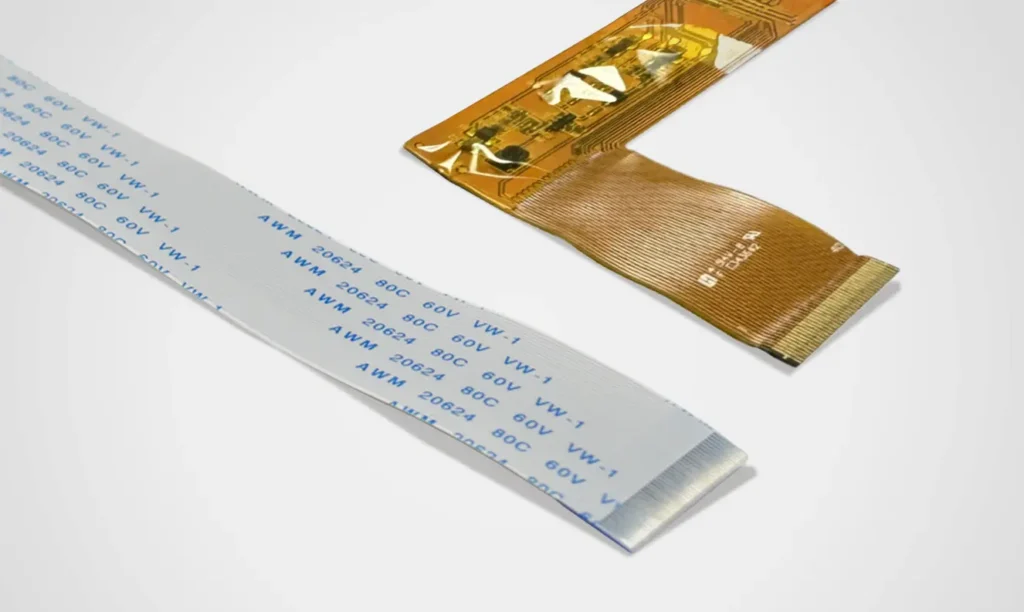
You see flex cables everywhere in modern technology. These flat and flexible connectors help you create smaller, lighter, and more reliable devices. The demand for compact electronics has pushed the flex cable market to new heights. You benefit from their use in smartphones, laptops, and medical equipment because flex cables enable high-density wiring without adding bulk. YLS stands out as a trusted name, offering Flexible Flat Cable (FFC) solutions that support the next generation of electronic designs. As the market grows rapidly, you can count on flex cables to deliver reliable performance in even the most space-limited applications.
Key Takeaways
Flex cables are essential for modern devices, allowing for compact designs and reliable connections.
You can find flex cables in smartphones, laptops, medical equipment, and home appliances, enhancing their functionality.
Choosing flexible cables can save space and reduce weight in your designs, making products easier to carry.
Flex cables offer durability and flexibility, making them ideal for devices with moving parts or tight spaces.
Customization options for flex cables help you meet specific project needs, ensuring optimal performance.
Flex Cable Basics
What Is a Flex Cable
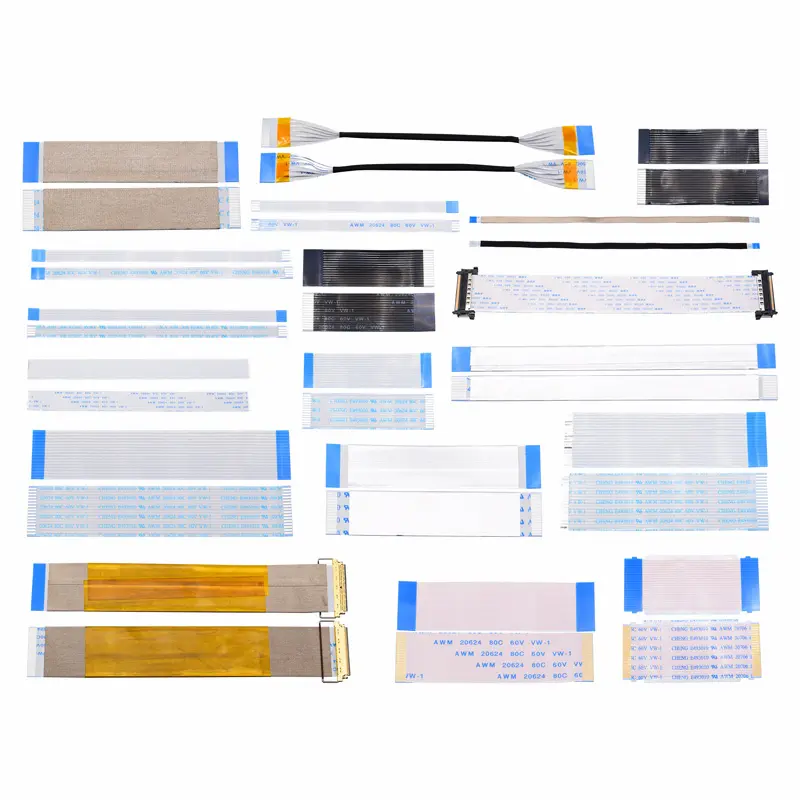
You often see flex cables in modern electronics. These cables bend and twist without breaking, making them perfect for devices that need to save space. Flex cables connect different parts inside your devices, such as screens, buttons, and circuit boards. You can find them in smartphones, laptops, cameras, and even medical equipment.
Flexible Flat Cables (FFCs) are a special type of flex cable. YLS offers FFCs that use thin, flat strips of metal pressed onto a plastic film. This design lets you fit more connections into a smaller space. FFCs work well in tight spots where traditional round cables cannot fit. You can rely on them for stable and high-speed connections.
Key Features and Structure
Flex cables use advanced materials to deliver strong performance in electronics. The table below shows the main materials and how each one helps your device:
Material | Contribution to Performance |
|---|---|
Polyimide Substrate | Provides durability, electrical insulation, and high temperature tolerance. |
Copper Traces | Offers excellent conductivity and can be etched thin without losing resistivity. |
Polyimide Coverlay | Protects copper traces from environmental damage while allowing selective connections. |
Adhesives | Ensures reliable bonding under flexing conditions without cracking. |
You can see that each material plays a key role in making flex cables reliable and long-lasting. FFCs from YLS use hot-pressed copper wire on a PET film, which makes them lightweight and easy to install. You can choose from different pitch sizes and conductor counts to match your project needs.
When you compare FFCs to other flexible printed circuits, you notice some differences:
Feature | Flexible Flat Cable (FFC) | Flexible Printed Circuit (FPC) |
|---|---|---|
Structure | Thin, flat strips of metal in a plastic film | Etched flexible copper on a substrate |
Flexibility | Less flexible than FPC | More flexible, allowing for complex designs |
Customization | Standardized pitch, limited customization | Highly customizable with multiple layers and vias |
Applications | Used in consumer electronics for connections | Used for intricate circuits with components |
You can choose the right type based on your device’s needs. FFCs give you a simple, compact solution for many everyday electronics.
Main Uses of Flex Cables
Consumer Electronics
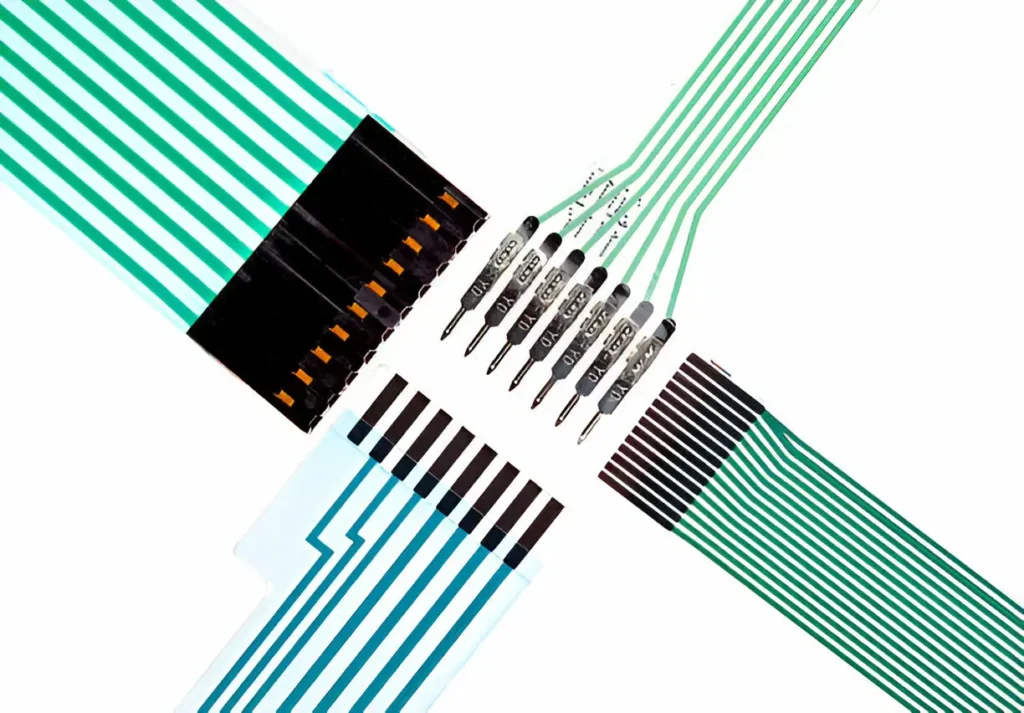
You interact with ribbon cables every day when you use your favorite gadgets. These flat flexible cables connect the internal parts of smartphones, tablets, laptops, and cameras. You find them inside laptop screens, where they link the display to the motherboard. Their compact size lets you enjoy thinner and lighter products. Ribbon cables also appear in devices that open and close, such as flip phones and folding laptops. The flexible cables bend and twist without breaking, which keeps your electronics working smoothly.
Smartphones and tablets use ribbon cables to connect touchscreens, buttons, and batteries.
Laptops rely on flat flexible cables for connections between the keyboard, trackpad, and laptop screens.
Cameras use ribbon cables to link sensors, lenses, and displays.
You see ribbon cables in gaming consoles and smartwatches, where space is limited.
YLS’s flat flexible cables stand out because they offer high-density wiring and a compact design. You can fold or bend these cables to fit tight spaces, which helps manufacturers create sleeker products. The adaptability of ribbon cables allows you to enjoy advanced features in smaller devices.
Tip: When you choose ribbon cables for your project, you make it easier to design compact and reliable electronics.
Medical and Automotive Devices
You depend on flexible cables for safety and precision in medical and automotive technology. In medical equipment, ribbon cables connect sensors, displays, and control units. You find them in diagnostic machines, wearable health monitors, and surgical tools. The lightweight and flexible nature of these cables ensures they fit into compact designs and last longer than traditional wiring.
Feature | Flexible Cables in Medical Devices | Traditional Wiring |
|---|---|---|
Flexibility | Superior for tight spaces | Limited |
Compactness | Designed for small integration | Bulkier |
Durability | Withstands stress and vibration | Prone to wear |
You see ribbon cables in automotive electronics as well. They power sensors, infotainment systems, and lighting. Flexible cables handle vibrations and temperature changes, which improves reliability and safety. Their ability to fit into tight spaces and complex shapes makes them essential for modern vehicles. You benefit from stable power delivery to advanced driver assistance systems, which keeps you safe on the road.
YLS flat flexible cables offer high-speed, low-interference signal transmission. You can trust them in critical applications where performance matters most.
Industrial and Home Appliances
You find ribbon cables in many appliances around your home and workplace. Smart refrigerators, washing machines, vacuums, and HVAC systems all use flexible cables to connect control panels, displays, and sensors. These cables make it possible to place displays in ergonomic positions and support real-time data transmission between different parts of the appliance.
Smart refrigerators use ribbon cables for touchscreens and temperature sensors.
Washing machines rely on flexible cables to connect control units and displays.
Vacuums and HVAC systems use ribbon cables for sensors and motor controls.
Small kitchen appliances, like coffee makers and blenders, use flat flexible cables for compact wiring.
In robotics and automation, ribbon cables play a key role. They allow robotic arms to move freely without damaging internal wiring. Flexible cables reduce maintenance costs and extend the service life of machines. You benefit from fewer breakdowns and smoother production workflows.
YLS ribbon cables adapt to curved designs and tight spaces. You can count on their durability and stable signal transmission, even in harsh environments.
Note: When you use ribbon cables in appliances and industrial systems, you improve both performance and reliability.
Advantages of Flex Cables
Flexibility and Space Efficiency
You benefit from flexible cables because they bend and twist easily without breaking. This flexibility and endurance make them perfect for devices with moving parts or tight spaces. Flexible cables use special conductor stranding and soft insulation materials, so you can route them around obstacles and through small openings. Unlike rigid wiring, flexible cables adapt to frequent movement, which is essential in robotics and dynamic systems.
Flexible cables provide superior bending and torsion resistance.
You can save up to 60% of space in your device design by choosing flexible cables over traditional wiring.
These cables fit into compact spaces, helping you create smaller and lighter products.
Tip: Flexible cables help you design electronics that are both compact and reliable.
Durability and Reliability
You can trust flexible cables to last in harsh environments. Manufacturers use materials like polyimide and high-purity copper to boost mechanical strength and reduce fatigue. Proper strain relief and reinforcement techniques, such as oversized pads and high-bond adhesives, help distribute forces and prevent damage. Abrasion protection, like heat shrink tubing, keeps the cable safe from wear.
Durability Feature | Benefit for You |
|---|---|
Polyimide insulation | Resists heat and chemicals |
High-purity copper | Withstands millions of duty cycles |
Reinforced terminations | Reduces stress and prevents breakage |
Abrasion protection | Guards against wear and tear |
Flexible cables endure high-vibration environments, making them ideal for automotive, industrial, and medical devices. You get reliable performance even after repeated bending and movement.
Customization and Performance
You can customize flexible cables to fit your specific needs. YLS offers options like custom pitch, shielded cables, and fast prototyping. Shielded cables protect sensitive signals from electromagnetic interference, which is important in automotive dashboards, medical imaging devices, and industrial controllers. Flexible flat cables feature a parallel structure, ensuring consistent spacing between conductors for uniform impedance. This design supports high-speed data transmission with minimal signal loss or distortion.
Flexible cables have excellent dielectric properties for strong signal integrity.
The uniform thickness and controlled impedance help maintain high performance in fast electronic systems.
You can choose from different conductor counts, pitch sizes, and termination styles to match your project.
Note: Flexible cables simplify installation and reduce costs by using fewer materials and streamlining assembly.
Flex Cables vs. Traditional Wiring
Key Differences
You often face a choice between flexible cables and traditional round cables when designing electronic devices. Each type has unique strengths and weaknesses. The table below highlights the main differences in electrical performance:
Feature | Flex Cables | Round Cables |
|---|---|---|
Speed and Bandwidth | Comparable speeds and bandwidth | Comparable speeds and bandwidth |
Resistance to Interference | Less resistant to electromagnetic interference | More resistant due to thicker insulation |
Durability | Less durable due to flexibility | More durable due to robust insulation |
Flexibility | More flexible, can be routed easily | Less flexible, more rigid |
Flexible cables give you unmatched flexibility. You can bend and route them through tight spaces, which is difficult with round cables. However, round cables often provide better protection against interference and physical damage because of their thicker insulation.
When you install flexible cables, you save time and effort. Flexible flat cables are quicker and simpler to install than traditional round cables. You avoid the hassle of bulky wiring, which means you finish projects faster and reduce labor costs.
Why Flex Cables Are Preferred
You see flexible cables used in many real-world applications because they offer clear advantages. Here are some common uses:
Connecting PCBs to flat panel displays (LCD, OLED)
Interconnections between PCBs in folding devices
Part wiring in consumer devices
Critical cabling in automotive systems
Medical devices like endoscopes
Flexible cables help you create smaller, lighter, and more portable products. The table below shows some environmental benefits:
Benefit | Description |
|---|---|
Compact Size | Flex cables can fit into tight spaces, enabling smaller product designs. |
Lighter Weight | They weigh significantly less than traditional cables, enhancing portability. |
Eco-Friendly | EcoGen Ecocables are made from materials free of harmful substances and are fully recyclable. |
You can trust the quality of YLS flexible cables. YLS follows strict ISO certifications and quality assurance processes. The table below explains how this impacts your projects:
Evidence Type | Description |
|---|---|
ISO Certifications | Indicate adherence to strict quality standards, impacting product quality. |
Testing Processes | Ensure each flexible printed circuit board meets industry standards for reliability. |
Note: When you choose flexible cables from YLS, you get reliable performance, easier installation, and products that meet global quality standards.
You see flex cables everywhere in modern devices because they offer many advantages:
Fit into tight spaces for compact designs
Bend and twist for dynamic connections
Last longer than traditional wiring
Weigh less, making devices easier to carry
Simplify assembly and lower costs
YLS Flexible Flat Cables stand out for their space-saving design, flexibility, and easy installation.
Feature | Benefit |
|---|---|
Fit your exact project requirements | |
Durability | Handle repeated bending and movement |
Flexible cables help you build the next generation of electronics. Choose trusted manufacturers like YLS for reliable results.
FAQ
What is the main difference between FFC and FPC?
You see FFCs as flat, ribbon-like cables with parallel conductors. FPCs use etched copper on a flexible substrate. FFCs work best for simple, high-density connections. FPCs handle more complex circuits.
Can you customize YLS Flexible Flat Cables for your project?
Yes! You can choose the pitch, number of conductors, length, and termination style. YLS also offers shielded options and fast prototyping.
Tip: Contact YLS for custom solutions that fit your exact needs.
Where do you commonly use flex cables?
You find flex cables in smartphones, laptops, cameras, medical devices, cars, and home appliances. They connect screens, buttons, sensors, and circuit boards.
Device Type | Common Use |
|---|---|
Smartphone | Screen and battery links |
Laptop | Keyboard and display |
Medical Device | Sensor connections |
How do flex cables improve device reliability?
You get better reliability because flex cables resist vibration, bending, and repeated movement. Their durable materials and strong construction help prevent failures in demanding environments.
