
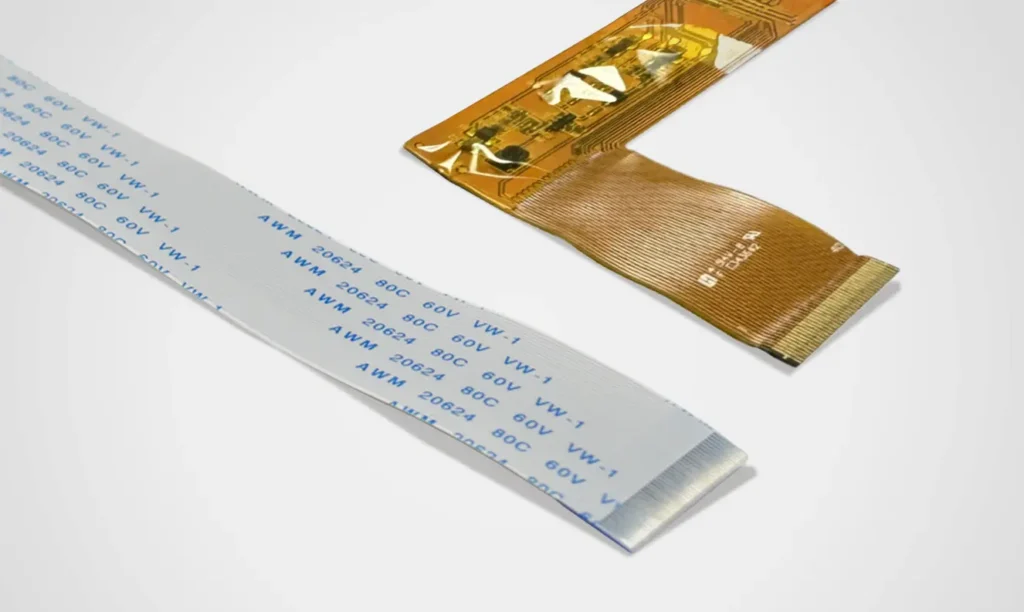
You want the best solution for moving axes, and YLS brings expert insight to help you decide. Cable choices matter because about 85% of robot dress pack failures come from cables and hoses stressed by millions of cycles of movement. You need to compare ribbon vs ffc and flex PCB based on flexibility, durability, installation, cost, and reliability. Modern machines run faster and put more stress on cables, so picking the right one helps you avoid downtime. Consider your application needs before making a choice.
Key Takeaways
Choose ribbon cables for organized wiring in robotics and automotive systems. They offer high flexibility and fit tight spaces.
FFC cables provide a balance of flexibility and durability. They are ideal for high-speed applications and can endure frequent movement.
Select flex PCBs for complex designs that require maximum flexibility. They excel in wearable devices and compact electronics.
Always consider the specific needs of your application when selecting cables. Match flexibility and durability to your device’s movement profile.
Follow best practices for cable installation and maintenance to extend lifespan and reliability. Use high-quality materials and avoid sharp bends.
Ribbon vs FFC vs Flex PCB Comparison
YLS Custom Ribbon Cable Overview
You can use custom ribbon cable for organized, low-profile wiring in moving axes. YLS offers ribbon cable with pitch options from 0.5mm to 2.0mm, tinned or silver-plated copper conductors, and flexible cable assemblies that handle dynamic movement. The table below shows typical specifications for YLS ribbon cable used in moving axes:
Parameter | Value Range / Options |
|---|---|
Pitch | 0.5mm / 1.0mm / 1.25mm / 2.0mm |
Conductor Type | Tinned copper / Silver-plated copper |
Cable Structure | Type A / Type D / Custom foldable routing |
Bending Radius | ≥ 1mm (dynamic), ≥ 0.5mm (static) |
Flex Life | ≥ 20 million cycles (tested in robotic arm sim) |
Temperature Resistance | -40°C to +105°C (special: up to +125°C) |
EMI Shielding Option | Aluminum foil + ground trace / custom options |
Rated Voltage | 30V / 60V / up to 100V for power modules |
Current Capacity | Up to 1.5A per trace (depending on width/pitch) |
Length Tolerance | ±0.2mm (customizable for compact routing) |
Connector Compatibility | Hirose / JST / Molex / I-PEX or custom |
Certifications | RoHS / REACH / UL 2651 / CE |
You get high-flex cable assemblies that support complex movement profiles. YLS ribbon cable works well for shielded ffc and flexible flat cable needs in robotics and automation.
Flexible Flat Cable (FFC) Overview
Flexible flat cable stands out for its balance of flexibility, durability, and cost. You can use ffc for high-speed applications, especially when you need shielded ffc or custom ffc solutions. FFC features reinforced copper conductors and durable insulation. It handles repeated flexing and resists fatigue, making it ideal for moving axes in automotive, robotics, and industrial systems. FFC cable assemblies are lightweight and easy to route. You can find flexible cable assemblies in lighting, powertrain, and advanced driver assistance systems.
FFC is engineered for high durability and repeated flexing.
Industrial-grade ffc can endure over 1 million cycles.
Flexible flat cable supports shielded ffc for EMI-sensitive environments.
FFC cable is ideal for simple, cost-effective projects.
Flex PCB Overview
FPC, or flexible printed circuit, offers the highest flexibility and complexity. You can use fpc for advanced, compact designs that require intricate routing. Flex PCB uses rolled-annealed copper for high endurance. It can bend over 100,000 times and withstand more than 1,000,000 cycles at a 5mm radius. The recommended bend radius depends on the circuit type:
Circuit Type | Recommended Bend Radius |
|---|---|
Single-sided circuits | 3 to 6 times the circuit thickness |
Double-sided circuits | 6 to 10 times the circuit thickness |
Multilayer circuits | 10 to 15 times the circuit thickness |
Dynamic applications | 20 to 40 times the circuit thickness |
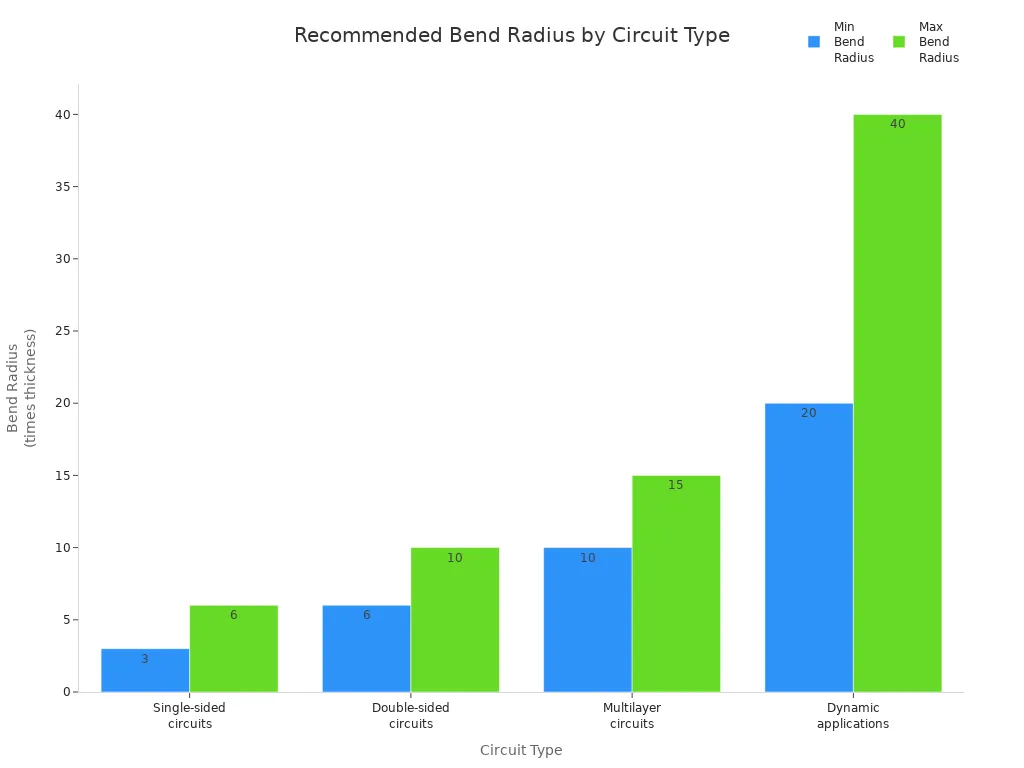
You should follow these guidelines to maximize the fatigue life of your flexible printed circuit. FPC is best for wearable devices, medical sensors, and application-specific flexible cable solutions.
Side-by-Side Comparison Table
Feature | Ribbon Cable (YLS) | FFC (Flexible Flat Cable) | FPC (Flexible Printed Circuit) |
|---|---|---|---|
Flexibility | High | Moderate | Very High |
Flex Life | 20M+ cycles | 1M+ cycles | 1M+ cycles |
Cost | Low | Low to Medium | Medium to High |
EMI Shielding | Available | Available (shielded ffc) | Customizable |
Application Suitability | Robotics, automation | Automotive, robotics, industry | Wearables, sensors, compact devices |
Customization | High | High | Very High |
Installation | Easy | Easy | Moderate |
You can use ribbon vs ffc for most moving axes. Choose fpc for the most demanding flexible cable assemblies. Ribbon vs ffc gives you a practical choice for shielded ffc and flexible flat cable needs. FPC is the top pick for complex, high-flex designs.
Cable Flexibility and Durability
YLS Ribbon Cable Flexibility
You need cable flexibility when your equipment moves again and again. YLS ribbon cables use stranded conductors made from many fine wires. This design improves cable flexibility and lets the cable bend and twist without breaking. You can route ribbon cables through tight spaces and around moving parts. The parallel conductor layout keeps the cable flat and organized. You get high flex life, which means the cable can handle millions of cycles before failure. YLS ribbon cables also offer reinforcement options like PET stiffeners and EMI foil. These features help maintain durability and cable flexibility in dynamic environments.
Tip: Choose ribbon cables with fine-stranded conductors and reinforced insulation for the best cable flexibility and durability in moving axis applications.
FFC Flexibility for Moving Axes
Flexible flat cables (FFC) give you a balance of flexibility and durability. You can use FFC in robotic arms, automotive systems, and industrial machines. FFC cables fold and bend easily, making them suitable for repeated movement. The insulation material, such as PET or PI, keeps the cable flexible even at high temperatures. FFC cables from YLS support custom pitch and conductor counts, so you can match the cable flexibility to your project needs. Shielded FFC options protect against EMI, which is important in environments with sensitive electronics.
FFC cables handle frequent movement and resist fatigue.
You can select FFC with PUR or TPE jackets for extra flexibility and durability.
Fine-stranded conductors inside FFC improve cable flexibility and reduce the risk of breakage.
You get reliable performance and long flex life when you choose FFC for moving axes.
Flex PCB Durability
Flex PCBs offer the highest flexibility for complex designs. You can use flex PCBs in wearable devices, medical sensors, and compact electronics. The rolled-annealed copper in flex PCBs allows for repeated bending and twisting. You must follow recommended bend radius guidelines to maximize durability. Single-sided circuits need a smaller bend radius, while multilayer circuits require a larger radius. Flex PCBs can handle over one million cycles of movement if you design them correctly.
Circuit Type | Bend Radius Needed | Suitability for Dynamic Movement |
|---|---|---|
Single-sided | 3-6x circuit thickness | High |
Double-sided | 6-10x circuit thickness | Moderate |
Multilayer | 10-15x circuit thickness | Lower |
Dynamic applications | 20-40x circuit thickness | Highest |
You must select flex PCBs with fine-stranded conductors and proper insulation to achieve the best cable flexibility and durability. Flex PCBs excel in applications where you need maximum flexibility and complex routing.
How to Choose for Moving Axes
You should focus on cable flexibility and durability when selecting cables for moving axes. Look for these features:
Stranded conductors for improved cable flexibility.
Reinforced insulation for extra durability.
Jacket materials like PUR or TPE for resistance to oil, chemicals, and extreme temperatures.
High flex life ratings for cables that will move often.
You can trust YLS ribbon cables and FFC for most moving axis applications. Flex PCBs work best for specialized designs that need maximum flexibility. Always match the cable flexibility to your device’s movement profile and environment.
Installation, Performance, and Cost
Ease of Installation
You want a cable that installs quickly and fits your electronics layout. Ribbon cable assemblies let you connect multiple components at once. You can use IDC connectors for mass termination, which saves time and improves installation efficiency. Flexible flat cables work well in simple electronics applications with minimal bending. You can easily route FFC cables in automotive displays and robotics. Flex PCBs offer flexibility for complex electronics, but installation can be more challenging. You need to follow bend radius guidelines to avoid damage.
Connector Type | |
|---|---|
LIF | Uses friction to keep the FPC/FFC in place. |
ZIF | Has a locking flap that holds the cable without force. |
Flat cables help you maintain a compact and organized device layout. Ribbon cables suit fixed connections in stable environments. Flex cables fit applications that require frequent bending and tight spaces.
Electrical Performance
You need reliable signal transmission for your electronics. Ribbon cables provide consistent signal performance in organized layouts. FFC cables support high-speed signal transmission and work well in automotive displays and consumer electronics. Shielded FFC options protect against EMI, which improves signal integrity. FPCs use metal shielding films and ground vias for efficient EMI suppression. You get compact solutions for signal transmission in wearable electronics and medical devices.
Feature | FFC | FPC |
|---|---|---|
EMI Shielding | Metal foil wrapping | Shielding film + ground connection |
FFC cables require metal foil wrapping for EMI shielding.
FPCs offer efficient EMI suppression with shielding films and ground connections.
You can select cables based on signal integrity needs and performance requirements. Choose ribbon cables for stable signal transmission in organized electronics. Use FFC for high-speed signal transmission in automotive displays and robotics. Flex PCBs excel in applications needing maximum flexibility and advanced signal performance.
Cost and Sourcing with YLS
You want cost-effective solutions for your electronics projects. Ribbon cables and FFCs offer low to medium cost, making them ideal for most applications. Custom FFCs from YLS provide tailored connectivity, which can enhance device performance and efficiency. YLS supports rapid sample turnaround, often within 48 hours. You can quickly move from design to testing, which improves availability and cost efficiency. YLS offers flexible sourcing options and customization for ribbon cables and FFCs. You get reliable support for electronics applications in automotive displays, robotics, and consumer electronics.
Tip: Contact YLS for custom cable solutions that match your electronics performance needs and budget.
Use Cases and Tips for Moving Axes
When to Choose Ribbon vs FFC
You should match your cable choice to the needs of your application. Ribbon cables work well in consumer electronics where you need organized wiring and high flexibility. You often see them in printers, scanners, and compact devices that require frequent movement. Flexible flat cables fit best in robotic systems and industrial machines. You can use FFC for robotic insertion tasks, as seen in advanced manufacturing lines. These cables also appear in automotive displays and medical equipment, where flexibility and reliability are important.
Ribbon cables: Used in consumer electronics like laptops, printers, and LED lighting.
FFC: Common in robotic systems for insertion tasks, automotive dashboards, and medical imaging devices.
Flex PCB: Found in wearable medical sensors, compact consumer electronics, and flexible displays.
YLS offers custom ribbon and FFC solutions that support high flexibility and reliability for moving axes in these fields.
Flex PCB for Specialized Applications
You should choose flex PCB when your design needs maximum flexibility and complex routing. Flex PCBs excel in medical devices such as wearable heart monitors and implantable sensors. You also find them in advanced consumer electronics like foldable phones and smartwatches. In robotic systems, flex PCBs support intricate movement where space is limited. Their ability to bend and twist without losing reliability makes them ideal for specialized applications.
Maximizing Lifespan and Reliability
You can extend the lifespan and reliability of your cables by following best practices:
Check datasheets for minimum bend radius to protect flexibility.
Use drag chains in continuous movement systems for support.
Avoid kinks, as they can weaken cables and reduce reliability.
Place cables on the neutral axis inside tracks to ensure even movement.
Allow slack so cables move freely without tension.
You should also consider these maintenance strategies:
Strategy | Description |
|---|---|
Material Selection | Use high-quality materials for durability against abrasion and chemicals. |
Frequent Flexing | Choose stranded or annealed copper to prevent breakage in dynamic movement. |
Thermal Exposure | Select insulation like PTFE for stability near heat sources in consumer electronics and medical. |
Environmental Stress | Use silver plating and PU insulation to resist moisture, dust, and UV in robotic systems. |
Mechanical Wear | Add reinforced edges or sleeving to prevent fraying in tight spaces. |
Proper Handling | Route cables correctly and use strain relief for maximum reliability. |
Tip: Always follow manufacturer guidelines and use the right materials for your environment. YLS provides custom solutions for consumer electronics, medical, and robotic systems that require flexibility and reliability.
You need flexible cables for moving axes because they handle repeated bending and last longer than solid wires. Flexible cables use fine wire bundles that can endure millions of bends, making them ideal for dynamic applications. For most projects, ribbon cables and FFCs offer the best balance of flexibility, durability, and cost.
Quick Decision Checklist:
Need high flexibility? ✔️ Choose ribbon or FFC.
Want easy installation? ✔️ Go with ribbon or FFC.
Require complex routing? ✔️ Pick flex PCB.
Why Trust YLS? | Details |
|---|---|
Experience | Over 10 years in flat cable manufacturing |
Customization | Fully customizable cables for your needs |
Quality Assurance | 100% electrical testing before shipment |
Industry Compliance | UL, RoHS, and REACH certified |
YLS supports you with engineering help, fast prototyping, and reliable cables for every moving axis project.
FAQ
What makes ribbon cables a good choice for moving axes in robotics and automotive systems?
You can use ribbon cables for organized wiring in robotics and automotive devices. They handle frequent movement and fit tight spaces. You get reliable performance in robotics and automotive applications that need flexible, space-saving connections.
How do you select the right FFC for automotive and robotics projects?
You should check the pitch, conductor count, and insulation type. For robotics and automotive tasks, choose FFCs with high flex life and EMI shielding. You can ask YLS for custom options that match your robotics or automotive requirements.
When should you use flex PCB instead of ribbon or FFC in robotics and automotive designs?
You should use flex PCB when your robotics or automotive design needs complex routing and maximum flexibility. Flex PCB works well in robotics and automotive sensors, wearable devices, and compact electronics where space is limited.
How do you increase cable lifespan in robotics and automotive moving axes?
You can follow bend radius guidelines and use drag chains. Place cables on the neutral axis and avoid sharp bends. For robotics and automotive systems, pick cables with stranded conductors and reinforced insulation. This helps you get longer service life in robotics and automotive environments.
What are the main benefits of YLS cables for robotics and automotive applications?
You get high customization, fast prototyping, and reliable quality. YLS cables support robotics and automotive projects with flexible, durable, and certified solutions. You can trust YLS for advanced wiring in robotics and automotive systems.
