
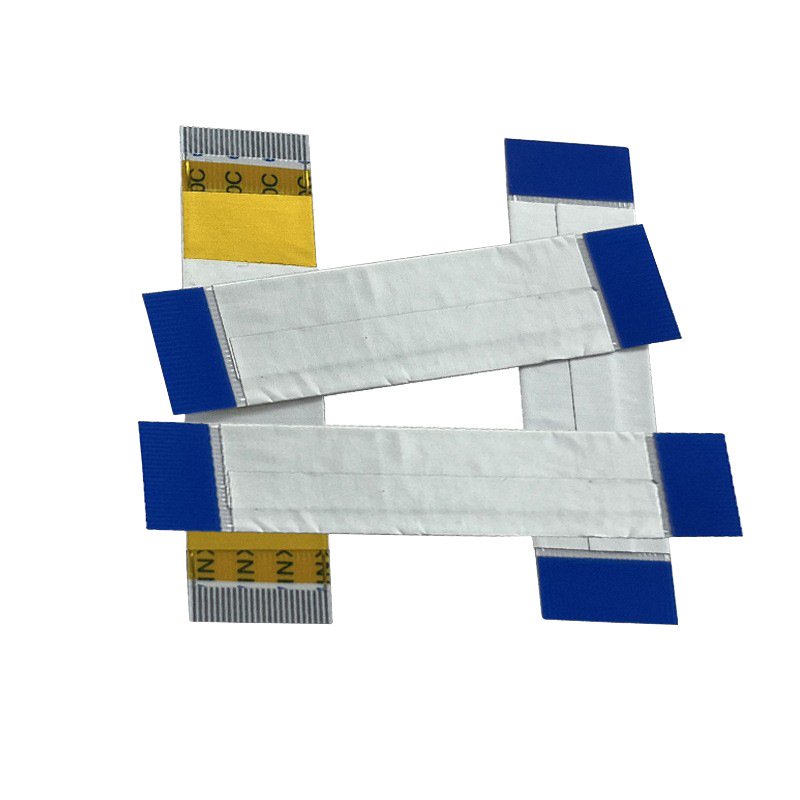
Ordering bulk flexible flat cable without a strong sample policy exposes you to risks like poor fit, signal loss, or device failures. You need a process that qualifies each ffc cable for your design. A sample policy lets you check fit, flex, and process validation before you commit. When you work with YLS, you can request custom flexible flat cable samples and experience rapid sample turnaround. This approach ensures high-performance connections and high-speed data transmission in your design.
A sample policy for ffc helps you:
Confirm that each flexible flat cable matches your design and connectivity needs.
Check that the cable meets safety and high-speed data transmission standards.
Reduce qualification risk by validating samples before scaling up.
With YLS, you can trust a reliable sample policy and rapid sample turnaround to support your design.
Key Takeaways
A strong sample policy for FFC cables reduces risks like poor fit and signal loss. Always test samples before bulk orders.
Request custom FFC cable samples to ensure compatibility with your device. This step helps confirm performance and safety standards.
Document your sample evaluation process. Keeping records of specifications and test results supports quality control and future orders.
Evaluate supplier reliability to avoid delays and ensure consistent quality. Trustworthy suppliers provide rapid sample turnaround and support.
Continuously improve your sample policy by testing new cables and adapting to changing needs. Stay ahead of industry trends for optimal performance.
Why Sample Policy Matters for FFC Cables
Reducing Bulk Order Risks
You face many risks when you order bulk FFC cables without a sample policy. You may receive cables that do not fit your device or fail to meet performance standards. You can avoid these problems by requesting FFC samples before placing large orders. You test the cable for fit, flex, and process validation. You check if the cable matches your design and if it supports reliable transmission. You also confirm certification for safety and quality. YLS helps you reduce qualification risk by offering rapid sample turnaround and custom FFC solutions. You set internal sampling procedures that protect your investment and prevent costly mistakes.
Ensuring Cable Compatibility
You must ensure that each FFC cable works with your device and meets your requirements. You use samples to check compatibility with connectors, signal transmission, and mechanical properties. You verify that the cable supports high-speed performance and meets certification standards. You test the cable in real-world conditions to see if it handles flexing and folding. YLS provides flexible flat cable samples with customizable pitch and conductor options. You can request samples that match your exact specifications. You confirm that the cable delivers stable performance and reliable transmission in your application.
Saving Time and Costs
You save time and money by qualifying FFC cables with a sample policy. You avoid delays caused by rework or returns. You prevent tool-up costs for cables that do not meet certification or performance needs. You use samples to validate transmission and durability before committing to bulk orders. You streamline your procurement process and improve efficiency. YLS supports you with fast sample delivery and expert guidance. You make informed decisions and optimize performance in your project.
Tip: Always document your sample evaluation process and keep records of certification and performance results. This practice helps you track improvements and ensures consistent transmission quality.
Understanding Flexible Flat Cable Samples
What Is a Flexible Flat Cable Sample
You use a flexible flat cable sample to check fit, flex, and process validation before you place a bulk order. This sample lets you test how the cable connects with your device and ensures it meets your requirements for tailored connectivity. Manufacturers offer different types of samples to match industry needs. You can see the most common types in the table below:
Product Type | Unique Strengths | Applications |
|---|---|---|
Flexible circuit board materials | Handles heat, keeps shape, less signal loss | Phones, appliances |
LCP flexible circuit board materials | Less signal loss, works at high frequency, resists water | Phones, network gear, tablets |
Low transmission loss flexible multi-layer circuit board materials | Thinner than coaxial cable, easy to handle | Antenna modules for mobile products |
Flexible circuit board materials resin coated copper foil | Can be thin and layered, no halogen | Phones, HDI boards |
You request samples to check if the cable fits your connector and device. You also use samples to test signal transmission and durability. This process helps you reduce qualification risk and avoid costly mistakes.
Key Specifications to Check
You need to check several key specifications when you evaluate flexible flat cable samples. These specifications help you confirm that the cable supports reliable connectivity and meets your project needs. Here is a list of important specifications:
Pitch Size: Distance between conductors, must match the mating connector.
Conductor Count: Number of individual wires, verify against PCB layout.
Conductor Width and Spacing: Affects current capacity and crosstalk.
Insulation Material: Options like PET for flexibility or polyimide for temperature resistance.
Bend Radius: Minimum safe bending radius for dynamic applications.
Flex Life: Number of flex cycles before failure, varies by construction.
Termination Type: ZIF, LIF, or solder contacts.
Shielding: Important for high-speed or noisy environments.
Length Tolerance: Confirm actual length due to factory tolerances.
Tip: Always document your sample evaluation results. This practice helps you track improvements and ensures consistent tailored connectivity.
YLS Sample Customization Options
YLS gives you many customization options for flexible flat cable samples. You can select features that match your device and application. The table below shows the available options:
Customization Feature | Details |
|---|---|
Pitch Sizes | 0.5mm, 1.0mm, 1.25mm |
Design Options | Shielded, Foldable |
Sample Availability | 48h Sample Ready |
Additional Features | Folding, Shielding, Notching, Punching, etc. |
Optional Add-ons | Custom labels, Hole punching, Special packing |
Technical Support | Connector sourcing support |
You benefit from rapid sample turnaround, which means you receive samples within 48 hours. This speed lets you test and validate your design quickly. YLS supports industry applications like automotive, medical devices, and consumer electronics. You can request samples with custom pitch, shielding, or folding features to ensure the cable meets your connectivity needs.
Note: Rapid sample turnaround helps you make faster decisions and reduces time-to-market for your products.
Sample Policy Process for Custom FFC Solutions
Requesting FFC Cable Samples
You start your journey toward reliable custom ffc solutions by requesting FFC cable samples from YLS. You select the exact specifications you need, such as pitch size, conductor count, and whether you require a 29pin ffc cable or another configuration. You can ask for custom features like folding, shielding, or special labeling. YLS provides a simple online request form, or you can contact their technical team directly for guidance. You should always specify your application, such as automotive, medical, or consumer electronics, so the sample matches your requirements.
You need to clarify your expectations for on-time delivery and delivery reliability at this stage. You should ask about sample lead time, packaging, and any minimum order quantity for your custom ffc solutions. YLS typically prepares samples within 48 hours, which helps you move quickly through your validation process. You can request multiple versions, such as a 29pin ffc cable with different lengths or shielding options, to compare fit and flex in your device.
Tip: Always keep a record of your sample requests and communication with the supplier. This practice helps you maintain control over your project timeline and ensures on-time delivery.
Evaluating Quality and Compliance
Once you receive your FFC cable samples, you begin the evaluation process. You check each custom ffc solutions sample for fit, flex, and process validation. You insert the 29pin ffc cable into your device and test for secure connection and signal integrity. You also bend and flex the cable to see if it withstands repeated movement without damage.
You follow a structured approach to quality assurance. Here is a checklist you can use:
Confirm UL 20960 is stated in the specifications for your custom ffc solutions.
Validate the UL File Number using the official UL database.
Request a full technical drawing with all tolerances for your 29pin ffc cable.
Test the sample for insertion force and electrical conductivity.
Clarify minimum order quantity and unit price breakpoints for your custom ffc solutions.
Document the lead time, including both production and shipping for on-time delivery.
Specify packaging requirements, such as anti-static bags or reel type, for safe delivery.
Agree on the process for replacing any defective samples.
Check for RoHS, REACH, and conflict minerals compliance for your cable.
Retain a signed proforma invoice or contract with all agreed terms for control.
YLS uses strict compliance practices to ensure every custom ffc solutions sample meets industry standards. The table below shows how YLS manages quality and control at every stage:
Compliance Area | Key Practices |
|---|---|
Raw Material Storage | Standardized zoning and labeling; controllable temperature, humidity, and ventilation; safe storage of incoming raw materials. |
Core Production Lines | Proper equipment calibration; employee compliance with hygiene protocols; real-time control of production parameters. |
Quality Inspection | Accurate testing equipment; standardized sampling procedures; traceability of non-conforming products; recognized quality management system. |
Warehousing & Logistics | Compliant finished product storage conditions; traceable shipping batches; full-process control. |
You should document your findings and share feedback with YLS. This step helps you maintain control over the process and supports on-time delivery for your project.
Approving Samples for Bulk Orders
After you complete your evaluation, you decide if the FFC cable samples meet your needs for custom ffc solutions. You use clear criteria to approve samples for bulk orders. The table below outlines the main steps:
Criteria | Description |
|---|---|
Sourcing | Verify UL 20960 certification, audit suppliers to avoid counterfeit cables. |
Receiving | Inspect quantity, quality, and packaging for physical damage and specs. |
Testing & Validation | Verify the sample in your device, with assistance for adjustments as needed. |
You approve the 29pin ffc cable for volume production only if it passes all tests for fit, flex, and quality. You confirm that YLS can meet your requirements for on-time delivery and delivery reliability. You finalize your order by signing a contract that includes all technical details, delivery schedules, and quality control agreements.
Note: You should always keep records of your approval process. This practice helps you track delivery performance and maintain control over future orders.
You now have a robust sample policy for custom ffc solutions. You reduce qualification risk, avoid costly mistakes, and ensure your 29pin ffc cable meets all your technical and quality requirements. YLS supports you with fast delivery, strong quality control, and flexible custom options for every project.
Sample Evaluation Criteria for FFC Cables
Technical Specifications
You need to check several technical details when you evaluate an FFC sample. The most important factor is pitch. Pitch determines how the cable fits with connectors and devices. You must confirm pitch accuracy to avoid signal loss or connection issues. The table below shows key specification points you should review:
Specification | Description |
|---|---|
Width and Pitch | Ensure the cable fits in the designated space and connectors. Common sizes include 0.5 mm, 1.0 mm, and 1.25 mm. |
Conductor Count | Determine the number of conductors needed for your application, especially for complex circuits. |
Shielding | Choose shielded cables for applications sensitive to electromagnetic interference (EMI). |
Length | Consider the distance the signal must travel; shorter cables are generally more efficient. |
Environment | Select cables with appropriate coatings for extreme temperatures or harsh conditions. |
You should request FFC samples with the exact pitch and conductor count for your device. This step helps you validate fit, flex, and process before you commit to bulk orders. You reduce qualification risk and avoid tool-up costs.
Physical Quality and Durability
You must inspect the physical quality of each cable sample. Look for strong quality control in the manufacturing process. Check the cable for uniform pitch, smooth surface, and secure terminations. Test the cable for reliable performance by bending and flexing it several times. You want to see if the cable maintains quality after repeated movement. High-quality cables show no cracks or signal loss. You should document your findings and share feedback with your supplier. This practice helps you maintain strong quality control and ensures reliable performance in your application.
Tip: Always keep records of your sample evaluations. Tracking results helps you improve future orders and maintain quality.
Compliance and Documentation
You need to verify compliance certifications for every FFC cable sample. Ask your supplier for certification documentation, such as UL, RoHS, or REACH. Review the documents to confirm the cable meets safety and environmental standards. You should check if the cable matches your industry requirements. Reliable suppliers provide clear certification documentation and support your quality assurance process. This step protects your project and ensures you receive high-quality cables.
Note: Compliance certifications and strong quality control help you avoid costly mistakes and support reliable performance in every project.
Avoiding Common Pitfalls in FFC Sample Qualification
Overlooking Key Cable Specs
You must pay close attention to cable specifications when you qualify FFC samples. If you overlook key specs, you risk poor signal integrity and increased electromagnetic interference. These issues can cause reduced durability and reliability in your bulk FFC orders. You need to check pitch, conductor count, shielding, and termination type. Always request FFC samples that match your device requirements. Test each sample for fit, flex, and process validation. This step helps you set internal sampling procedures and reduces qualification risk before you commit to volume purchases or tool-up costs.
Note: Missing critical specs can compromise the effectiveness of your FFC cables and lead to costly mistakes.
Ignoring Supplier Reliability
You should always evaluate the reliability of your supplier. A reliable supplier provides consistent quality and supports your project with technical expertise. If you ignore supplier reliability, you may face delays, inconsistent product quality, or even counterfeit cables. Check the supplier’s track record, certifications, and communication. Ask for documentation and sample reports. Reliable suppliers like YLS offer rapid sample turnaround and clear quality control processes. You gain confidence in your bulk orders when you trust your supplier.
Supplier Evaluation Checklist | Why It Matters |
|---|---|
Certifications | Ensures compliance and quality |
Sample Reports | Confirms product consistency |
Communication | Supports project timelines |
Track Record | Reduces risk of delays |
Rushing Evaluation Steps
You need to take your time during the sample evaluation process. Rushing through fit, flex, and process validation can lead to missed defects and qualification risks. Test each FFC sample thoroughly for quality and performance. Document your findings and share feedback with your supplier. Careful evaluation helps you maintain high quality standards and ensures your cables meet all requirements. You protect your investment and avoid costly rework or returns.
Tip: Set clear qualification criteria and follow a structured evaluation process for every FFC sample.
Best Practices for YLS Flexible Flat Cable Sample Policy
Setting Clear Qualification Criteria
You need to set clear qualification criteria before you approve any ffc cable sample. This step helps you avoid mistakes and ensures the cable fits your device and application. Use the following table to guide your selection process:
Selection Factor | Key Questions to Ask | Common Mistakes to Avoid | Recommended Verification Method |
|---|---|---|---|
Application Environment | What temperature, vibration, or chemical exposure will the cable face? | Using consumer-grade cables in industrial settings | Review device environmental specs and industry standards |
Length & Pitch | Does the pitch match the connector? Is the length within tolerance? | Assuming standard sizes fit all devices | Measure existing cable or consult engineering drawings |
Customization Needs | Are labels, special routing, or unique terminations required? | Overlooking identification needs in complex assemblies | Review BOM and assembly instructions |
Connector Type | Is it ZIF, LIF, or CIF? Top or bottom contact? | Installing a top-contact cable into a bottom-contact connector | Visual inspection of existing connector or datasheet |
Durability | Will the cable undergo repeated flexing or harsh conditions? | Choosing low-flex cables for dynamic applications | Check flex cycle ratings and material specs |
You should request ffc samples that match your device requirements. Test each sample for fit, flex, and process validation. This practice reduces qualification risk and prevents costly errors.
Maintaining Records and Feedback
You must keep detailed records of your sample evaluations. Document every step, from sample request to final approval. Record the specifications, test results, and feedback for each cable. This habit helps you track improvements and identify trends in quality. Share your feedback with YLS so they can adjust future samples to meet your needs. Use a simple spreadsheet or database to organize your records. Consistent documentation supports internal sampling procedures and helps you make informed decisions.
Tip: Keeping clear records makes it easier to review past projects and ensures you maintain high standards for every order.
Continuous Improvement
You should always look for ways to improve your sample policy. Follow these strategies to optimize your process:
Check the operating environment for each cable.
Choose cables designed for durability.
Plan for space constraints in your device.
Add shielding to prevent interference.
Design for easy maintenance and replacement.
Select cables that allow for upgrades.
Test samples in real-world conditions.
Work with trusted suppliers like YLS.
Respect the recommended bending radius.
Use quality materials for longer life.
You can request new samples as your needs change. Test them for fit, flex, and process validation. This approach helps you stay ahead of industry trends and ensures your cables always meet your requirements.
You gain confidence in your FFC cable orders when you follow a strong sample policy. Requesting and testing samples for fit, flex, and process validation helps you set internal procedures that reduce qualification risk. YLS offers rapid sample turnaround and customization, as shown below:
Details | |
|---|---|
Pitch Sizes | 0.5mm, 1.0mm, 1.25mm |
Shielding | Yes |
Folding | Yes |
Sample Turnaround | 48 hours |
You improve project success rates by reviewing procurement processes before contacting YLS for sample requests.
Partnering with procurement experts reveals existing channels and resources.
Structured evaluations enhance decision-making.
Using pre-existing procurement processes lets teams focus on specific challenges.
You can contact YLS to request samples and optimize your procurement strategy for future bulk orders.
FAQ
How do you request a flexible flat cable (FFC) sample from YLS?
You can request an FFC sample by contacting YLS through their website or email. Provide your required pitch, conductor count, and any custom features. YLS prepares most samples within 48 hours for rapid evaluation.
What should you check when testing an FFC sample for fit and flex?
Test the sample in your device. Check connector fit, cable length, and flexibility. Bend the cable several times to see if it maintains performance. Record your results for future reference.
Why is process validation important before bulk FFC orders?
Process validation helps you confirm that the cable meets your technical and quality standards. You avoid costly mistakes by testing samples for signal integrity, durability, and compliance before committing to large orders.
How can you set effective internal sampling procedures?
Create a checklist for each sample.
Document specifications, test results, and feedback.
Use these records to guide future orders and reduce qualification risk.
