
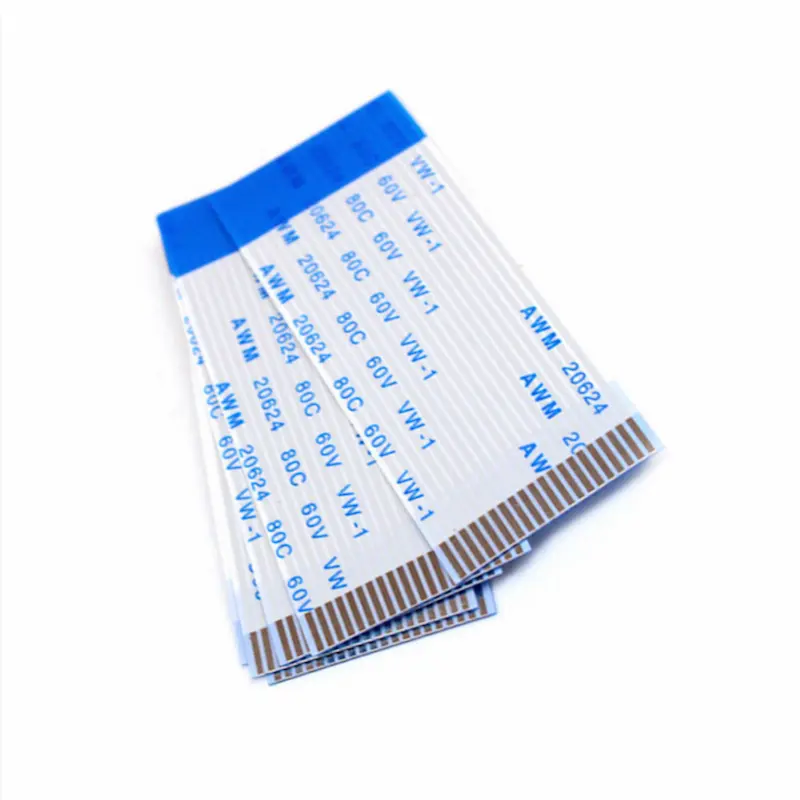
You need to choose the right ul style for your ffc by matching each flat flexible cable to your specific application. Ul standards help you confirm the safety, suitability, and quality of every ribbon cable and signal connection. Each ul certification verifies the flat cable’s performance, making sure it meets strict wire and cable requirements. YLS provides a wide range of ul-approved flat cable options to fit different industry needs. Use this guide to make informed decisions about certification, not just rely on supplier advice.
Key Takeaways
Always check the UL style number on FFC cables to ensure they meet your application needs and safety standards.
Select cables based on their voltage and temperature ratings to match your device’s requirements for optimal performance.
Look for UL-approved cables with high flame resistance and reliable insulation to protect your device and data.
Consider environmental factors like moisture and electrical noise when choosing FFC cables for specific applications.
Regularly inspect and maintain your FFC cables to ensure they remain compliant and safe for use.
What Are UL Styles for FFC?
Understanding UL Style Numbers
You see UL style numbers on every ribbon cable and flat cable. These numbers help you identify the exact standards and approval for each wire and cable. UL assigns a unique number to each cable type based on material, construction, and performance. When you select an FFC, you need to check the UL style number to match your application needs.
UL style numbers show you important data about the cable. For example, some FFC cables use polyester (PET) for insulation. PET gives good flexibility and keeps costs low. Other cables use polyimide (PI) or PEEK for higher temperature resistance and chemical stability. You can compare FFC and FPC cables using the table below:
Feature | FFC | FPC |
|---|---|---|
Construction | Flat cable with parallel traces | Flexible printed circuit board |
Material | PET (Polyester) | Polyimide (PI) |
Customization | High | High |
Trace Complexity | Parallel only | Any pattern, multi-layer |
Dynamic Bending | Limited | Excellent |
Cost | Low | Higher |
Typical Use | Simple interconnects | Structural + interconnect |
You should always check the UL style number to confirm the cable’s material and construction. This helps you choose the right ribbon cable for your device.
Why UL Styles Matter for Flat Flexible Cable
UL styles matter because they set standards for safety, approval, and performance. When you use a UL-approved ribbon cable, you know it meets strict wire and cable requirements. UL standards cover fire safety, signal performance, and material traceability.
Fire safety: UL tests materials to prevent flame spread and toxic gas emissions.
Signal performance: UL ensures proper conductor size, insulation thickness, and shielding for minimal signal loss.
Material traceability: UL tracks every component for compliance.
You protect your device and data when you choose a UL-approved FFC. UL styles give you confidence in the cable’s quality and reliability. You also meet industry standards and avoid compliance issues. Always look for UL style numbers on ribbon cable packaging and documentation.
Key Specs for the Right UL Style
Voltage and Temperature Ratings
You must check the voltage and temperature ratings before you select a flat cable. UL assigns each ribbon cable a maximum voltage rating. This rating tells you how much electrical power the wire and cable can safely carry. Most FFC cables support voltages from 30V up to 300V, depending on the insulation and conductor size. You also need to look at the temperature range. Standard FFC cables work well between -10°C and +80°C. If your application needs higher heat resistance, you can choose a ribbon cable with polyimide insulation. These cables can handle temperatures up to 105°C. Always match the ul style to your device’s requirements for both voltage and temperature.
Flammability and Insulation
Flammability is a key factor for safety and approval. UL tests every ribbon cable for flame resistance. FFC cables must meet strict standards like UL 2896, which checks how the insulation reacts to fire. You should look for cables with VW-1 or FT1 flame ratings. These ratings show that the flat cable passed tough ul tests for fire safety. Good insulation also protects the signal and keeps the wire and cable reliable. When you choose a cable with proper insulation, you reduce the risk of short circuits and data loss.
FFC cables with UL 2896 approval offer:
High flame resistance
Reliable insulation for signal protection
Better compliance with industry standards
Environmental and Mechanical Needs
You must consider the environment where you will use the ribbon cable. Some applications need extra protection from heat, moisture, or electrical noise. The table below shows important environmental factors for ul style selection:
Environmental Factor | Description |
|---|---|
Temperature Range | Standard FFCs operate between -10°C to +80°C; high-temperature variants can go up to 105°C with polyimide insulation. |
EMI/RFI Shielding | Shielded FFCs with aluminum or copper foil layers are recommended for electrically noisy environments. |
Moisture & Chemical Resistance | Cables with protective overjackets or conformal coatings are suitable for outdoor or industrial use. |
Flame Rating | Consider cables with VW-1 or FT1 flame ratings for higher safety, as per UL 20960 testing. |
You should always check the ul approval and compliance for your wire and cable. This ensures your ribbon cable will perform well and protect your signal in any environment.
Matching UL Style to Application
Defining Your Application
You need to start by understanding your application before you select the right ul style for your flat flexible cable. Each industry has unique requirements for ribbon cable design, performance, and safety. You see flat flexible cable used in many fields:
Consumer electronics, such as smartphones, tablets, and home appliances
Automotive systems, including infotainment and powertrain control
Aerospace, for in-flight entertainment and navigation
Medical equipment, where flexible connections are critical
You must define the environment, electrical load, and mechanical stress your application will face. For example, automotive applications often need vibration resistance and high durability. Medical devices require high protection ratings and reliable signal transmission. When you know your application requirements, you can match them to the right ul style for your ffc.
A table can help you see how industry needs affect ul style selection:
Feature | Relevance to Industry |
|---|---|
Vibration Resistance | Automotive |
High Protection Rating (IP67) | Medical Devices |
High Mechanical Stress Tolerance | Industrial Applications |
You should always consider these factors when you choose a ribbon cable for your project.
Choosing FFC Cable with UL 20960 Approval
You want to ensure your flat flexible cable meets the highest standards for safety and performance. Many engineers choose ffc cable with ul 20960 approval because it offers reliable insulation, flame resistance, and strong signal protection. This ul style fits a wide range of applications, from automotive displays to medical monitoring devices.
You can follow these practical steps to match your application specs to the right ul style:
Step | Description |
|---|---|
1 | Match the ffc to compatible connectors (like ZIF or LIF) with the correct pin count and spacing. |
2 | Make sure the ffc matches the connector in pitch, thickness, and termination style for secure signal transfer. |
3 | Choose ffc with reinforced edges or double-layer insulation for applications with constant flexing. |
You should always check the ul style number and approval on the ribbon cable packaging. This confirms the cable meets the standards for your application. When you use ffc cable with ul 20960 approval, you get better compliance and suitability for demanding environments.
YLS Flexible Flat Cable Customization
You may need a unique solution for your application. YLS offers flexible flat cable customization to help you meet specific requirements. You can adjust conductor pitch, spacing, shielding, and dielectric materials to optimize your ribbon cable for data transmission and durability.
A table shows how YLS customization supports your needs:
Customization Aspect | Description |
|---|---|
Conductor Pitch | Tailored to fit device requirements and improve data transmission |
Spacing | Adjustable for unique application needs and better performance |
Shielding | Options to protect against interference and maintain signal quality |
Dielectric Materials | Selection for improved durability and performance |
You can request folded ribbon cables for automotive or drone use, custom lengths and pitches for battery management, or high-density designs for medical devices. YLS also provides vibration-resistant cables for automotive displays. This flexibility ensures you always get the right ul style for your flat flexible cable, no matter how complex your application.
Tip: Work closely with your supplier to share your application requirements. This helps you get the best ribbon cable design and ul certification for your project.
You can trust YLS to deliver flat flexible cable solutions that match your standards for safety, approval, and performance.
Reading UL Markings on FFC
Decoding UL Labels
You need to know how to read the UL markings on your ffc. These labels give you important information about the ribbon cable and help you confirm its approval and safety. When you look at a flat cable, you should find the UL Trademark. You will also see the word “LISTED” in capital letters. Some ribbon cable labels include a control or issue number. This number helps you track the wire and cable back to the manufacturer. You may also see product details, such as the UL style number, which links the ribbon cable to specific standards for approval.
Tip: Always check for clear and complete UL markings before you use any ffc in your project. This step protects your data and ensures your device meets safety requirements.
Verifying Compliance
You want to make sure your ffc meets all UL standards for compliance and approval. You can follow these steps to verify the authenticity of the UL marking on your ribbon cable:
Look for the UL Listed Mark on the ribbon cable. This mark shows that the wire and cable passed strict safety tests.
Check for the UL Trademark, the word “LISTED,” and a control or issue number. These details confirm the ribbon cable’s approval.
Use the Product IQ database from UL. Enter the file number (such as E106436) or search for the manufacturer’s name. This tool lets you confirm that the flat cable has real UL certification.
Review the certification marks online. These marks are trusted indicators of compliance and approval for wire and cable.
You should always verify UL markings before you install any ffc. This process helps you avoid non-compliant products and keeps your signal safe. When you follow these steps, you support the safety and reliability of your wire and cable system.
Comparing Suppliers for FFC Cables
Evaluating Documentation and Support
You need to check supplier documentation before you select any flat flexible cable. Reliable suppliers provide clear paperwork that proves UL approval and compliance. You should ask for UL certification, ISO certification, and ROHS compliance. These documents show that the ribbon cable meets safety and quality standards. You also need material safety data sheets and product test reports. These papers help you understand the properties of the wire and cable and confirm signal performance.
Documentation Type | Description |
|---|---|
UL Certification | Verification of compliance with safety standards for FFC cables. |
ISO Certification | Assurance of quality management standards. |
ROHS Compliance | Confirmation that products meet restrictions on hazardous substances. |
REACH Compliance | Documentation ensuring compliance with chemical safety regulations. |
Material Safety Data Sheets (MSDS) | Information on the properties and handling of materials used in the cables. |
Product Test Reports | Results from testing the cables to ensure they meet specified standards. |
Commodity Inspection Certificates | Verification of the quality and compliance of the products before shipment. |
Marine Transportation Reports | Documentation related to the safe transport of the cables. |
You must also look at supplier support. Good support helps you solve problems and get answers quickly. Reliable manufacturers offer after-sales service and technical help. You can check their reliability, certifications, and support availability.
Aspect | Importance |
|---|---|
Manufacturer Reliability | Critical for ensuring quality and consistency |
Certifications | Necessary for compliance with UL standards |
Support Availability | Essential for after-sales service and assistance |
Tip: Always review documentation and support before you choose a ribbon cable supplier. This step protects your data and ensures approval for your project.
Why Choose YLS for Flat Flexible Cable
You want a supplier that delivers quality, customization, and compliance. YLS stands out as a trusted manufacturer for flat flexible cable. YLS uses advanced testing and quality assurance processes. You get ribbon cable that meets UL 94 and IEC 60332 standards. YLS performs electrical testing and flex cycle testing to ensure approval and safety.
Quality Indicator | Description |
|---|---|
Testing & Quality Assurance Processes | In-process and final product testing ensures compliance with electrical, mechanical, and environmental specifications. |
Material Selection | Use of premium-grade materials like oxygen-free copper and polyimide insulation ensures optimal performance and durability. |
Precision Engineering | High-quality FFCs are manufactured with exacting tolerances to prevent fitment issues and signal interference. |
Prototyping Support | Fast-turn prototyping enables quicker design validation and product development cycles. |
Tooling Costs | Some manufacturers offer free or low-cost tooling for initial runs, reducing upfront investment. |
Minimum Order Quantity (MOQ) | Flexible MOQs benefit startups and low-volume producers. |
Global Reach | Manufacturers with international facilities can support regional compliance and logistics needs. |
Sustainability Practices | Eco-conscious suppliers implement recyclable packaging and energy-efficient processes. |
YLS offers flexible customization for flat cable. You can request different conductor pitches, shielding, and lengths. YLS supports fast prototyping and low minimum order quantities. You get ribbon cable that fits your exact needs and meets UL approval. YLS also provides global support and sustainable practices. You can trust YLS to deliver wire and cable solutions that protect your signal and meet compliance requirements.
Ensuring Safety and Compliance
Ongoing Maintenance Tips
You need to keep your ffc in good condition to maintain approval and meet every safety standard for flat flexible cables. Regular inspection helps you spot early signs of wear or damage. Check the ribbon cable for cracks, discoloration, or exposed conductors. Clean the connectors and contact points to prevent dust buildup, which can affect signal quality. Use a soft brush or compressed air for cleaning. Test the wire and cable for continuity and resistance. This step ensures the ribbon cable still meets ul standards and provides reliable data transmission.
You should record maintenance dates and findings in a log. This practice helps you track the performance of each flat cable and supports compliance with industry standards. Replace any ffc that shows signs of failure or does not pass electrical tests. Always use cables with proper ul certification and approval for replacements. You protect your device and maintain safety by following these steps.
Tip: Schedule maintenance checks every six months for critical applications. This routine keeps your wire and cable system safe and reliable.
Common Pitfalls to Avoid
You can avoid many problems by staying alert during selection and installation. Some mistakes happen often when choosing ul styles for ffc cables:
Accepting generic “compliant” claims without certified documentation can lead to approval issues.
Assuming all 0.5mm pitch ribbon cable options work across brands may cause fitment problems.
Overlooking connector actuator type, such as flip-lock versus slide-lock, affects retention force and safety.
Failing to inspect solder joints on pre-terminated ends can result in cold joints or misalignment, risking signal loss.
Not validating flex cycle life for dynamic applications may cause early wire and cable failure.
You should always demand clear ul certification and documentation. Match the ribbon cable to your device’s connector and check every detail. Inspect the wire and cable before installation. Confirm the flex cycle rating for applications with frequent movement. These steps help you meet every safety standard for flat flexible cables and ensure compliance.
You can secure the integrity and suitability of your flat flexible cable by following these steps:
Define pitch, pin count, and bend radius for your application.
Check for a valid ul file number and confirm flame resistance and approval.
Match conductor material and end treatment to your connector.
Test the multi-wire flat cable for signal integrity and data continuity.
Review packaging and negotiate terms for wire and cable orders.
Use this checklist for suitability and approval:
Confirm distinct thermal and voltage ratings.
Verify flame resistance and insulation.
Ensure signal integrity and compatibility.
Why Choose YLS? | Description |
|---|---|
Practical flat cable designs for signal integrity. | |
Flexible Production | Low MOQ and fast pilot runs for any ribbon cable need. |
Products meet global standards and certification. | |
Reliable Communication | Direct support for wire and cable projects. |
You can trust YLS to deliver flat flexible cable solutions that protect your signal, ensure compliance, and maintain the integrity of your wire and cable system.
FAQ
What is the difference between FFC and ribbon cable?
You use an FFC for flexible, flat connections in tight spaces. Ribbon cable usually refers to a group of wires running parallel, but it may not always be as thin or flexible as an FFC. Both connect electronic components efficiently.
How do you verify UL approval for a cable?
You should always ask for verifiable certification documents from your supplier. Check the UL style number on the cable and confirm it in the UL Product IQ database. This step ensures you use a safe and compliant product.
Why is UL certification important for automation systems?
You need UL certification in automation to guarantee safety and reliability. Certified cables reduce the risk of electrical faults and downtime. You also meet industry standards, which helps you avoid costly compliance issues.
How often should you inspect your FFC?
You should inspect your FFC every six months. Look for signs of wear, discoloration, or damage. Regular checks help you maintain performance and prevent unexpected failures in your device.
Can you customize a ribbon cable for unique applications?
You can request custom designs for your ribbon cable. Manufacturers like YLS offer options for pitch, length, shielding, and conductor count. Customization ensures your cable fits your device and meets all technical requirements.
