
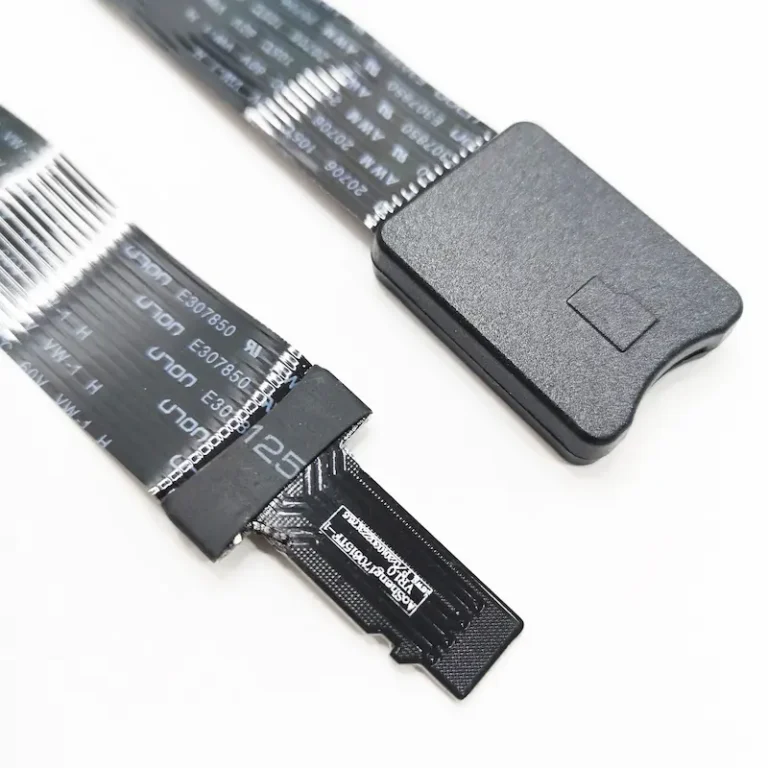
You encounter about lvds cables in many modern devices. LVDS cables use differential signaling to send data with high speed and strong noise immunity. This technology supports reliable performance in electronics like displays, cars, and smart devices.
The global LVDS cable market could reach $8.29 billion by 2033, with a projected 14.32% CAGR from 2025.
Emerging display technologies show an 8% CAGR from 2026 to 2033, driven by new data and bandwidth needs.
YLS cables stands out as a trusted provider of display cables that support lvds standards for demanding applications.
Key Takeaways
LVDS cables use differential signaling for high-speed data transfer and strong noise immunity, making them ideal for modern electronics.
YLS display cables support LVDS standards, offering customizable options for various applications, ensuring reliable performance.
Understanding LVDS standards like TIA/EIA-644 and IEEE 1596.3 is crucial for ensuring compatibility and efficiency in device connections.
Choose the right type of LVDS cable based on your environment; twisted pair cables suit high-noise areas, while FFCs are great for tight spaces.
Always verify that your LVDS cables meet safety and compliance standards to ensure reliable and safe operation in your devices.
About LVDS Cables and YLS Display Cable
What Is LVDS?
You often see about lvds cables in devices that need fast and reliable data transmission. LVDS stands for Low Voltage Differential Signaling. This technology uses two wires to send signals in opposite directions. You get strong noise immunity and high-speed data transfer. LVDS works well in environments with lots of electrical noise, such as factories or cars. You find LVDS in LCD TVs, touch monitors, and notebook computers. These cables transmit video data from graphics processors to screens. LVDS also appears in HDMI cables for file transfer and video interfacing devices. You benefit from low power consumption, low bit error rates, and low crosstalk. LVDS supports higher data rates and longer cable lengths than older technologies.
Key Features of LVDS Cables
LVDS cables offer several important features that make them ideal for modern electronics. You get high signal integrity, which means less jitter and fewer errors. The cables minimize common mode noise and radiation. You see low power requirements, making them perfect for portable systems. LVDS cables can reach up to 10 meters without losing signal quality. You notice strong noise resistance because of differential signaling. These cables support data rates up to 3.125 Gbps per lane. You find them in applications that need stable and fast data transmission, such as industrial control panels and medical displays.
Here is a table showing the core technical specifications of LVDS cables:
Specification | Details |
|---|---|
Voltage Range | 1.8V to 3.3V |
Data Rates | Up to 3.125 Gbps per lane |
Noise Immunity | Strong noise resistance due to differential signaling |
Power Consumption | Low power requirements, suitable for portable systems |
Maximum Distance | Up to 10 meters without significant signal degradation |
LVDS cables provide better electromagnetic compatibility. You see reduced power supply noise, which lowers costs. The differential signaling increases voltage compliance and improves signal-to-noise ratio. LVDS adapts well to low-voltage applications, including compact embedded systems.
YLS Display Cable Overview
YLS specializes in display cables that support LVDS technology. You get ultra-thin, flexible cables designed for high-performance screens. YLS display cables simplify design and speed up assembly. You can customize pitch, pin count, and length to fit your device. These cables work in smartphones, smart locks, industrial panels, and more. YLS display cables feature grounding reinforcement and shielding layers for stable connections. You benefit from secure ZIF connections with stiffeners. The cables handle high-speed data transmission and maintain signal integrity in demanding environments.
Here is a table highlighting unique features of YLS display cables for LVDS applications:
Feature | Description |
|---|---|
Pitch | 0.5–1.0mm |
Pins | 20–50 pins |
Controlled Impedance | ±5% |
Grounding Reinforcement | Yes (with shielding layer) |
Stiffener | For secure ZIF connection |
Data Transmission | Engineered for stable, high-speed transmission |
Applications | Industrial control panels, medical displays, in-car infotainment systems |
You see YLS cables used in automotive systems, medical devices, and consumer electronics. The cables support advanced features in vehicles, such as infotainment and driver assistance systems. YLS uses innovations in shielding and insulation to reduce electromagnetic interference. You get reliable performance and compliance with every standard required for modern display technology.
LVDS Standards and Specifications
TIA/EIA-644 and IEEE 1596.3
You need to know about lvds cables and the standards that guide their design. Two main standards shape the way you use low voltage differential signaling in electronics: TIA/EIA-644 and IEEE 1596.3. These standards set the rules for how signals travel, how much voltage you use, and how devices connect.
Here is a table that shows the history and adoption of these standards:
Standard | Development Details | Adoption Context |
|---|---|---|
IEEE 1596.3 | Scoped for the Scalable Coherent Interface (SCI) and later generalized for telecom | Widely adopted for connecting flat panel displays in laptops |
TIA/EIA-644 | Generalized from IEEE 1596.3 for broader telecom applications | Became the de facto standard for LVDS connections |
IEEE 1596.3 started with the Scalable Coherent Interface, which helped computers share data quickly. Later, engineers used this standard for telecom and display technology. TIA/EIA-644 built on this work and became the main standard for LVDS connections in many industries. You see these standards in laptops, monitors, and industrial equipment.
Electrical Parameters and Construction
You must pay attention to the electrical parameters when you select or design lvds cables. These parameters make sure your data moves fast and stays accurate. LVDS works with a differential output voltage between 250 mV and 450 mV across a 100 Ω termination load. The common-mode voltage usually sits around 1.2 V. The driver current is about 3.5 mA, which helps keep the signal strong and clear.
Here is a table that summarizes the typical electrical parameters for LVDS cables:
Parameter | Typical Value | Notes |
|---|---|---|
Differential load | 100 Ω | Across receiver inputs |
Driver current | ≈ 3.5 mA | Constant-current source |
Differential swing | ≈ 350 mVpp | Across the 100-Ω termination |
Common-mode voltage | ≈ 1.2 V | Receiver typically tolerant around this range |
You see that these values help LVDS achieve high data rates and strong noise immunity. The cable construction also matters. You find twisted pair wires inside most LVDS cables. This design reduces electromagnetic interference and keeps your signals clean. YLS display cables use controlled impedance and low signal skew to match these requirements. You get reliable data transfer and fewer errors in your devices.
Connector and Compliance Standards
You need the right connectors to make sure your LVDS cables work with your devices. The most common connector types for LVDS display cables are JST and Molex. These connectors offer secure fits and support different pitch sizes, making them suitable for many applications.
Connector Type | Key Features | Applications |
|---|---|---|
JST | Compact design, reliable fit, pitches from 1.0mm–2.5mm | Ideal for compact spaces and smaller displays |
Molex | Strong locking mechanisms, pitch sizes from 1.0mm–2.5mm | Suitable for high-performance, long-lasting applications |
You must also check compliance with international standards. Organizations test LVDS cables for differential signaling, 8b/10b encoding, and embedded clocks. They measure jitter, amplitude, skew, and risetime to make sure the cables meet strict requirements. YLS display cables pass these tests by using high-speed data transfer, controlled impedance, and low signal skew. You can trust YLS cables to deliver stable performance in all LVDS applications.
Tip: Always choose LVDS cables that meet TIA/EIA-644 and IEEE 1596.3 standards. This ensures your devices run smoothly and safely.
Here is a table showing how YLS display cables demonstrate compliance:
Design Feature | Description |
|---|---|
High-speed data transfer | Ensures that data can be transmitted quickly without loss of quality. |
Controlled impedance | Maintains signal integrity by minimizing reflections and ensuring consistent performance. |
Low signal skew | Reduces timing errors, allowing for accurate data transmission in LVDS applications. |
You see that YLS display cables follow all major LVDS standards. You get cables that work in demanding environments and support the latest display technologies.
Importance of LVDS Standards in Applications
Performance and Reliability
You depend on LVDS standards to keep your devices running smoothly. LVDS uses differential signaling, which helps reject common-mode noise. This technique is important in places with lots of electromagnetic interference, such as factories or hospitals. You see that LVDS maintains signal quality even in noisy environments. When you use LVDS cables in industrial control systems, you get reliable data transmission. This reliability boosts operational efficiency and productivity in robotics and human-machine interfaces.
Here is a table showing how experts measure LVDS cable performance:
Metric | Description |
|---|---|
Signal Loss | Reduced signal loss keeps data accurate in medical imaging and control panels. |
Image Quality | Clear images help diagnostic tools work better and improve user experience. |
Data Throughput | Fast data transfer supports real-time applications and reduces delays. |
Real-World Use Cases
You find LVDS cables in many devices around you. In consumer electronics, LVDS connects display panels to graphics processors in laptops, TVs, and monitors. This connection allows high-speed video signals to reach your screen without distortion. In industrial automation, LVDS cables transmit real-time image data in machine vision systems. You also see LVDS cables in robotics, where they carry sensor data and control signals for precise movements.
LVDS cables support high-speed video transmission in laptops and monitors.
You rely on LVDS for real-time data in industrial robotics and machine vision.
LVDS cables help maintain data integrity in environments with strong electrical noise.
YLS Display Cable Advantages
You want cables that meet every standard and perform reliably. YLS display cables support LVDS technology with features like controlled impedance and low signal skew. These features ensure stable, high-speed data transmission in demanding environments. You benefit from grounding reinforcement and shielding layers, which protect your signals from interference. YLS display cables pass strict compliance tests, so you can trust them in medical devices, automotive systems, and industrial panels.
Tip: Always check that your display cables meet LVDS standards for the best performance and reliability.
You see YLS cables used in applications where signal integrity and durability matter most. With YLS, you get cables that deliver consistent results and help your devices work at their best.
Comparing LVDS Cable Types
Twisted Pair vs. Flat Flexible Cable (FFC)
You often see two main types of lvds cable constructions: twisted pair and flat flexible cable (FFC). Twisted pair cables use two wires twisted together. This design helps reduce electromagnetic interference and keeps your data signals clean. You find twisted pair cables in environments with high electrical noise, such as factories or automotive systems.
Flat flexible cables, or FFCs, use flat, ribbon-like conductors. You get a compact and lightweight solution that fits into tight spaces. FFCs work well in devices like smartphones, tablets, and slim displays. You can bend and route these cables easily, which makes them ideal for modern electronics where space matters. YLS display cables use FFC construction to deliver stable lvds performance in small devices.
Tip: Choose twisted pair cables for high-noise environments. Pick FFCs when you need flexibility and space-saving designs.
Shielded vs. Unshielded Options
You must decide between shielded and unshielded lvds cables based on your application. Shielded cables have a protective layer that blocks electromagnetic interference (EMI). This feature gives you better signal protection and communication quality. Unshielded cables offer more flexibility and cost savings, but they do not protect as well in noisy environments.
Here is a table comparing the two options:
Type of Cable | Advantages | Disadvantages |
|---|---|---|
Shielded Cables | Protects data from EMI, improved signal protection, enhanced communication fidelity | More costly, less flexible, harder to install in small spaces |
Unshielded Cables | Versatile, inexpensive, easy to install, lightweight, flexible | Less protection from interference, not for high EMI environments |
You should use shielded cables in cars, factories, or medical equipment. Unshielded cables work best in consumer electronics where EMI is low.
Best-Use Scenarios for YLS Display Cables
You can match YLS display cables to many lvds applications. These cables offer features like ultra-fine pitches, grounding reinforcement, and heavy EMI shielding. You get reliable performance in both simple and demanding environments.
Application Area | Features | Use Case Description |
|---|---|---|
Smartphones and Tablets | Ultra-fine pitches, high pin counts, stable high-speed data transmission | Connects screens to control boards for effective display functionality. |
Industrial Panels | Grounding reinforcement, shielding, stiffeners | Ensures secure connections in demanding environments. |
Automotive Systems | Heavy EMI shielding, vibration-proof connectors | Connects central touch screens, digital clusters, and HUDs for high-bandwidth video. |
You can rely on YLS display cables for clear signals in vehicles, secure connections in factories, and flexible layouts in consumer devices. These cables adapt to your needs, whether you build a smartphone or an advanced automotive system.
You gain reliable performance when you understand LVDS cable definitions and standards. LVDS standards support high-speed data transfer and low power use. They also help reduce electromagnetic interference, improving display quality. YLS display cables meet key standards like TIA/EIA-644 and IEEE 1596.3, giving you confidence in demanding applications.
LVDS standards guide compatibility and efficiency.
YLS cables deliver stable connections for modern devices.
Factor | Description |
|---|---|
Bandwidth Requirements | Make sure your cable supports your device’s data needs. |
Transmission Distance | Check if your cable length matches your application. |
Operating Environment | Choose cables for temperature, moisture, and EMI conditions. |
Compliance with Standards | Select cables that meet CE, UL, and RoHS for safety and reliability. |
You should always consider standards and brand reputation when you select LVDS cables.
FAQ
What devices use LVDS cables?
You find LVDS cables in laptops, monitors, medical devices, automotive displays, and industrial panels. These cables connect screens to control boards and support high-speed data transfer.
How do you choose the right LVDS cable?
You should check your device’s connector type, pitch, pin count, and shielding needs. YLS offers custom options to match your exact requirements.
Can you bend or fold LVDS FFC cables?
You can bend FFC cables gently. Avoid sharp folds to prevent damage. YLS display cables use flexible materials for easy routing in tight spaces.
Are YLS display cables compliant with safety standards?
Yes, YLS display cables meet ISO9001:2008 and RoHS standards. You get reliable, safe cables for your electronics projects.
