
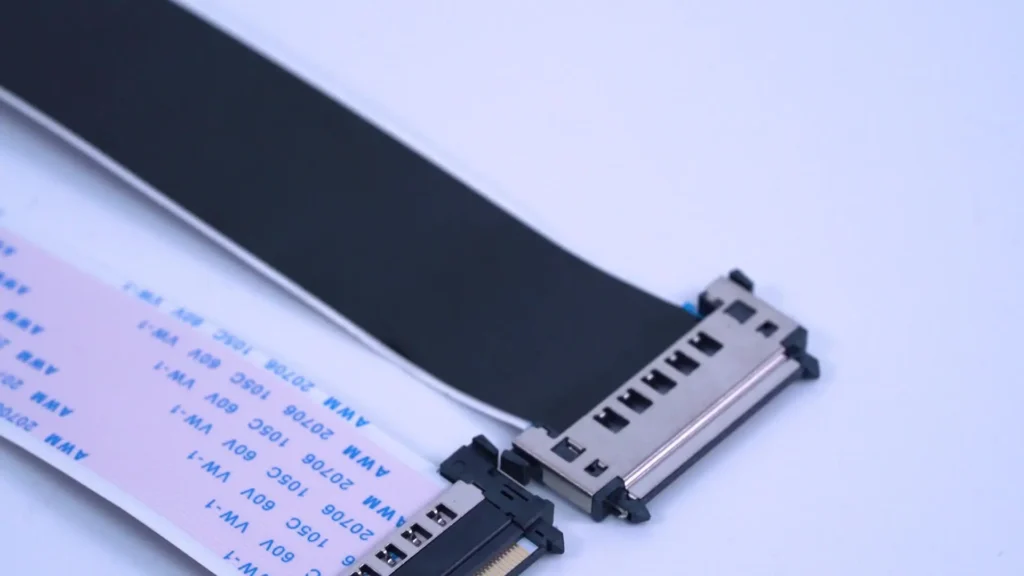
You need to balance bend radius, cycles, and motion to get the best flex life from your cable. Engineers face rising demands for flexibility as the market for ffc cables in high-flex applications is set to grow by 7–10% each year. This growth comes from more advanced technology and changes in how people use devices. YLS stands out as a trusted name for flexible cable assemblies and application-specific flexible cable solutions. When you design with flexibility in mind, you extend the service life of each cable. You can rely on YLS for cable options that fit your needs.
Key Takeaways
Understand flex life to ensure your cable can withstand repeated bending. Always check the flex life rating for dynamic applications.
Choose the right bending radius to protect cable integrity. A proper radius helps cables last longer and reduces stress on conductors.
Match cable flexibility to the specific motion profile of your application. Different movements require different cable designs for optimal performance.
Follow installation best practices to extend cable lifespan. Proper routing and support prevent damage and ensure reliable operation.
Select high-quality materials for durability. The right conductor and insulation materials enhance flexibility and resistance to wear.
Flex Life and Flexibility in FFC Cables
What Is Flex Life
Flex life tells you how many times a cable can bend or move before it starts to fail. You measure flex life by running the cable through repeated cycles of bending, twisting, or flexing. This is important for applications like printers, robotics, and moving axes, where cables face constant movement. You want to know that your cable will last through millions of cycles without losing performance.
Tip: Always check the flex life rating when you select cables for dynamic applications. This helps you set realistic expectations for maintenance and replacement.
Here is a quick look at how flex life is measured in the industry:
Test Method | Description |
|---|---|
Flex Endurance Test | Sample is flexed to ±90° to accelerate deterioration. |
Rapid Comparative Testing | Compares multiple samples under the same conditions for quick results. |
Long-term Life Prediction | Simulates actual routing conditions for more accurate damage representation. |
Progressive Conductor Health Checks | Custom checks for changes in resistance and signal integrity during flex testing. |
Defining Cable Flexibility
Flexibility means how easily a cable bends or adapts to movement. You need high flexibility in environments where cables must move with robotic arms, printer heads, or sliding axes. Flexible cables allow for kinematic freedom, so moving parts do not face extra resistance. This increases durability and lets you design more compact systems with tighter bends.
Flexible cables:
Increase durability by surviving repeated cycles.
Enable efficient routing in small spaces.
Reduce stress on connectors and critical components.
Improve the lifespan of your system by enduring millions of cycles.
Motion Types and Application Needs
You must match the cable flexibility to the type of movement in your application. For example, a printer head moves back and forth in a predictable path, while a robot arm may twist and bend in multiple directions. Each motion profile requires a different approach to cable selection.
YLS Flexible flat cables offer features that address these needs:
Feature | Description |
|---|---|
Ultra-flexibility | Built for robot arms, AGVs, and pick-and-place systems. |
High durability | Tolerates millions of tight bends, ensuring longevity in dynamic environments. |
EMI shielding | Protects against electromagnetic interference, maintaining signal integrity. |
You can choose ultra-thin, flexible designs for tight bends and dynamic joints. YLS cables are rated for up to 5 million bending cycles, making them ideal for robotics and moving axes. For printers, you can use foldable cables that handle repeated back-and-forth movement without failure. If you need to protect data signals, select options with single or double-sided EMI shielding.
Note: When you specify cables for your project, always consider the expected movement and the number of cycles. This ensures you get the right balance of flexibility and durability for your application.
Bend Radius and Cable Flexibility
Bend Radius Impact on FFC Cables
You need to understand how the bending radius affects both cable flexibility and flex life. The bending radius is the smallest curve you can safely make with a cable without causing damage. When you use a tighter bending radius, you increase stress on the conductors and insulation. This stress can shorten the flex life of ffc cables. If you maintain the proper bending radius, you allow the cable to survive millions of cycles in real-world applications like printers, robotics, and moving axes.
The bending radius and flex life are directly related.
Tighter bends increase stress and reduce flex life.
Proper bending radius helps cables last longer in dynamic environments.
Minimum Bend Radius Guidelines
You should always follow minimum bending radius guidelines to protect cable flexibility and performance. For static applications, use a minimum bending radius of 10 times the thickness of the cable for 1-2 layers. In dynamic applications, increase the minimum bending radius to 100 times the thickness. This practice helps you avoid early failures and ensures the cable can handle repeated movement.
Tip: Always check the cable thickness and match it to the right bending radius for your application. This simple step can extend the life of your system.
YLS Flexible Flat Cable Design Considerations
YLS Flexible Flat Cables give you options to meet unique bending radius needs. The flat design allows for better routing in tight spaces, which increases cable flexibility. You can choose custom lengths, pitches, and pre-folded designs for specialized equipment. YLS also follows IPC/WHMA-A-620 standards, which set strict requirements for reliability and durability. These standards ensure that every cable meets high expectations for performance under stress.
When you select YLS Flexible Flat Cables, you get products that support high flexibility and survive frequent bending. This makes them ideal for demanding environments where reliability matters most.
Designing for Motion and Cycles
Anticipating Motion Profiles
You need to start by understanding the motion profile of your application. Every system has a unique pattern of movement. In robotic systems, you see twisting, bending, and repetitive cycles. Printers and imaging gantries often require back-and-forth movement. Continuous-motion applications, such as robotic arms or infusion systems, demand cables that can handle millions of cycles without failure.
To specify the right flexible cable assemblies, follow these steps:
Map the Motion Path
Identify how the cable will move. Will it bend, twist, or flex in multiple directions? Robotic systems often combine all three types of movement.Estimate the Number of Cycles
Calculate how many cycles the cable will experience each day. Multiply this by the expected service life of the equipment.Assess Environmental Factors
Check for temperature extremes, dust, or moisture. These factors affect cable durability and reliability.Select the Right Cable Flexibility
Choose a cable with the flexibility to match the motion profile. For robotic systems, look for high-flex cable assemblies that can survive continuous-motion applications.
Tip: Always consider the points where the cable connects to other components. These areas often see the most stress and are common failure points.
Material Selection for Flex Life
Material selection plays a key role in flex-life performance. The right combination of conductor and insulation materials increases both flexibility and durability. For example, tin-plated flat copper wires provide excellent signal transmission and resist fatigue. Flexible polyester insulation protects the conductors from abrasion and environmental stress. This pairing allows the cable to withstand repeated bending and harsh conditions.
You can also choose advanced material combinations for even greater durability in continuous-motion applications. The table below shows some of the most durable options:
Material Type | Properties |
|---|---|
Polyimide Substrate | Durable, electrically insulating, high temperature tolerance |
Copper Traces | High conductivity, can be etched thin, enhanced durability with high purity |
Polyimide Coverlay | Protects copper traces from environmental damage |
Adhesives | Stable over temperature range, reliable bonding without cracking |
When you select materials, focus on both the flex area and the termination points. Fatigue often starts at these locations, especially in robotic systems and other high-cycle environments.
YLS Solutions for High-Cycle Applications
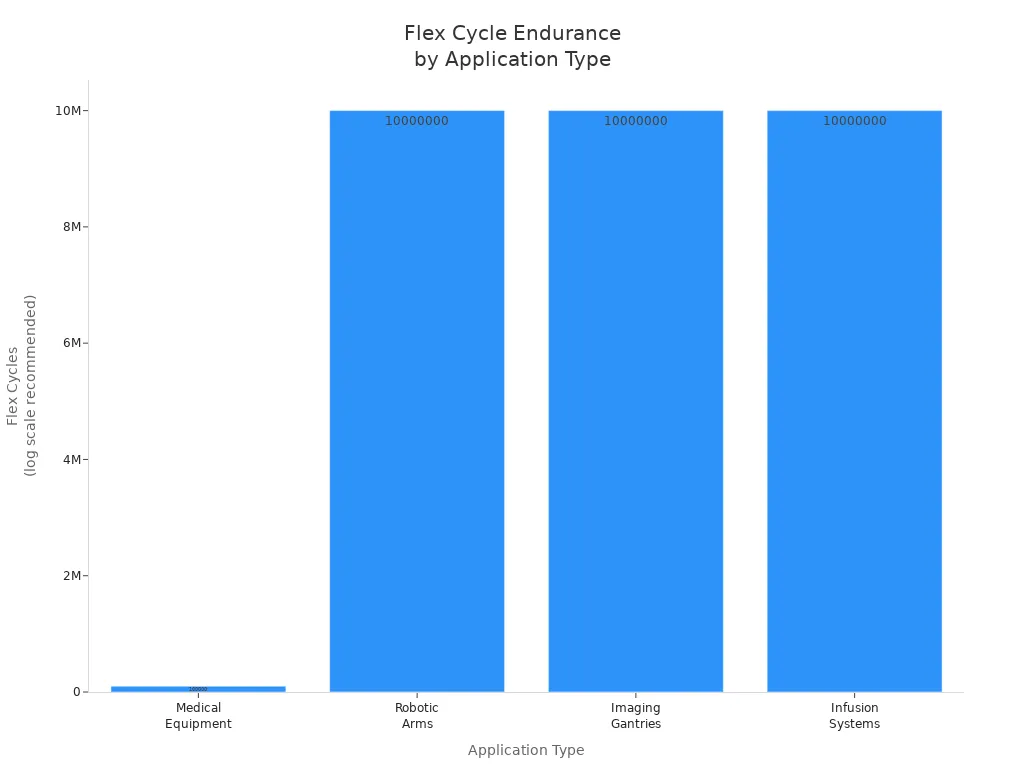
YLS offers flexible cable assemblies designed for continuous-motion applications. You can rely on YLS for solutions that deliver high flex-life performance and design efficiency. In laboratory testing, YLS flexible flat cable solutions have shown impressive endurance:
Application Type | Flex Cycle Endurance |
|---|---|
Medical Equipment | 100,000+ cycles |
Robotic Arms | 10 million cycles |
Imaging Gantries | 10 million cycles |
Infusion Systems | 10 million cycles |
YLS stands out by offering rapid prototyping and full customization for unique motion requirements. You can tailor every aspect of your cable, from insulation type to mechanical modifications. The table below highlights YLS’s customization and prototyping capabilities:
Feature/Service | Description |
|---|---|
Surface & Insulation Customization | Options include PET or PI insulation, tin-plated, bare copper, or gold conductors, and heat-resistant materials. |
Mechanical Modifications | Customizations like punch holes, slots, notches, and fold lines for compact routing. |
Labeling & Traceability | Options for QR codes, printed marks, and custom labeling for easy installation and tracking. |
Packaging Options | Various packaging types including bulk bags, trays, and anti-static options. |
Six-Step Custom FFC Process | A streamlined process from project kick-off to mass production ensuring speed and accuracy. |
You should also consider the most important factors when selecting ffc cables for repetitive motion:
Factor | Description |
|---|---|
Durability and Reliability | Ensure the connector can withstand repeated use, crucial for repetitive motion applications. |
Bending Cycles | Important for devices with frequent movement, as it affects the lifespan of the cable. |
Environmental Considerations | Choose connectors with high IP ratings for protection against moisture and dust, especially in harsh environments. |
YLS flexible flat cable solutions offer a high flex life of over 1 million cycles. This gives you a competitive advantage in demanding continuous-motion applications. You can trust YLS for flexible cable assemblies that meet the needs of robotic systems, printers, and moving axes.
To avoid premature failure, pay attention to common causes such as insulation degradation, conductor fatigue in the flex area, and stress at termination points. Proper design and material selection help you prevent these issues and extend the life of your cable.
Note: When you work with YLS, you gain access to expert support, rapid prototyping, and a proven track record in high-flex environments. This ensures your high-flex cable assemblies deliver reliable performance in every cycle.
Installation Best Practices
Proper Routing and Support
You can extend the life of your flexible cable assemblies by following smart routing and support practices. When you route cables, use large radii in corners to prevent stress that can cause tearing. Avoid sharp corners in trace routing. Smooth transitions help distribute stress and improve reliability. You should secure the cable with mounting hardware, especially in high-vibration environments. This reduces unwanted movement and protects the conductors. Drill holes at corners and design recessed slots to disperse stress at vulnerable points. If you want extra strength, consider embedded glass cloth or aramid fiber. These materials add tear resistance and structural integrity. Fillet pads at junctions also help spread out stress, making the cable more reliable over many cycles.
Tip: Always support the cable properly during installation. Misalignment or poor support can lead to damaged conductors and electrical faults over time.
Avoiding Common Mistakes
You can avoid many problems by steering clear of common installation errors. Using a bend radius that is too small often leads to cracking or delamination. Tight bends can break copper traces and cause electrical failures. Sharp bends thin out copper, making the cable more likely to fail after repeated cycles. Make sure you do not skip proper support. Inadequate support increases the risk of misalignment and electrical faults. YLS provides checklists and templates to help you avoid these mistakes. Ongoing training and expert support are also available to keep your team updated on best practices.
Do not use a bend radius smaller than recommended.
Avoid sharp bends and sudden direction changes.
Always secure the cable to prevent movement.
Use the resources and support from YLS for proper installation.
Real-World YLS Application Scenarios
You can see the benefits of proper installation and design in real-world cases. The table below shows how YLS flexible cable assemblies have improved performance in different industries:
Industry | Case Study Description | Outcome |
|---|---|---|
Automotive | A leading electric vehicle manufacturer required cables for dashboard displays. | Reduced wiring failures by 60% and improved assembly speed. |
Medical Devices | A medical imaging company needed ultra-thin cables for portable ultrasound machines. | Devices became lighter and more durable, enhancing efficiency. |
Consumer Electronics | A global laptop brand sought to create slimmer devices with custom cable lengths. | New laptops launched on time, praised for sleek design. |
These examples show how proper installation and the right flexible cable assemblies can boost durability and flexibility. You can trust YLS to provide solutions that last through millions of cycles in demanding environments.
You can maximize improved cable lifespan by following best practices for bend radius, cycles, and flexibility in your design. Choose the right cable for your application and map out motion paths to reduce stress. YLS supports you at every step, from project preparation to quality control, as shown below:
Step | Description |
|---|---|
Project Preparation | Define cable specs with YLS engineers. |
Testing & Validation | Test samples and adjust as needed. |
Final Sign-off | Approve prototypes before production. |
Mass Production | Receive cables with full reliability checks. |
Quality Control | Every cable tested for performance and lifespan. |
YLS ensures RoHS, REACH, ISO, and UL compliance for every cable. Consult YLS for custom ffc cables that deliver long-lasting performance in demanding environments.
FAQ
What is the best way to choose a cable for high-flex applications?
You should look at the motion type, number of cycles, and bend radius. Select a cable rated for millions of cycles. Check if the cable fits your space and movement needs. Always ask for test data from your supplier.
How do you prevent cable failure in robotics?
You can prevent cable failure by using the correct bend radius and supporting the cable at stress points. Choose a cable designed for repetitive motion. Inspect the cable regularly for signs of wear or damage.
Can you use the same cable for printers and moving axes?
You should not use the same cable for every application. Printers and moving axes have different motion profiles. Select a cable that matches the specific movement and cycle requirements of your equipment.
How does cable thickness affect flexibility?
Thinner cables bend more easily and fit into tight spaces. Thicker cables provide more strength but may not flex as well. Always match the cable thickness to your application’s needs for best results.
What should you check before installing a new cable?
You should check the cable length, connector type, and bend radius. Make sure the cable meets your equipment’s requirements. Test the cable for signal quality before final installation.
