
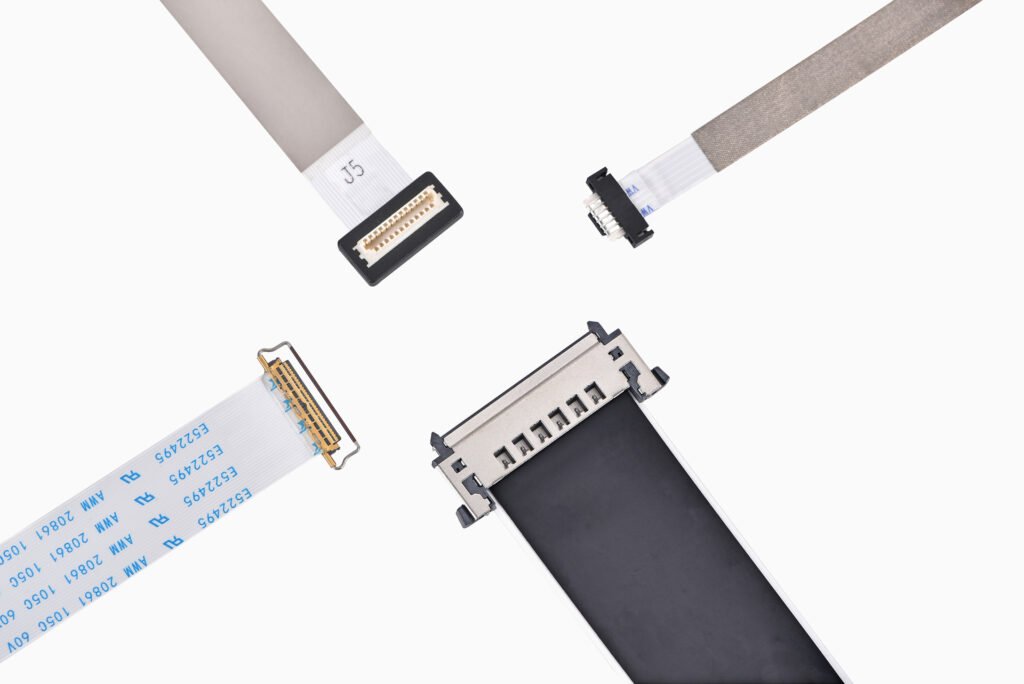
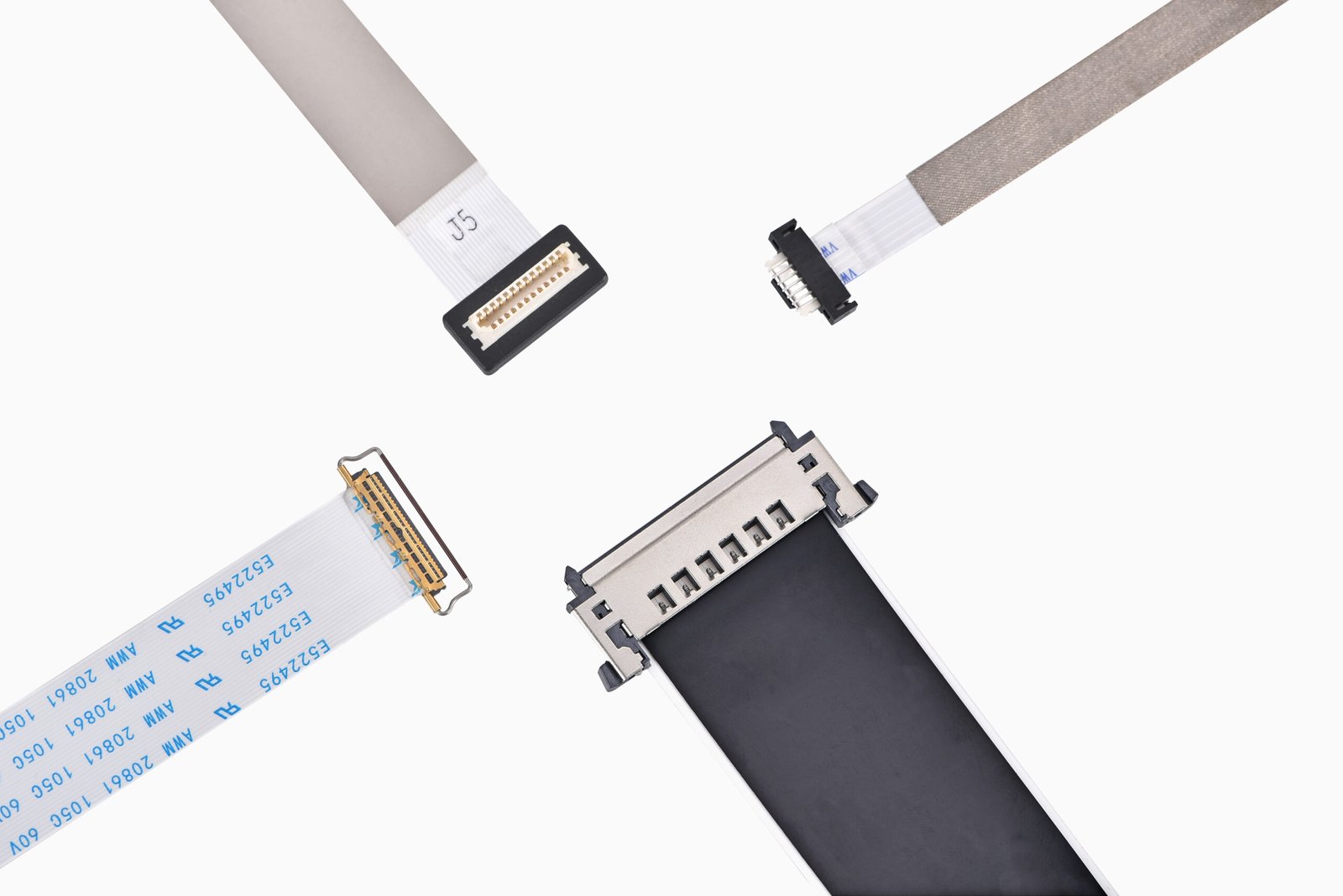
You see flexible flat cables (FFC) in many modern devices. These cables provide slim, reliable connections that save space and boost performance. YLS, a leading manufacturer, supplies FFC solutions trusted by global brands. You can spot FFC cables in devices like:
Smartphones
Laptops
Gaming consoles
Choosing the right ffc types ensures your device works safely and efficiently in its intended environment.
Key Takeaways
FFC cables are essential for modern electronics, providing reliable connections in tight spaces.
Choosing the right FFC type improves device performance and reduces maintenance needs.
Key factors in selecting FFC cables include pitch size, pin count, and environmental conditions.
YLS offers a variety of FFC options, including custom designs to meet specific project requirements.
Shielding in FFC cables protects against electromagnetic interference, ensuring clear signal transmission.
What Are FFC Cables?
Definition and Structure
You often see FFC cables inside modern electronics. FFC stands for Flexible Flat Cable. These cables have thin, flat shapes with several metal conductors placed side by side. YLS, a trusted manufacturer, designs FFC cables to fit tight spaces and provide reliable connections. You can choose from many ffc types, each made for specific needs.
The structure of an FFC cable uses special materials to improve performance. Here is a table showing common materials and their impact:
Material Type | Impact on Performance |
|---|---|
Polymer substrates | Give flexibility and let the cable bend without losing signal quality |
Copper foil | Blocks signal interference and keeps data stable |
Flexx-Sil | Adds flexibility, shields against EMI, and resists heat |
PTFE | Offers strong insulation and works well in high temperatures |
These materials help FFC cables stay strong and flexible, even in demanding environments.
Common Uses in Electronics
You find FFC cables in many devices because they save space and allow flexible routing. Their flat design makes them perfect for compact electronics. Here are some examples of where you might see FFC cables:
Device Type | Examples |
|---|---|
Cameras | Connects image sensor with processing board |
Robotics | Used in moving parts like robotic arms |
Consumer electronics | Laptops, printers, monitors |
Automotive | Dashboards, infotainment systems |
Medical devices | Imaging equipment, diagnostic machines |
Industrial equipment | Robotics and automation systems |
Home appliances | Washing machines, microwaves |
Tip: When you select the right ffc types, you make sure your device works well and fits into small spaces.
Engineers often use FFC cables in LCD monitors, computers, tablets, cameras, printers, and even home appliances. These cables help solve challenges like miniaturization and complex routing. You can rely on YLS to provide FFC cables that meet industry standards and offer customizable options for your project.
FFC vs FPC: Key Differences
Construction and Materials
You might wonder how FFC and FPC cables differ. Both connect electronic parts, but their construction and materials set them apart. Here is a table to help you see the main differences:
Feature | FFC | FPC |
|---|---|---|
Construction | Flat cable with parallel traces | Flexible printed circuit board |
Material | PET (Polyester) | Polyimide (PI) |
Customization | Limited | High |
Trace Complexity | Parallel only | Any pattern, multi-layer |
Dynamic Bending | Limited | Excellent |
Cost | Low | Higher |
Typical Use | Simple interconnects | Structural + interconnect |
FFC cables use a simple design with parallel wires inside a flat plastic strip. FPC cables use copper traces on a flexible polyimide film. This lets FPC cables bend more and handle complex circuits. You often see FFC types in devices that need basic, reliable connections.
Application Scenarios
You should choose the right cable for your project. FFC cables work best in devices that need simple, flexible connections. You find them in:
Laptops and cameras
Printers, copiers, and scanners
Car dashboards and infotainment units
Medical monitors and wearable devices
Industrial control panels
FPC cables fit high-end electronics and complex systems. They handle high-frequency signals and can bend in many directions. You see them in smartphones, tablets, aerospace, and advanced medical devices.
Note: FFC cables are great for tight spaces and easy connections. FPC cables offer more design freedom and better performance for advanced needs.
When you compare ffc types to FPC, think about your device’s needs. FFC cables save space and cost, while FPC cables give you more flexibility and complex routing. YLS offers both options, so you can match the right cable to your application.
Main FFC Types from YLS
YLS offers a wide range of ffc types to meet the needs of modern electronics. You can choose from standard flexible flat cables, display cables, automotive cables, high-speed cables, and custom or shielded options. Each type has unique features and construction details that make it suitable for specific applications.
Standard Flexible Flat Cable Types
Standard flexible flat cables form the backbone of many electronic devices. You will find these ffc types in products like LCD monitors, computers, tablets, cameras, printers, and industrial automation systems. These cables provide reliable, space-saving connections for both signal and power transmission.
Here is a table that summarizes the most widely used standard FFC cable types from YLS:
Specification | Details |
|---|---|
Pitch Sizes | 0.4mm, 0.5mm, 1.0mm, 1.25mm |
Number of Conductors | Up to 96 conductors for high-density wiring |
Cable Length | Customizable from 30 mm to 1000 mm or longer |
Cable Thickness | Ranges from 0.1 mm to 0.5 mm |
Insulation Material | PET or PI (polyimide) |
Conductor Material | Tin-plated copper |
End Termination | Tinned ends, gold fingers, crimped ends |
Additional Features | Shielding, punching, notching, labeling |
You can select from several standard types, each designed for specific connector orientations and mechanical needs:
Type | Overview | Key Specifications | Typical Use Cases |
|---|---|---|---|
Type I | Opposite-side contacts, half-width stiffeners on both ends | Opposite-side contact, half-width stiffeners | Reverse connections, side-locking connectors |
Type J | Stiffener on same side as exposed contacts | Same-side contact, reverse stiffeners on both ends | ZIF connectors needing pressure on contact side |
Type K | Reverse-side stiffener on one end, leads for soldering on the other | Mixed termination, reverse stiffener on connector | Custom applications, hardwired and specialty connectors |
Type L | Stiffener on same side as exposed contacts | Same-side contact, reverse stiffeners on both ends | ZIF connectors, pressure on contact side |
Type M | Opposite-side contacts, stiffener on one end only | Opposite-side contacts, stiffener on one end | Asymmetrical reverse-contact designs |
Type N | Stiffener on same side as exposed contacts | Same-side contact, reverse stiffeners on both ends | ZIF connectors, pressure on contact side |
You will notice that 0.5mm and 1.0mm pitch sizes dominate the market. These sizes cover most mobile devices, displays, and industrial equipment.

Tip: Standard ffc types from YLS are certified to ISO 9001, ISO 13485, AS9100, and UL standards. These certifications ensure consistent quality and safety for your projects.
Display, Automotive, and High-Speed FFC Types
You can find specialized ffc types for demanding applications in displays, vehicles, and high-speed data systems. YLS engineers these cables to handle harsh environments, frequent movement, and high data rates.
Display FFC Cables
Display cables from YLS connect screens to control boards in smartphones, tablets, industrial panels, and smart home devices. These cables support ultra-fine pitches, high pin counts, and stable high-speed data transmission. You can choose options with grounding reinforcement, shielding, and stiffeners for secure connections. Display ffc types often use PET or PI insulation and gold-finished ends for corrosion resistance.
Automotive FFC Cables
Automotive cables must withstand vibration, temperature extremes, and continuous flexing. YLS automotive ffc types use reinforced ends, high-flex life construction, and heavy EMI shielding. You will see these cables in dashboards, infotainment systems, lighting, and battery management. They support protocols like LVDS, CAN, and MIPI, and meet ISO and automotive safety standards.
High-Speed FFC Cables
High-speed cables from YLS deliver fast, reliable data transmission for cameras, displays, and embedded systems. These ffc types feature controlled impedance, low signal skew, and optional shielding. They support protocols such as LVDS, MIPI, USB, and HDMI. You can use them in EMI-sensitive environments and compact devices.
Here is a table showing some unique construction details for these specialized cables:
Property | Value |
|---|---|
Temperature Range (°C) | -20 to +260 |
Flex Life Cycles | > 20 million |
Maximum Acceleration | > 40 m/sec² |
Minimum Bend Radius | > 10 x cable thickness |
Jacket Material | PTFE |
You will find these cables in:
Touchscreen displays and foldable screens
Automotive control panels and connectivity modules
Ambient lighting systems
High-speed data links in cameras and industrial equipment
Note: YLS uses advanced manufacturing to deliver vibration-resistant, flame-retardant, and pre-labeled cables for easy assembly and traceability.
Custom and Shielded FFC Types
You may need custom or shielded ffc types for unique projects or EMI-sensitive environments. YLS offers full customization, including pitch, length, conductor count, shielding, labeling, and packaging.
Custom FFC cables help you overcome space constraints and fit tight enclosures. You can specify materials, surface finishes, and mechanical modifications. Shielded ffc types use precise conductor layouts and advanced shielding to maintain signal clarity, even over long distances or in high-interference areas.
Feature | Custom FFC Cables | Shielded FFC Cables |
|---|---|---|
Tailored Design | Overcomes space constraints in electronic designs | Designed for EMI-sensitive applications |
Material Choices | High-quality materials for durability and performance | Precise conductor layout for signal clarity |
Signal Integrity | Maintains strong signal integrity in compact devices | Guarantees signal clarity across long runs |
Support | Rapid sample turnaround and expert support | Ensures smooth transition from design to production |
You can request features like:
Shielding and EMI control for sensitive circuits
Custom punching, notching, and labeling for easy installation
Folded layouts for battery trays or articulated joints
Medical-grade insulation and gold-finished ends for reliability
Callout: Shielded ffc types from YLS control characteristic impedance and reduce EMI, making them ideal for RF, antenna, and high-speed data applications.
YLS supports you with rapid prototyping, low minimum orders, and expert engineering. You can trust these cables for medical, automotive, industrial, and consumer electronics.
Key Features and Selection Guide

When you select an FFC cable, you need to focus on several important features. These features help you match the cable to your device’s requirements and ensure reliable performance.
Pitch, Pin Count, and Materials
Pitch and pin count play a big role in compatibility and performance. Pitch is the distance between each conductor. Smaller pitch sizes allow for higher data speeds and more compact designs, but they can increase complexity and cost. The number of pins determines how many signals you can transmit at once. You should always match the pitch and pin count to your device’s connector and data needs.
Feature | Description |
|---|---|
Pitch Size | Smaller pitch = higher density, faster data, but more complex and costly |
Pin Count | More pins = more signals, supports complex circuits |
Conductor | Copper is common for high conductivity and durability |
Insulation | PET and polyimide (PI) offer flexibility and heat resistance |
Polyimide insulation stands out for its thermal stability and flame-retardant properties. Tinned copper conductors resist rust and provide long-lasting connections.
Tip: Always check your device’s connector type and spacing before choosing an FFC cable.
Reinforcement and Shielding Options
You can improve cable durability and signal quality with reinforcement and shielding. Reinforcement options like stiffeners and adhesive backing protect the cable at connection points. Strain relief features prevent damage from pulling or bending. Shielding blocks electromagnetic interference (EMI), which is important in high-speed or noisy environments.
Strain relief: Reduces stress at terminations
Stiffeners: Add mechanical support
Shielding: Protects against EMI and keeps signals clear
Shielding Type | Best Use Case | EMI Protection Level |
|---|---|---|
Foil Shield | High-frequency, static applications | Excellent |
Braided Shield | Low-to-mid frequency, flexible applications | Good |
Multi-layer Shielding | Broad frequency range, critical environments | Superior |
How to Choose the Right FFC Type
To choose the right FFC cable, start by listing your device’s needs. Consider pitch, pin count, and connector compatibility. Think about the environment—will the cable face frequent movement, high temperatures, or EMI? For high-speed data, look for cables with controlled impedance and strong shielding. If your device bends or flexes often, select a cable with high flex life and strong reinforcement.
Checklist for Selection:
Identify connector type and pitch size.
Count the number of signals needed.
Check current and voltage ratings.
Review temperature and environmental conditions.
Decide if shielding or reinforcement is necessary.
Match cable length and termination to your layout.
YLS offers a wide range of FFC types, including custom options. You can work with YLS to tailor pitch, pin count, materials, and shielding for your specific project. This ensures your device runs reliably and efficiently.
Note: Choosing the right FFC cable improves device performance, reduces maintenance, and extends product life.
You gain a real advantage when you understand FFC cable types and their features.
FFC cables fit tight spaces and support flexible designs.
Controlled impedance keeps your signals clear, even at high speeds.
EMI reduction boosts device reliability.
You can choose from standard or custom options to match your needs.
Key factors include pitch, conductor count, and insulation.
YLS stands out as a trusted provider. Many companies, like Ninja Van, have seen fewer stoppages and better efficiency after switching to YLS high flex cables. YLS holds ISO9001:2008 and RoHS certifications, so you know you get quality and safety.
For more details or to request samples, visit YLS’s official website.
FAQ
What is the difference between FFC and FPC cables?
You see FFC cables as flat, ribbon-like connectors with parallel wires. FPC cables use etched copper traces on a flexible film. FFCs work best for simple connections. FPCs handle complex circuits and tight bends.
How do I choose the right pitch size for my FFC cable?
You should match the pitch size to your device’s connector. Smaller pitch sizes fit compact spaces and support more signals. Always check your connector’s specifications before ordering.
Can I customize the length and pin count of my FFC cable?
Yes! YLS lets you choose custom lengths and pin counts. You can request cables that fit your exact design, making installation easier and more reliable.
Why is shielding important in FFC cables?
Shielding protects your signals from electromagnetic interference (EMI). You need shielding for high-speed data or noisy environments. This keeps your device running smoothly and your data clear.
