
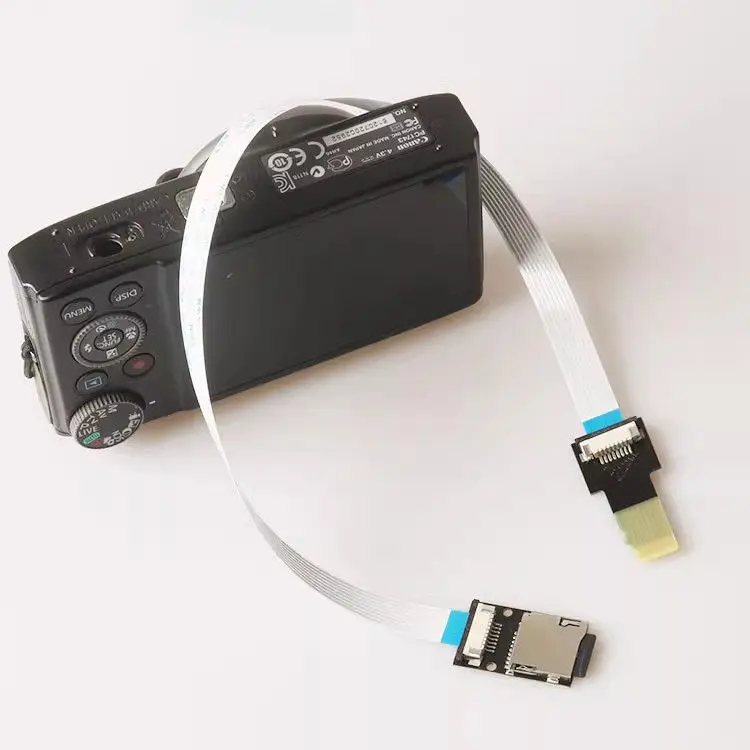
You see LVDS cables in many advanced electronic devices.
Low-Voltage Differential Signaling helps you achieve high-speed data transfer using twisted-pair copper cables with 100-ohm impedance.
This technology supports rapid data rates while using less power than other methods.
High-speed data transmission gives you smooth performance in devices like 8K TVs and VR headsets by reducing noise and keeping signals clear.
YLS stands out as a trusted provider of advanced cabling solutions:
Unique Product Offerings | Industry Applications |
|---|---|
Flexible flat cable solutions | Suitable for various industries |
Extensive customization options | Ideal for prototyping and pilot runs |
100% electrical testing before shipment | Ensures reliability across applications |
Factory-direct products | Competitive pricing and efficient delivery |
Display cables play a key role in connecting screens in smartphones, cars, and medical equipment, particularly in low voltage applications where efficiency and performance are critical.
Key Takeaways
LVDS cables enable high-speed data transfer with low power consumption, making them ideal for modern electronics like 8K TVs and VR headsets.
Choosing the right LVDS cable involves considering connector types, cable lengths, and shielding needs to ensure optimal performance.
Differential signaling in LVDS cables provides excellent noise immunity, enhancing data integrity and reducing errors in high-speed applications.
Customization options for LVDS cables allow you to tailor features like pitch and insulation, ensuring they meet specific project requirements.
YLS display cables offer reliable performance with rigorous testing and quality standards, making them a trusted choice for various industries.
What Are LVDS Cables?
LVDS cables help you transfer data quickly and reliably in many electronic devices. You often see them in laptops, monitors, automotive displays, and medical equipment. These cables use low voltage differential signaling to send information with high speed and low noise. You can choose from several types of LVDS cables, each designed for specific needs and environments.
LVDS Cable Structure
You find that LVDS cables come in different forms, each with unique features. The structure of these cables affects how well they perform and how durable they are. Here is a table that shows the main types of LVDS cables and their descriptions:
Type of LVDS Cable | Description |
|---|---|
LVDS Flat Ribbon Cables | Multiple conductors in a flat structure, ideal for high conductor count applications like displays. |
LVDS Coaxial Cables | Central conductor with insulating layer and metallic shield, excellent for EMI protection. |
LVDS Flex Cables | Flexible Printed Circuits designed for mechanical reliability and dynamic flexibility. |
LVDS Round Cables | Paired twisted wires, often with braid shielding for enhanced performance against external interference. |
You can see that each type serves a different purpose. Flat ribbon cables work well in devices where you need many connections in a small space. Coaxial cables give you strong protection against electromagnetic interference. Flex cables let you bend and move the cable without breaking it, which is useful in devices that need to move or fold. Round cables use twisted pairs and shielding to keep signals clear, even in noisy environments.
The construction of LVDS cables also plays a big role in their performance. High-quality components make sure you get reliable data transfer without signal loss. Precision manufacturing keeps the wires aligned and ensures flawless wiring, which is important for high-speed signals. Rigorous testing checks that the cables work well under stress and last a long time.
Construction Aspect | Impact on Signal Integrity and Durability |
|---|---|
High-quality components | Ensures reliable performance and minimizes signal degradation. |
Precision manufacturing processes | Guarantees correct alignment and flawless wiring for high-speed data transfer. |
Rigorous testing procedures | Validates electrical performance and mechanical reliability under stress. |
Tip: When you select an LVDS cable, always consider the structure and materials. This helps you match the cable to your device’s needs and ensures long-lasting performance.
How Low Voltage Differential Signaling Works
Low voltage differential signaling, or LVDS, uses a smart way to send data. Instead of sending a single signal referenced to ground, LVDS sends two opposite signals down a pair of wires. The voltage difference between these two wires is small, usually around 350 millivolts. This low voltage swing keeps power use low and helps protect your data from noise.
You benefit from LVDS because it improves signal integrity and reduces electromagnetic interference. Here is how it works:
Differential signaling uses a pair of wires to transmit two complementary signals.
This method enables the cancellation of common-mode noise, which is a major contributor to electromagnetic interference.
The receiver measures the voltage difference between the two wires, effectively rejecting external noise that affects both wires equally.
Differential signaling enhances immunity to crosstalk by transmitting complementary signals.
Common-mode signals, which affect both traces equally, are rejected by the receiver when calculating the differential voltage.
The receiver responds to the voltage difference between the two signals, which mitigates the impact of EMI.
This results in higher quality, more stable, and more reliable data transmission.
You see that low voltage differential signaling gives you a clear advantage in high-speed data transfer. It keeps your signals strong and stable, even in environments with lots of electrical noise. This makes LVDS cables a top choice for modern electronics where reliability and speed matter most.
Low Voltage Benefits in Data Transmission
Signal Integrity and Noise Immunity
You want your data to travel fast and stay accurate. Low voltage differential signaling helps you achieve this by sending two opposite signals along paired wires. This method cancels out much of the noise that can affect your data. When you use LVDS, you get strong protection against electromagnetic interference, even in busy electronic environments.
As long as you keep the electric and magnetic fields tightly coupled between the two wires, LVDS reduces electromagnetic noise. The equal and opposite currents in the wires create fields that cancel each other out. This means your signals stay clear and reliable.
YLS display cables add another layer of protection. Their EMI shielding acts like a barrier, absorbing or deflecting outside noise. This shielding is important for keeping your data safe, especially in devices that use low voltage for high-speed communication. You also benefit from the ultra-thin design, which fits easily into compact devices without sacrificing performance.
Power Efficiency and Speed
You save energy and boost speed when you use low voltage signaling. LVDS operates at a lower voltage, which means it uses less power and produces less heat. This makes your devices safer and more cost-effective to run. You also get faster data transfer, which is essential for high-resolution displays and real-time applications.
Here is a table that shows why low voltage systems are a smart choice for data transmission:
Benefit | Description |
|---|---|
Safety | Lower voltage reduces the risk of electrical hazards. |
Cost-Effectiveness | Lower energy use and installation costs save you money. |
Flexibility & Scalability | Easy to upgrade or expand as your needs grow. |
Improved Performance | High bandwidth and low latency support fast, reliable data transfer. |
Environmental Impact | Reduced energy consumption helps protect the environment. |
YLS display cables support these advantages with features like customizable lengths and pin counts. You can match the cable to your device’s exact needs, ensuring stable, high-speed data flow. The shielded design keeps your visuals crisp and your connections reliable, even in noisy environments.
YLS Display Cable Applications
Use Cases in Modern Devices
You see YLS display cables in many devices you use every day. These cables help connect screens to control boards, making sure you get clear images and fast response times. You find them in smartphones, tablets, industrial panels, and cars. Each application needs special features to work well.
Here is a table that shows where you use YLS display cables and what makes them important:
Application Area | Features | Use Case Description |
|---|---|---|
Smartphones and Tablets | Ultra-fine pitches, high pin counts, stable data | Connects screens to control boards for sharp, fast displays. |
Industrial Panels | Grounding, shielding, stiffeners | Keeps connections secure in tough environments. |
Automotive Systems | Heavy EMI shielding, vibration-proof connectors | Links touch screens, digital clusters, and HUDs for high-bandwidth video. |
You get reliable performance in each device because YLS designs cables for the exact needs of the application. In smartphones, you need ultra-thin cables that fit tight spaces. In cars, you want cables that resist vibration and block interference. In factories, you need cables that stay strong under stress.
Customization and Industry Standards
You can customize YLS display cables to fit your project. You choose the pitch, conductor count, insulation, and even environmental resistance. This flexibility helps you solve problems in many industries, from consumer electronics to medical devices.
Here are some ways you can customize your cable:
Pick the pitch for high-density or standard layouts.
Select the number of conductors for your data needs.
Choose insulation for extra protection in harsh places.
Add features for temperature or humidity resistance.
YLS display cables also meet important safety and quality standards. You see certifications like UL 94 for flammability and IEC 60332 for fire safety. These standards give you peace of mind when you use the cables in cars, hospitals, or home electronics.
YLS supports LVDS, MIPI, and eDP interfaces, so you can use these cables in many types of devices. You get a solution that matches your technical and safety requirements every time.
Choosing the Right LVDS Cable
Cable Types and Compatibility
You need to match your LVDS cable to your device for the best results. Start by checking the connector type and the display size. Each connector supports different screen sizes and data rates. Here is a quick guide:
Connector Type | Typical Display Use | Pitch | Notes |
|---|---|---|---|
20-pin LVDS | Small LCD screens (<12”) | 0.5mm | Entry-level or compact devices |
30-pin LVDS | 13–15” HD displays (1366×768) | 0.5mm | Most common in mid-range laptops |
40-pin LVDS | 15.6”+ Full HD (1920×1080) or more | 0.3–0.5mm | Supports higher data rates and resolution |
You should also consider the pitch, which is the distance between pins. A smaller pitch fits more connections in a tight space. Make sure your cable matches the connector on your device. YLS offers technical support to help you select the right connector and cable combination.
When you choose a cable, think about your application’s needs. Ask yourself these questions:
What data rate do you need?
How long is the cable run?
What are the operating conditions (temperature, humidity)?
Does your system require low voltage operation?
YLS can customize cables with features like fold lines, special labels, or unique shapes. This helps you get a perfect fit for your project, whether you need a prototype or a large production run.
Length, Shielding, and Performance
Cable length and shielding play a big role in performance. Longer cables can lose signal quality, especially at high speeds. You want to keep cables as short as possible for the best results. If you need a longer cable, look for options with strong shielding.
Shielding protects your data from electromagnetic interference. This is important in environments with lots of electronic noise. YLS display cables offer advanced EMI shielding and grounding features. These keep your signals clean and reliable, even in challenging conditions.
You should also check the quality of the conductors and connectors. High-quality materials last longer and give you better performance. YLS supports custom lengths, pin counts, and special packaging to match your needs. You can order cables for testing or mass production, knowing you will get consistent quality every time.
Tip: Always balance cost, performance, and reliability when choosing your LVDS cable. The right choice will help your device run smoothly and efficiently.
LVDS vs. Other Signaling Methods
Differential vs. Single-Ended
You often see two main ways to send signals in electronics: differential signaling and single-ended signaling. LVDS uses differential signaling, which means it sends two opposite signals down a pair of wires. Single-ended signaling sends one signal referenced to ground.
Here are some key differences:
Noise Immunity: Differential signaling, like LVDS, gives you much better noise immunity. The paired wires cancel out interference, so your data stays clear. Single-ended signaling is more likely to pick up noise, which can cause errors.
Data Transmission Efficiency: LVDS lets you transfer data at higher speeds. You get more bandwidth and better performance, especially in environments with lots of electrical noise or ground offsets. Single-ended signaling struggles with high data rates and can lose signal quality.
Cost-Effectiveness: Differential signaling uses two wires for each signal, but it reduces the total number of wires needed for high-speed connections. This makes LVDS more cost-effective when you need to move lots of data quickly.
Tip: If you want stable, high-speed data transmission, differential signaling is usually the best choice.
Feature | Differential (LVDS) | Single-Ended |
|---|---|---|
Noise Immunity | Excellent | Limited |
Data Rate | High | Moderate |
Bandwidth | Wide | Narrow |
Cost for High Data | Lower (fewer wires needed) | Higher (more wires needed) |
Data Integrity | Strong | Weaker |
When to Use LVDS
You should use LVDS when your device needs reliable, fast data transfer. LVDS works well in environments with lots of electrical noise, like factories or cars. You also benefit from LVDS in devices with high-resolution screens, such as laptops, medical monitors, and automotive displays.
Choose LVDS if you need:
High bandwidth for video or image data.
Strong noise immunity for stable performance.
Efficient wiring for compact designs.
Enhanced data integrity for critical applications.
LVDS cables from YLS help you meet these needs. You get cables that support high-speed, low-noise data transmission. You can customize them for your project, making sure your device performs at its best.
Note: LVDS is ideal for modern electronics where speed, reliability, and signal quality matter most.
You gain many benefits when you use LVDS cables for high-speed, reliable data transmission.
Advantage | Description |
|---|---|
High Data Rates | Supports hundreds of Mbps to several Gbps. |
Low Power Consumption | Uses less power than other standards. |
High Noise Immunity | Cancels out common-mode noise. |
Low EMI | Reduces radiated emissions. |
Improved Signal Integrity | Keeps signals strong over long distances. |
Choosing the right cable matters. If you select the wrong type, you may see flickering displays or data errors. YLS offers custom solutions that match your needs and meet industry standards. You can trust YLS for quality and flexibility in your next project.
FAQ
What devices use LVDS cables?
You find LVDS cables in laptops, monitors, automotive displays, and medical equipment. These cables help transfer data quickly and keep signals clear in high-speed electronics.
How do you choose the right LVDS cable?
You should check your device’s connector type, cable length, and shielding needs. YLS offers custom options to match your exact requirements for performance and compatibility.
Why is low voltage important in LVDS?
Low voltage reduces power use and heat. You get safer, more efficient devices. LVDS also helps protect your data from noise, making your signals more reliable.
Can you customize YLS display cables?
Yes! You can select pitch, length, pin count, and shielding. YLS supports both prototypes and large orders. You get cables that fit your project perfectly.
