
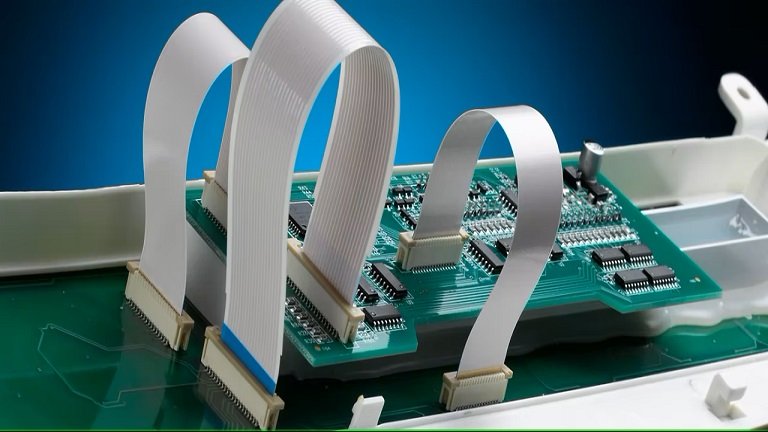
An ffc to ffc connector links two flat flexible cables to create a direct electrical path. You use these connectors for their 1:1 pin mapping, which ensures each wire connects accurately from one ffc to another. The flat and flexible design lets you fit them into tight spaces. This feature supports the miniaturization of electronics, especially in devices where every millimeter matters. You rely on these connectors for compact and reliable connections in modern gadgets.
Key Takeaways
- FFC to FFC connectors provide a compact and flexible solution for connecting flat flexible cables, making them ideal for modern electronics.
- The 1:1 pin mapping feature ensures accurate connections, reducing the risk of signal loss and enhancing device reliability.
- Choosing the right pitch size and connector type is crucial for optimal performance and space efficiency in your electronic designs.
- Locking mechanisms in connectors enhance security and durability, making them suitable for devices exposed to movement and vibration.
- FFC connectors are widely used in consumer electronics, automotive systems, and medical devices, highlighting their versatility and importance in various applications.
What is an FFC to FFC connector?
Basic structure and function
You often see an ffc to ffc connector in devices that need slim, flexible wiring. This connector joins two flat flexible cables, or FFCs, to create a continuous electrical path. You can distinguish an ffc to ffc connector from a general ffc connector because it specifically connects one FFC directly to another, rather than linking an FFC to a circuit board or other component.
The construction of an ffc to ffc connector relies on materials that provide both flexibility and strength. Most FFCs use PET plastic as the base material. This plastic forms a thin, bendable film that supports the copper traces inside the cable. You benefit from this design because it allows the cable to bend and twist without breaking. The table below shows why PET plastic is a popular choice:
| Material | Description | Advantages |
|---|---|---|
| PET plastic | A thin, flexible plastic film used in FFC construction. | Provides flexibility and durability, making it suitable for various applications. |
When you use an ffc connector, you insert the ends of two FFCs into the connector housing. The connector holds the cables in place and aligns the copper contacts so that electricity flows smoothly from one cable to the other. This setup makes ffc/fpc connectors ideal for tight spaces where traditional round wires would not fit.
1:1 pin mapping and operation
You rely on the 1:1 pin mapping of an ffc to ffc connector to ensure accuracy. Each pin on one FFC lines up perfectly with the corresponding pin on the other FFC. This direct mapping means you do not have to worry about crossed signals or misaligned connections. You get a straightforward, reliable link between two points.
Understanding how ffcs work helps you appreciate the value of this design. The copper traces inside each FFC carry signals or power. When you connect two FFCs using an ffc to ffc connector, the connector aligns each trace so that the signal passes directly through. This method reduces signal loss and keeps your electronic device running smoothly.
You often find ffc connectors in devices like laptops, printers, and cameras. These products need compact, lightweight wiring that can handle frequent movement. Ffc/fpc connectors deliver this flexibility while maintaining a secure connection. When you learn how ffcs work, you see why engineers choose these connectors for modern electronics.
FFC connector features and types
Pitch and size options
When you choose ffc or fpc connectors, pitch size becomes one of the most important factors. Pitch refers to the distance between the center of one conductor to the next. This measurement affects how much space the connector takes up and how many signals you can send through it. You often see these common pitch sizes:
| Pitch Size | Description |
|---|---|
| 1.25mm | Standard pitch size for FFC/FPC |
| 1.27mm | Slightly different, often confused |
A smaller pitch allows you to fit more conductors in a limited space, which helps when you design compact devices. However, smaller pitches can make assembly more challenging and may increase the risk of signal interference. You need to balance size with performance when selecting ffc/fpc connectors.
Locking mechanisms
Locking mechanisms play a key role in keeping your connections secure. You can find several types of locking features in ffc and fpc connectors. Here are some ways these mechanisms help:
- Locking functions enhance retention force, preventing disengagement of connections.
- Different locking methods withstand shock and vibration, which is crucial for portable devices.
- Connectors with locking features improve user handling and ease of assembly.
Connectors with locking functions can strengthen mating retention and help prevent unintended unmating. Locking methods vary from connector to connector. For example, the EVAFLEX FFC/FPC connectors have an auto-locking feature that can mate FFC/FPC with one action, making them more robust and durable than traditional FFC/FPC connectors.
You benefit from these features because they make your devices more reliable, especially if you use them in environments with movement or vibration.
Termination and mounting styles
Termination and mounting styles affect how you install ffc/ffp connectors in your devices. You can choose from several options, such as surface mount, through-hole, or ZIF (Zero Insertion Force) types. Each style offers different advantages of ffcs, like easier assembly or better durability. For example, ZIF connectors let you insert and remove cables without much force, reducing wear and tear.
The slim profile and foldable geometry of ffc/fpc connectors simplify internal layouts. Their parallel conductor arrangement ensures consistent spacing and uniform impedance, which is crucial for high-speed data transmission. Materials like polyimide or polyester provide thermal and mechanical stability, supporting high-speed data without distortion. These features highlight both the advantages of ffcs and the disadvantages of ffcs. While you gain flexibility and compactness, you may face challenges with durability or handling in some applications.
When you understand these features, you can select the right ffc or fpc connectors for your project. You weigh the advantages of ffcs against the disadvantages of ffcs to make the best choice for your device.
Applications of FFC to FFC connectors
Consumer electronics
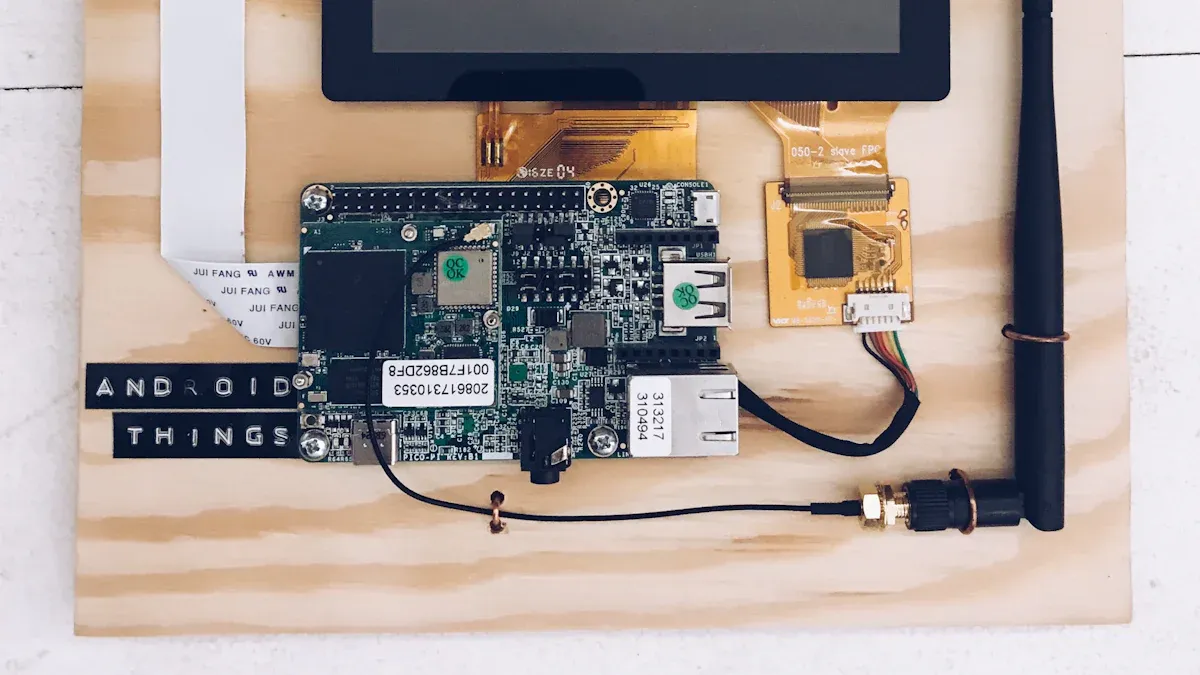
You encounter ffc to ffc connector technology in many consumer electronics. Devices like smartphones, laptops, tablets, and cameras rely on ffc connectors for their slim profiles and efficient assembly. The compact design of ffc ribbon cable supports the miniaturization of these gadgets. You benefit from strong signal integrity and reduced assembly errors, which help manufacturers produce reliable products quickly. The table below shows how ffc connectors enhance the design and functionality of smartphones and laptops:
| Benefit | Explanation |
|---|---|
| Cost-effective | FFC connectors use fewer materials, making them cheaper to produce. |
| Efficient assembly | Their flat shape allows for faster and more accurate installation in devices. |
| Strong signal integrity | The even spacing of wires helps maintain strong signals, essential for data transmission. |
| Shielding | Many FFC cables come with shielding to prevent interference from unwanted signals. |
| Compact design compatibility | Their shape is ideal for use in tight spaces, which is crucial for modern smartphones and laptops. |
| Reduced assembly errors | The design helps minimize mistakes during the assembly process. |
| High production efficiency | FFC connectors facilitate quick manufacturing of devices. |
You see these advantages in everyday devices, where flexibility and compactness matter most.
Automotive and industrial uses
You find ffc to ffc connector solutions in automotive infotainment systems, navigation units, and climate control panels. These connectors create reliable links between electronic components, even in harsh conditions. You benefit from their ability to withstand extreme temperatures, vibrations, and moisture. In industrial automation, ffc connectors play a key role in robotics and control systems. The following list highlights their importance:
- FFC to FFC connectors establish reliable connections in automotive infotainment systems, including navigation, audio playback, and climate control.
- These connectors endure harsh conditions such as extreme temperatures, vibrations, and moisture.
- Their space-saving and cost-effective nature allows efficient interconnections between electronic components.
You also see ffc used in industrial automation equipment. The table below outlines their features and applications:
| Feature/Application | Description |
|---|---|
| Ruggedness | Ensures reliable connections in harsh environments, crucial for automation. |
| Flexibility | Allows for easy routing in tight spaces, enhancing installation efficiency. |
| Reliability | Provides consistent performance in robotics and machinery. |
| Connection in Robots | Used to connect sensors and actuators in automated production lines. |
| Control Systems | Facilitates connections in control panels, ensuring seamless operation. |
| Aerospace | Utilized for reliability and performance in demanding environments. |
| Robotics | Essential for driving miniaturization in automation technologies. |
You notice that the adoption rate of ffc connectors in automotive and industrial sectors continues to grow. This trend is driven by technological needs and the rise of smart technologies.
Medical and specialized equipment
You see ffc to ffc connector technology in medical devices such as diagnostic monitors, imaging systems, and endoscopic equipment. Safety and reliability are critical in these applications. The table below summarizes key requirements:
| Requirement Type | Description |
|---|---|
| Safety | Connectors must have insulation to prevent electric shocks, protecting patients. |
| Reliability | Connectors are crucial for the proper functioning of medical devices. |
You benefit from the flexibility of ffc in specialized medical equipment. Flexible cables enable advanced devices to integrate seamlessly, enhancing mobility and precision. In imaging systems like MRIs and CT scanners, ffc ribbon cable ensures high-resolution imaging by connecting display monitors to main units. In endoscopic procedures, these cables transmit data from the camera to the display while allowing the device to navigate the human body effectively.
You observe that the medical, automotive, and industrial sectors are experiencing increased demand for reliable connectors. The global market for ffc and fpc connectors is projected to grow rapidly, with estimates showing a robust CAGR of 6.2% to 7.5% over the next decade. This growth reflects the importance of flexibility and compactness in modern cable-to-board applications.
Choosing the right FFC to FFC connector
Size and pitch considerations
Selecting the right connector starts with understanding your device’s needs. You should look at several factors before making a choice:
- Connector type—decide if you need ZIF, LIF, or another style.
- Pitch size—measure the distance between contact points and check the available space.
- Number of contacts—count how many signals or power lines your device requires.
- Current rating—make sure the connector can handle your device’s power needs.
- Temperature range—choose a connector that works in your device’s operating environment.
- Mounting style—pick a mounting method that fits your assembly process.
- Durability and reliability—ensure the connector can withstand repeated use.
- Cost—balance performance with your budget.
You avoid common mistakes by requesting detailed 3D models and drawings, confirming FPC thickness tolerances, and checking durability test data. Always verify the connector’s performance in vibration and shock tests, and ask about terminal plating thickness for better longevity.
Environmental and durability factors
FFC ribbon cable works well in many devices because of its flexibility and compact size. However, high humidity and heat can cause problems. Moisture can enter the cable, especially if the insulation is polyester or polyimide. This can lead to swelling or reduced strength. High temperatures speed up this process, making the cable age faster and possibly fail sooner.
You should choose connectors with high IP ratings, such as IP67 or IP68, for protection against water and dust. In explosive or harsh environments, look for connectors that meet Class 1, Division 2 standards. FFC and fpc connectors often provide the durability needed for mission-critical applications, resisting chemicals, shock, and vibration.
Compatibility and standards
You need to ensure your connector matches your hardware and meets industry standards. The table below highlights key points:
| Consideration | Description |
|---|---|
| Connector Pitch | Match the pitch with your cable or circuit. |
| Current and Voltage Rating | Confirm the connector supports your power needs. |
| Durability and Bending Cycles | Important for devices with frequent movement. |
| Shielding and EMI Resistance | Essential for sensitive electronics. |
| Industry Certifications | Look for UL, RoHS, and IPC compliance. |
You avoid compatibility issues by matching connector pitch and using adapter boards when needed. FPC connectors with ZIF or LIF features reduce insertion force and help prevent damage. Always check for certifications to ensure safety and reliability in your application.
You depend on the ffc to ffc connector for reliable, compact connections in modern electronics. These connectors offer high flexibility, strong signal integrity, and easy integration, as shown below:
| Advantage | Contribution to Reliability |
|---|---|
| High Flexibility | Enables compact designs without performance loss |
| Enhanced Signal Integrity | Maintains data quality, reducing errors |
| EMI Shielding | Protects signals from noise, increasing longevity |
| Cost-Efficiency | Fewer parts mean fewer failures |
| Easy Integration | Streamlines assembly, reducing mistakes |
When you select an ffc, remember these tips:
- Choose connectors that fit your device’s size and environment.
- Prioritize signal quality and mechanical durability.
- Consider new trends like miniaturization and advanced materials.
You can improve your project’s reliability and performance by making informed choices.
FAQ
What is the main advantage of using FFC to FFC connectors?
You get a compact and flexible connection. These connectors save space inside your device. You can route cables easily, which helps you design smaller and lighter electronics.
Can you reuse FFC to FFC connectors?
Yes, you can reuse many FFC to FFC connectors. Choose connectors with ZIF or LIF features for easy cable removal. Always check for wear or damage before reusing.
How do you choose the correct pitch size?
Measure the distance between the centers of two adjacent contacts. Match this measurement to your cable and device requirements. Smaller pitch sizes fit more signals in less space, but they may be harder to handle.
Are FFC to FFC connectors suitable for high-vibration environments?
You can use FFC to FFC connectors in high-vibration settings if you select models with strong locking mechanisms. Look for connectors rated for shock and vibration resistance.
