
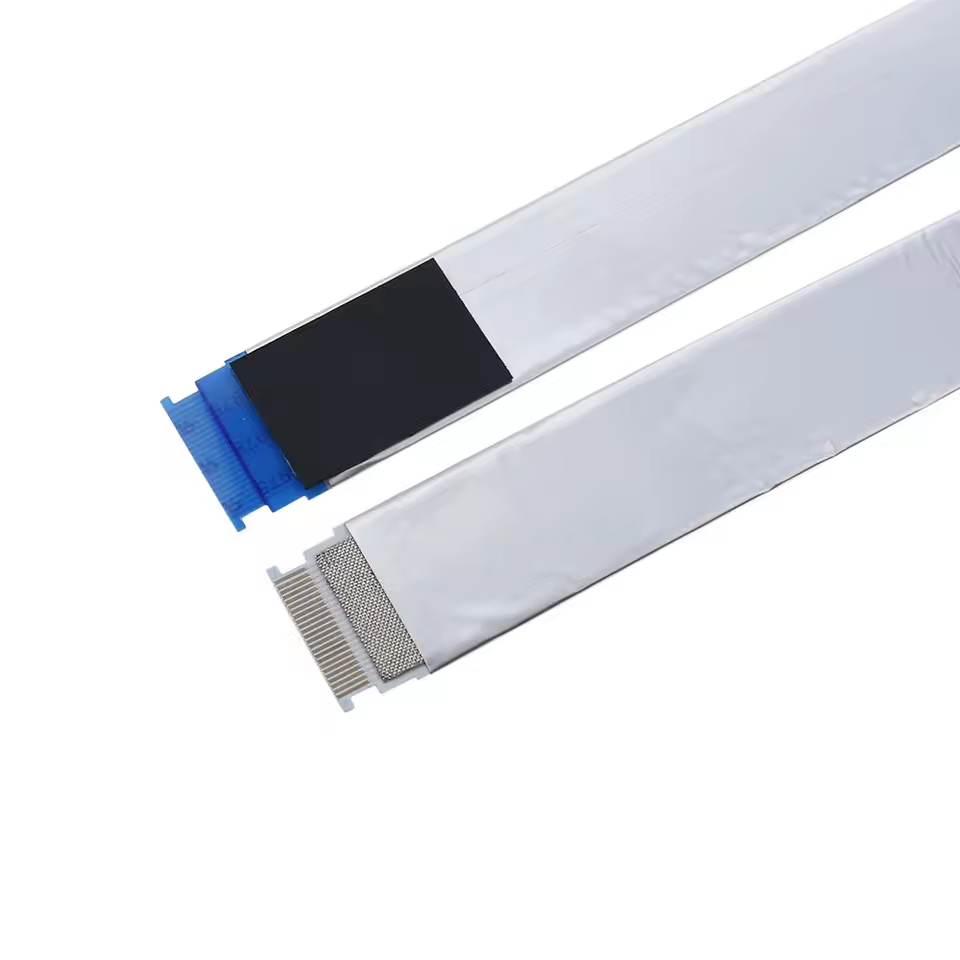
You need shielded and impedance-controlled FFC cables when your project involves high-speed data, sensitive medical electronics, or environments with strong electromagnetic interference. Ask yourself these questions before you choose your cable:
Do you design for automotive, medical, or industrial electronics?
Does your system require secure, high-speed data transmission?
Is your environment noisy or regulated for EMI compliance?
If you answer yes to any of these, make cable selection a priority early in your design. Impedance-Controlled FFC Cables help you avoid data loss and maintain signal integrity in these demanding scenarios.
Key Takeaways
Use shielded FFC cables to protect against electromagnetic interference (EMI) in sensitive environments.
Choose impedance-controlled FFC cables for high-speed data transmission to maintain signal integrity.
Check your data rate and cable length; use impedance control for speeds over 50 Mbps or lengths longer than 30 cm.
Consider your application’s environment; if it’s noisy or regulated, select the appropriate cable type early in your design.
Avoid costly redesigns by matching your cable choice to your project’s specific needs and compliance requirements.
Why Use Shielded FFC Cables
EMI and Signal Integrity Issues
You face many challenges when you design electronic systems for demanding environments. Electromagnetic interference (EMI) can disrupt signals and cause devices to malfunction. Shielded FFC cables help you solve these problems by blocking unwanted noise and protecting your data lines.
Tip: If your project sits near motors, wireless modules, or power supplies, you need to think about EMI.
Shielded FFC cables offer several advantages:
They minimize electromagnetic interference from both inside and outside your device.
They keep your signals clean, which is crucial for reliable data transfer.
They withstand harsh environments, so your system stays reliable and needs less maintenance.
They use flat copper conductors laminated with polyester film and shielding foil for extra protection.
You can choose from different shielding formats, such as foil, mesh, or hybrid designs. YLS Shielded-cable gives you the flexibility to customize pitch, pin count, and cable length. This means you get a cable that fits your exact needs, whether you build a medical device or an automotive system.
High-Speed Data and Compliance
You need shielded FFC cables when your application demands high-speed data or must pass strict compliance tests. High-frequency signals, like USB, HDMI, or LVDS, are sensitive to interference. Even a small amount of EMI can cause data loss or system errors.
Shielded FFC cables provide reliable EMI protection for sensitive electronics.
They feature shielding on both sides to boost performance in tough environments.
They help you meet industry standards for electromagnetic compatibility (EMC), which is important for passing regulatory tests.
YLS Shielded-cable supports high-speed protocols and offers options for impedance control. You can trust these cables to deliver stable signals and help your product meet global compliance requirements. If you want to avoid costly redesigns or failed tests, start with the right shielded cable from the beginning.
Key Applications for YLS Shielded-cable
Automotive and Industrial Uses
You work in environments where reliability matters. Automotive systems demand cables that withstand vibration, temperature swings, and exposure to chemicals. YLS Shielded-cable delivers robust EMI protection, which keeps your signals stable even near engines or electric motors. You can trust these cables to maintain performance in harsh conditions.
Industrial automation relies on flexible connections that endure thousands of bending cycles. Robotics and automation systems need cables that protect against electromagnetic interference. YLS Shielded-cable features shielding on both sides, which is essential for reliable data transmission. You see this in sensors, drive controls, and collaborative robots. These cables offer flexibility and signal stability, so your equipment operates without interruption.
Note: If you design for robotics or factory automation, choose shielded FFC cables that handle dynamic environments and provide strong EMI shielding.
Medical and Consumer Electronics
Medical devices require precision and reliability. You need cables that fit into tight spaces and deliver uninterrupted performance. YLS Shielded-cable is extremely thin and flexible, which makes it ideal for high-density electronics. These cables protect against EMI, ensuring your devices operate safely and accurately.
High retention force keeps connections secure.
High-heat resistance prevents failures in demanding environments.
Ground pin options provide advanced EMI prevention.
Consumer electronics benefit from YLS’s customization capabilities. You can select features that match your project’s needs. The table below shows options available for your designs:
Customization Option | Description |
|---|---|
Pitches | Choose from 0.50 mm to 2.54 mm for space efficiency. |
EMI Shielding | Reliable protection for sensitive applications. |
High-Temperature Resistance | Designed for devices exposed to heat. |
Impedance-Controlled | Supports high-speed signals like LVDS and USB. |
Side Retainers | Adds stability at cable ends for secure connections. |
Custom Printing | Permanent, smudge-proof cable identification. |
YLS brings over ten years of experience and advanced manufacturing to every project. You get cables tailored for automotive, medical, industrial, and consumer electronics. You can rely on YLS for solutions that meet your exact requirements.
Impedance-Controlled FFC Cables: When Are They Essential?
Data Rate and Cable Length Guidelines
You need to understand how data rate and cable length affect your signal quality. In the context of impedance-controlled FFC cables, “data rate vs. cable length” means how fast your signals travel and how far they go without losing integrity. Higher data rates or longer cables increase the risk of signal loss, reflections, or interference.
Tip: The faster your data or the longer your cable, the more important impedance control becomes.
Here is a practical rule-of-thumb to help you decide when you need impedance-controlled FFC cables:
If your data rate exceeds 50 Mbps, consider impedance control.
If your cable length is longer than 30 cm (about 12 inches), impedance control helps maintain signal quality.
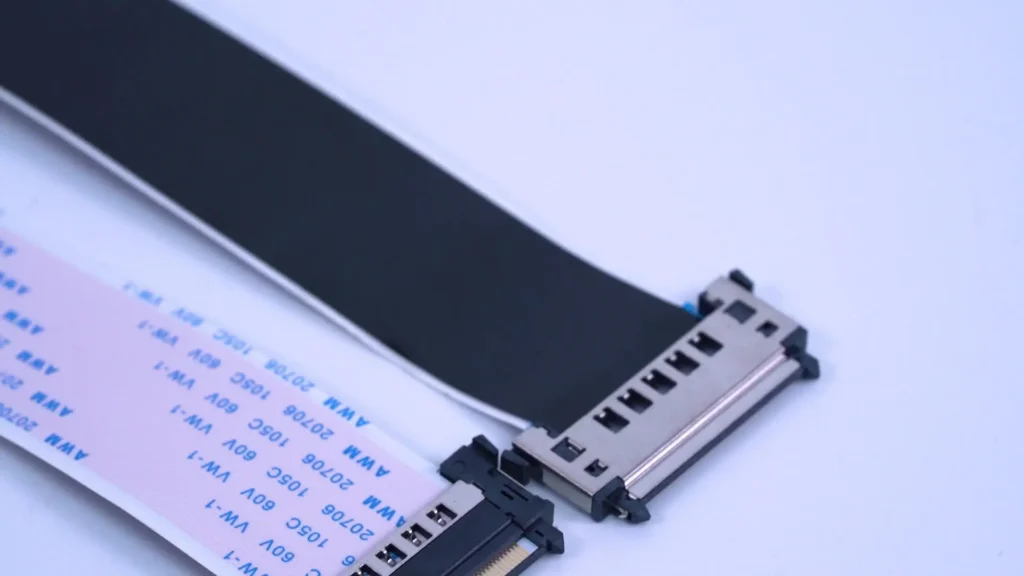
If you use protocols like LVDS, USB, HDMI, or MIPI, always choose impedance-controlled FFC cables.
If you notice errors, glitches, or data loss during testing, impedance control can solve these issues.
You can use this checklist to quickly assess your needs:
Scenario | Impedance Control Needed? |
|---|---|
Low-speed signals, short cable | Usually not |
High-speed signals, short cable | Sometimes |
High-speed signals, long cable | Always |
Sensitive medical or automotive | Always |
Impedance-controlled FFC cables keep your signals stable and reduce the risk of data errors. You get reliable performance, especially in high-speed or long-distance applications.
Environmental and Regulatory Factors
Your environment also plays a big role in cable selection. If your system operates near strong electromagnetic sources, such as motors or wireless transmitters, impedance-controlled FFC cables help protect your signals from outside noise. These cables also help you meet strict industry standards for electromagnetic compatibility (EMC).
You should ask yourself these questions:
Does your device need to pass EMC or EMI compliance tests?
Will your cable run through areas with lots of electrical noise?
Do you design for regulated industries like automotive or medical electronics?
If you answer yes to any of these, impedance-controlled FFC cables are essential. They help you avoid costly redesigns and ensure your product passes certification the first time.
YLS offers a full range of impedance-controlled FFC cables. You can customize pitch, pin count, and shielding to match your exact requirements. YLS supports high-speed protocols and delivers cables that meet global compliance standards. You get reliable, high-quality solutions for demanding environments.
Note: Choosing the right cable early in your design process saves time and money. YLS can help you select and customize impedance-controlled FFC cables for your unique application.
Decision Checklist and Risks
Quick Questions Before Choosing
You want to make the right choice for your project. Use this checklist to see if you need shielded or impedance-controlled FFC cables:
Does your design use high-speed signals like USB, HDMI, or LVDS?
Will your cable run longer than 30 cm (about 12 inches)?
Do you need to pass EMC or EMI compliance tests?
Is your device used in a noisy environment, near motors or wireless equipment?
Does your application involve medical, automotive, or industrial electronics?
Have you seen data errors or glitches during testing?
Tip: If you answer “yes” to any question, you should consider shielded or impedance-controlled FFC cables.
Here is a simple rule-of-thumb for data rate and cable length:
For data rates above 50 Mbps, or cable lengths over 30 cm, impedance control becomes important.
For low-speed signals and short cables, standard FFC cables may be enough.
Scenario | Recommended Cable Type |
|---|---|
High-speed, long cable | Impedance-Controlled FFC Cables |
High EMI environment | Shielded FFC Cable |
Medical or automotive use | Shielded or Impedance-Controlled |
Low-speed, short cable | Standard FFC Cable |
Consequences of Wrong Cable Choice
Choosing the wrong cable can cause serious problems. You may see data loss, signal errors, or even device malfunction. Your product might fail EMC or EMI compliance tests, leading to costly redesigns or delays. In regulated industries, using the wrong cable can result in safety risks or failed certifications.
Alert: Always match your cable to your application’s speed, length, and environment. This step protects your project from unexpected failures.
Impedance-Controlled FFC Cables help you avoid these risks by keeping your signals clean and your devices reliable.
You need the right cable to keep your project reliable and safe. Use shielded FFC cables to block electromagnetic interference. Choose impedance-controlled FFC cables to keep signals strong in high-speed or sensitive systems. Remember these key points:
Shielded FFC cables protect against EMI.
Impedance-controlled FFC cables keep signal integrity for fast data like LVDS or USB.
Consistent impedance, usually around 100 ohms, helps maintain performance.
Check your data rate and cable length. For speeds over 50 Mbps or cables longer than 30 cm, impedance control is a must. Review your needs, use the checklist, and reach out to YLS for custom solutions. If you still have questions, contact YLS for expert advice.
FAQ
What is a shielded FFC cable?
A shielded FFC cable uses a conductive layer to block electromagnetic interference. You protect your signals from noise and keep your data reliable in demanding environments.
When should you use impedance-controlled FFC cables?
You need impedance-controlled FFC cables for high-speed signals or cables longer than 30 cm.
Rule-of-thumb:
Data rate above 50 Mbps
Cable length over 30 cm
Sensitive protocols like LVDS, USB, HDMI
How does shielding affect cable flexibility?
Foil shielding adds minimal thickness and keeps the cable flexible. Mesh shielding gives stronger EMI protection but reduces flexibility. You choose the format based on your project’s needs.
What industries benefit most from shielded FFC cables?
Industry | Benefit |
|---|---|
Automotive | Stable signals near engines |
Medical | Reliable performance in devices |
Industrial | EMI protection for automation |
Consumer | Clean data for smart devices |
Can you customize shielded FFC cables for your project?
You can customize pitch, pin count, cable length, and shielding format. YLS offers OEM and ODM services to match your exact requirements.
