
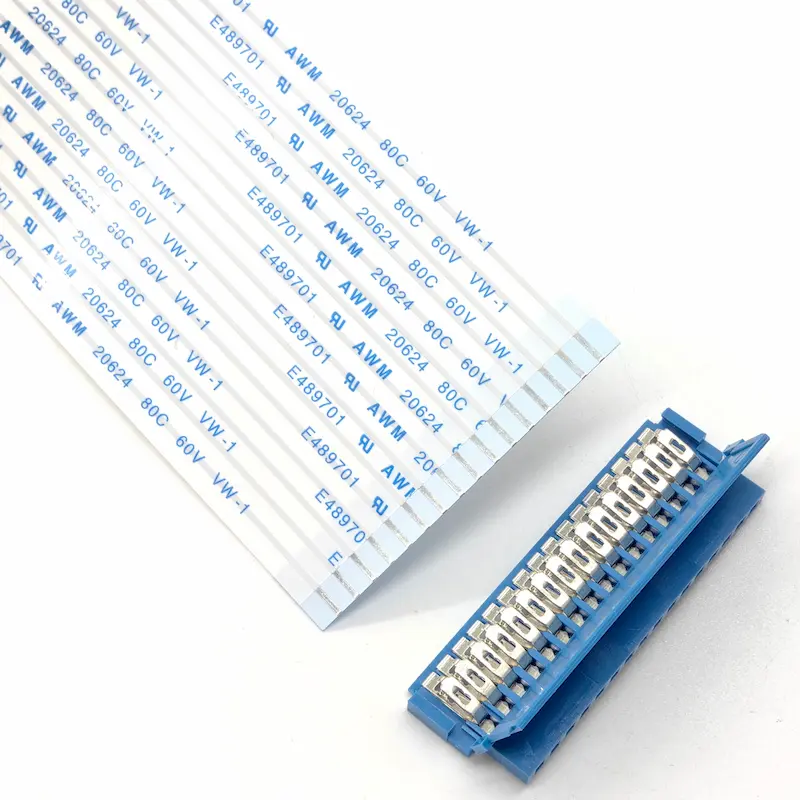
You need a step-by-step due diligence checklist when sourcing low-cost ffc cable. Use this checklist to confirm quality, safety, and reliable connections for your cable interconnects. Follow each step for due diligence:
Supplier qualification
Material verification
Dimension check
Electrical test
Visual inspection
Environmental testing
Sample approval
Batch consistency
Packaging and handling review
Documentation and traceability
Always require UL 20960 approval and real-world testing to keep cost low without sacrificing performance.
Key Takeaways
Start with a strong supplier qualification to ensure reliable and certified FFC cables.
Verify materials and confirm UL 20960 approval to guarantee safety and performance.
Perform thorough tests including dimension checks, electrical tests, and environmental stress tests.
Inspect every cable visually and during packaging to catch defects early and protect your investment.
Keep detailed records and use traceability systems to maintain quality and quickly resolve issues.
1. Supplier Qualification Checklist for Low-Cost FFC Cable
When you source a low-cost ffc cable, you need to start with a strong supplier qualification process. This step helps you avoid costly mistakes and ensures your interconnects deliver reliable connections in every application.
Supplier Audit
Begin your diligence with a supplier audit. Visit the factory if possible. Check the production environment and look for organized workspaces. Ask for verifiable certification documents. Review the supplier’s track record for on-time delivery and consistent quality. Speak with their quality control team. Request references from other buyers who use their ffc products. This hands-on approach helps you spot red flags early and keeps your cost under control.
Process Control (SPC)
You should ask about the supplier’s process control methods. Statistical Process Control (SPC) helps maintain quality during manufacturing. Request to see SPC charts for recent production runs. Look for evidence that the supplier tracks key parameters for ffc cable production, such as conductor width and insulation thickness. Consistent SPC data means fewer surprises and better performance in your final assemblies.
Compliance Review
Always review the supplier’s compliance certifications. Mismatches between listed and actual certifications can lead to major problems. Ask for up-to-date documents and check them against official databases. The most relevant certifications for ffc suppliers include:
Certification | Description |
|---|---|
UL | Underwriters Laboratories certification for safety standards |
CE | Conformité Européenne marking for product compliance in the EU |
FCC | Federal Communications Commission certification for electronic devices |
ISO 9000 | International standard for quality management systems |
ISO 14000 | International standard for environmental management systems |
You should confirm that your supplier holds the right certification for your market. This step protects your brand and ensures your cable meets all safety and quality requirements. Careful compliance review is a key part of due diligence when sourcing ffc interconnects.
2. Material Verification for FFC Cable with UL 20960 Approval
You must check the materials before you trust any ffc supplier. Material verification protects your project from hidden risks and ensures your ffc cable with ul 20960 approval meets all requirements for safety and performance.
Material Certificates
Ask your supplier for material certificates for every batch of ffc. These certificates should show the source and type of conductor, insulation, and adhesive used in the cable. Review the documents for accuracy. Make sure the certificates match the actual shipment. If you see missing information or mismatched details, request clarification right away. Reliable suppliers will always provide clear certificates.
Tip: Keep a checklist to track which certificates you have received for each order.
UL 20960 Approval
You need to confirm that your ffc cables with ul 20960 approval meet underwriters laboratories’ safety standard. Check for a valid ul file number on the certificate. This number proves the cable passed all required tests. UL 20960 covers distinct thermal and voltage ratings. You should compare these ratings to your application needs. Some projects need higher temperature resistance vs. cost. If you see a lower rating than expected, ask your supplier for an explanation. Never accept a cable without proper ul certification.
UL 20960 Checklist | What to Verify |
|---|---|
UL File Number | Matches supplier’s certificate |
Ratings | Thermal and voltage |
Certification Date | Still valid |
Spot-Check Samples
Do not rely only on paperwork. Always spot-check samples from each batch of ffc. Inspect the insulation, conductor, and adhesive layers. Test the cable for flexibility and strength. Compare the sample to the ratings on the certificate. If you find any difference, report it to your supplier. Spot-checking helps you catch problems before they reach your production line.
Note: Consistent spot-checks improve quality and reduce risk in every shipment.
3. Dimension Check for FFC Cable
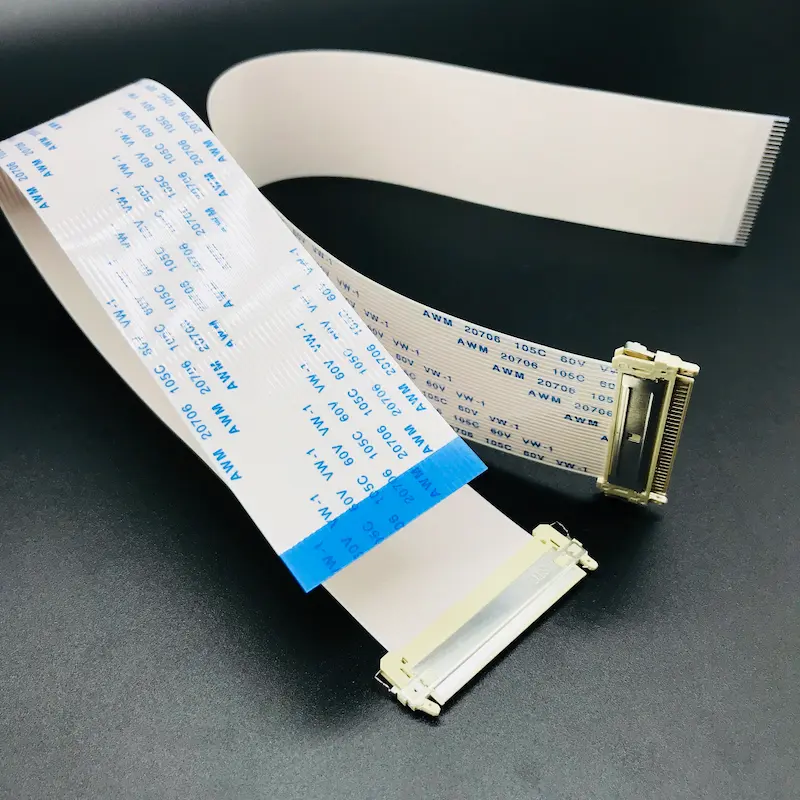
You need to check the dimensions of every ffc before you approve a shipment. This step helps you avoid problems with fit, function, and reliable connections in your final assembly. Use these three checks to confirm that your supplier meets the safety standard for flat flexible cables and delivers consistent quality.
Measurement Accuracy
You should always verify the accuracy of your dimension checks. Use calibrated tools to measure conductor width, insulation thickness, and overall cable length. Reliable suppliers calibrate their instruments using advanced methods and verify accuracy with third-party certification. Accredited bodies use ultra-high precision equipment that meets international standards. You can ask for calibration certificates from your supplier. These documents show compliance and help you trust the results.
Aspect | Description |
|---|---|
Accuracy and Reliability | Essential for users to avoid unintended consequences from inaccurate readings. |
Calibration Process | Instruments are calibrated for non-linearity across a wide temperature range using advanced proprietary methods. |
External Verification | Accuracy performance is verified by accredited certification bodies using ultra-high precision equipment traceable to international standards. |
Compliance | Calibration certificates are obtained from independent third parties and national metrology laboratories, ensuring global acceptance. |
Quality Assurance | Production equipment is periodically calibrated and maintained according to ISO9001 procedures, with documentation available upon request. |
Tip: Request recent calibration records for all measurement tools used on your ffc orders.
Fit and Flex Test
You should test how the ffc fits into your connectors and devices. Insert the cable into the mating connector and check for smooth engagement. Move the cable gently to see if it flexes without damage. This test helps you confirm that the cable will work in real-world applications. If you see any tightness or loose fit, report it to your supplier. Good fit and flex tests prevent failures during installation.
Bend Radius Inspection
You must inspect the bend radius of each ffc. Bend the cable to the minimum radius specified by the safety standard for flat flexible cables. Watch for cracks, splits, or delamination. A proper bend radius test ensures the cable will survive repeated movement in your product. This step protects safety and long-term performance.
Note: Consistent dimension checks help you qualify low-cost suppliers without sacrificing quality or compliance.
4. Electrical Test for FFC Cable
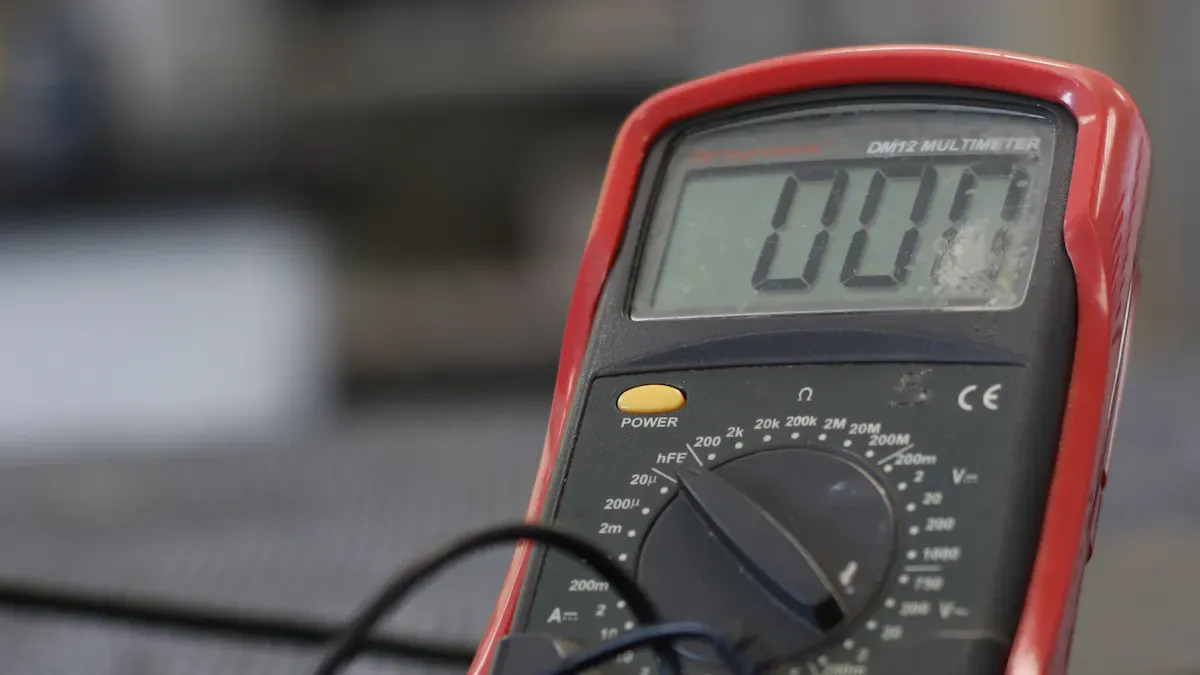
Electrical testing is a critical step in your ffc quality control checklist. You need to confirm that every ffc meets the safety standard for flat flexible cables and delivers reliable performance in your application. Use these three tests to check the electrical properties and ensure you do not compromise on safety or long-term reliability.
Insulation Resistance
Start by measuring insulation resistance. This test checks if the insulation layer prevents current from leaking between conductors. Use a calibrated insulation resistance tester. Place the probes on adjacent conductors and record the reading. For ffc, you should see a minimum value of 100 MΩ. This value shows that the insulation is strong and meets industry expectations. Low insulation resistance can lead to short circuits and failures. Always record your results and compare them with supplier data.
Tip: Test insulation resistance on samples from every batch to catch problems early.
Continuity Test
Next, perform a continuity test. This test checks if each conductor in the ffc provides a complete path for current. Use a multimeter or an automated tester. Touch the probes to both ends of each conductor. You should see a low resistance reading, which means the conductor is intact. If you find an open circuit, mark the cable as failed. Continuity testing helps you avoid assembly issues and ensures your ffc will work in your device.
Checklist for continuity test:
Test all conductors in each ffc
Record any failures
Reject cables with open circuits
Voltage-Withstand Test
Finally, run a voltage-withstand test. This test checks if the ffc can handle high voltage without breaking down. Apply the specified voltage between conductors and insulation for a set time. Watch for sparks, arcing, or sudden drops in resistance. If the cable passes, you can trust its safety and durability. This test is important for meeting quality and safety requirements in demanding environments.
Note: Always follow the voltage and time settings from the safety standard for flat flexible cables.
By following these electrical tests, you can qualify low-cost suppliers and maintain high standards for your ffc cables.
5. Visual Inspection Checklist for FFC Cable
Visual inspection gives you a fast way to spot problems before they affect your production. Use this checklist to confirm the condition of every ffc you receive from low-cost suppliers.
Cable Integrity
You need to check the physical state of each ffc. Look for cracks, splits, or signs of wear along the length. Examine the insulation for uniform color and thickness. If you see any exposed conductor or uneven edges, mark the item for review. Use a flashlight to inspect the surface for scratches or contamination. A clean and intact ffc helps you maintain safety and avoid failures in your assembly.
Tip: Keep a log of defects you find. This record helps you track supplier performance and improve your quality process.
Connector Compatibility
Test the ffc with your actual connectors. Insert the cable into the mating connector and check for smooth engagement. Make sure the locking tabs hold the ffc securely. If you notice resistance or loose fit, report the issue to your supplier. Proper compatibility ensures your assembly works without extra adjustments.
Checklist for connector compatibility:
Insert ffc into connector
Check for secure fit
Confirm locking mechanism works
Metal Component Condition
Inspect the metal parts of the ffc, such as the exposed contacts or terminals. Look for corrosion, discoloration, or bent pins. Use a magnifying glass to check for tiny defects. Clean and well-formed metal components support reliable electrical connections and long-term performance.
Inspection Item | What to Look For |
|---|---|
Contacts | No corrosion or discoloration |
Pins | Straight, not bent |
Surface | Smooth, no pitting |
Note: Careful inspection of metal components helps you qualify low-cost suppliers and maintain high standards for your production units.
6. Environmental Testing for FFC Cable
You need to check how your ffc performs under different environmental conditions. Environmental testing helps you confirm that your supplier delivers consistent quality, even when the cable faces stress in real-world use. Use these three tests to qualify your low-cost supplier.
Temperature Cycling
Place your ffc samples in a temperature chamber.
Set the chamber to cycle between high and low temperatures. For example, move from -20°C to 85°C.
Hold each temperature for at least 30 minutes.
Repeat the cycle at least 10 times.
After cycling, inspect the ffc for cracks, warping, or changes in flexibility. If you see any damage, reject the batch. Temperature cycling shows if the cable can survive shipping, storage, and use in harsh environments.
Tip: Record the results for each batch. This helps you track supplier performance over time.
Humidity Exposure
Put your ffc samples in a humidity chamber.
Set the humidity to 90% and the temperature to 40°C.
Keep the samples in the chamber for 96 hours.
After exposure, check for swelling, delamination, or sticky surfaces. Test the electrical properties again. High humidity can cause hidden problems in low-cost ffc, so this test is important for long-term reliability.
Test Step | What to Check |
|---|---|
Visual Inspection | Swelling, delamination |
Touch Test | Sticky or soft insulation |
Electrical Test | Insulation resistance values |
Bending Test
Bend each ffc sample back and forth 100 times.
Use the minimum bend radius recommended by the safety standard.
Watch for cracks, splits, or conductor breaks.
A good ffc will pass the bending test without damage. This test helps you confirm that the cable will last in applications where movement happens often.
Note: Always include environmental tests in your inspection checklist to avoid failures in the field.
7. Sample Approval for FFC Cables with UL 20960 Approval
You need to approve samples before you trust a batch of ffc cables with ul 20960 approval. This step helps you confirm that your supplier meets your quality standards and delivers safe products for your application. Follow these three checks to ensure your cable performs as expected.
First Piece Inspection
Start with the first piece inspection. Take the very first ffc from the batch and check it against your specifications. Measure the conductor width, insulation thickness, and length. Compare these values to your order requirements. Inspect the cable for defects, such as cracks or uneven edges. Test the electrical properties using your standard procedures. If the first piece passes, you can move forward with confidence.
Tip: Record your findings in a log. This helps you track supplier performance over time.
Last Piece Inspection
You should also inspect the last piece in the batch. This step shows if the supplier maintained quality throughout production. Repeat the same checks as you did for the first piece. Look for any signs of wear or inconsistency. If you find differences between the first and last ffc, report them to your supplier. Consistent results mean your supplier follows good process control.
Checklist for last piece inspection:
Measure dimensions
Inspect for defects
Test electrical properties
Installation Test
Finish your sample approval with an installation test. Take the approved ffc cable and install it in your device or connector. Check for proper fit and secure engagement. Move the cable to see if it flexes without damage. Run a quick electrical test after installation. This step confirms that your ffc works in real-world conditions and meets ul requirements.
Test Step | What to Check |
|---|---|
Fit | Smooth installation |
Flexibility | No cracks or splits |
Electrical Test | Reliable performance |
Note: Sample approval protects your production line from unexpected failures and ensures you receive safe, reliable ffc cables with ul 20960 approval.
8. Batch Consistency Checklist for Low-Cost FFC Cable
You need to check every batch of low-cost ffc cable for consistency. This step helps you avoid surprises and keeps your production running smoothly. Use these three checks to confirm that your supplier delivers reliable ffc every time.
Random Sampling
You should select random samples from each batch. Pick cables from different parts of the shipment. Test these samples for electrical and physical properties. Record the results for each sample. If you find any defects, report them to your supplier. Random sampling helps you catch hidden problems before they reach your assembly line.
Tip: Use a simple checklist to track which samples you tested and what results you found.
Process Variation Review
You must review process variation to ensure consistent quality in every batch. Use A/B checks to compare cables from different production runs. Set guardrails like minimum bend radius and bundling limits. Track the mean and spread of key electrical parameters with stratified sampling. Calibrate measurement tools and define reference planes for repeatable results. Control physical handling and measurement consistency with statistical sampling.
Review Method | Description |
|---|---|
A/B Checks | Compare cables from different runs to isolate variability |
Guardrails | Set limits for bend radius and bundling |
Stratified Sampling | Track mean and spread of electrical parameters |
Measurement Workflows | Calibrate tools and define reference planes |
Statistical Sampling | Control handling and measurement consistency |
Process variation review helps you qualify low-cost suppliers without sacrificing safety or performance.
Labeling Verification
You need to check the labeling on every batch of ffc. Look for clear batch numbers, production dates, and supplier information. Verify that the labels match your order and certificates. If you see missing or incorrect labels, ask your supplier for clarification. Proper labeling makes it easy to trace batches and resolve issues quickly.
Note: Consistent labeling supports traceability and protects your production from mix-ups.
Batch consistency checks help you keep cost low while maintaining high quality and reliable cable performance.
9. Packaging and Handling Review for FFC Cable
You must review packaging and handling when you source ffc. This step protects your investment and ensures your cables arrive in top condition. Poor packaging can lead to damage, lost parts, or contamination. You want to keep cost low, but you cannot ignore safety or quality.
Protective Packaging
You should check if your supplier uses proper protective packaging for every shipment. Look for these features:
Anti-static bags or sleeves to prevent static damage
Bubble wrap or foam inserts to cushion the ffc
Sealed outer cartons to block dust and moisture
Ask your supplier for photos of their packaging before you approve your order. You can request a sample shipment to inspect the packaging in person. Good packaging keeps your ffc safe during transport and storage.
Tip: Use a checklist to compare packaging from different suppliers. This helps you choose the best option for your needs.
Handling Procedures
You need to confirm that your supplier follows safe handling procedures. Mishandling can bend, crease, or contaminate the cable. Ask about their training for workers who pack and move ffc. Check if they use gloves or clean benches. Request a written procedure or a short video showing their process.
Handling Step | What to Verify |
|---|---|
Worker Training | Staff know how to handle ffc |
Clean Workspace | No dust or debris present |
Proper Tools | Use of gloves or tweezers |
You can reduce risk by making sure your supplier handles your ffc with care.
Shipping Inspection
You should inspect every shipment when it arrives. Open the boxes and check for crushed corners, water stains, or broken seals. Count the number of ffc cables and compare with your order. Test a few samples for physical and electrical properties. If you find damage, report it to your supplier right away.
Inspect packaging for signs of damage
Verify quantity and labeling
Test random samples for function
Note: Careful shipping inspection helps you catch problems early and keeps your production line running smoothly.
10. Documentation and Traceability Checklist for FFC Cable
You need strong documentation and traceability to protect your production and ensure reliable results when sourcing low-cost ffc cable. This checklist helps you keep records, track batches, and prove compliance for every shipment.
Record Keeping
Keep detailed records for each batch of ffc. Record the supplier name, production date, batch number, and inspection results. Store certificates for materials and electrical tests. Use a digital log or spreadsheet to organize your data. Good record keeping lets you spot trends and solve problems quickly. If you see repeated defects, you can trace them back to the source.
Tip: Update your records after every shipment. Consistent updates help you maintain quality and avoid confusion.
Traceability System
Set up a traceability system for your ffc cables with ul 20960 approval. Assign unique batch numbers to each shipment. Label every cable and package with these numbers. Use barcode labels or QR codes for easy scanning. If you find a defect, you can trace it to the exact batch and supplier. Traceability helps you recall faulty products and protect your customers.
Steps for traceability:
Assign batch numbers
Label cables and cartons
Scan and log shipments
A strong traceability system supports compliance and builds trust with your buyers.
Compliance Documentation
Collect and store all compliance documents for your ffc cable with ul 20960 approval. Keep copies of ul certification, material certificates, and inspection reports. Organize documents by batch and supplier. If you need to prove compliance, you can show these records to auditors or customers. Proper documentation protects your business and ensures you meet quality standards.
Document Type | What to Store |
|---|---|
UL Certification | Valid certificate for each batch |
Material Certificates | Source and test results |
Inspection Reports | Electrical and visual checks |
Note: Complete compliance documentation gives you confidence in your supply chain and helps you qualify low-cost suppliers without sacrificing safety.
Practical Tips for FFC Cable Quality Control
Routine Audits
You should schedule regular audits to keep your ffc supply chain strong. Audits help you spot problems before they affect your production. Visit your supplier’s facility or request virtual tours. Check their process for making each cable. Review their inspection records and ask to see how they test for defects. Use a simple table to track your audit findings:
Audit Item | Pass/Fail | Notes |
|---|---|---|
Clean workspace | ||
Calibrated tools | ||
Sample testing |
Tip: Routine audits help you catch issues early and keep your quality high.
Supplier Communication
Clear communication with your supplier makes a big difference. Share your expectations for ffc quality and testing. Ask questions if you see changes in the cable or packaging. Give feedback after each shipment. If you find a problem, report it right away. Good communication builds trust and helps your supplier understand your needs.
Ask for updates on production schedules.
Request photos or videos of the latest batch.
Confirm any changes in materials or design.
Standardized Checklist
A standardized checklist keeps your inspection process consistent. Use the same steps every time you review a batch of ffc. This approach helps you compare results and spot trends. Your checklist should include visual checks, electrical tests, and packaging reviews. Keep the checklist simple so your team can follow it easily.
Note: A good checklist saves time and helps you qualify low-cost suppliers without missing important steps.
By following these practical tips, you can improve your ffc sourcing process and protect your production from costly mistakes. Reliable quality starts with strong habits and clear steps for every cable you buy.
You can protect your production by using a checklist for every ffc cable order. This process helps you keep quality high and costs low. Always check for UL 20960 approval and run practical tests before you accept a shipment. Apply these steps every time you source cables. Add them to your procurement and production routines for better results.
Use your checklist for each order
Confirm UL 20960 approval
Test every batch for quality
Consistent checks lead to reliable cables and fewer problems in your final products.
FAQ
What is the most important quality check for low-cost FFC cables?
You should always check for UL approval and test the cable for electrical safety. These steps help you avoid hidden risks and ensure your product works as expected.
How often should I inspect shipments from new suppliers?
You need to inspect every shipment from a new supplier. Use random sampling and keep records of your results. This process helps you catch problems early.
Can I trust material certificates from low-cost suppliers?
You should verify all certificates by spot-checking samples. Ask for third-party test results if possible. This step protects you from fake or incorrect documents.
What should I do if I find defects in a batch?
You must report defects to your supplier right away. Keep samples and photos as proof. Good records help you resolve issues quickly.
How do I keep track of different batches?
You can use a simple table or spreadsheet. Record batch numbers, supplier names, and test results. This method makes it easy to trace problems if they happen.
